Santiago Cathedral
Santiago Cathedral
Rebuilt four times since 1528, Santiago de Cuba Cathedral dominates Céspedes Park and preserves the Cruz de la Parra, a vestige of Columbus's passage.
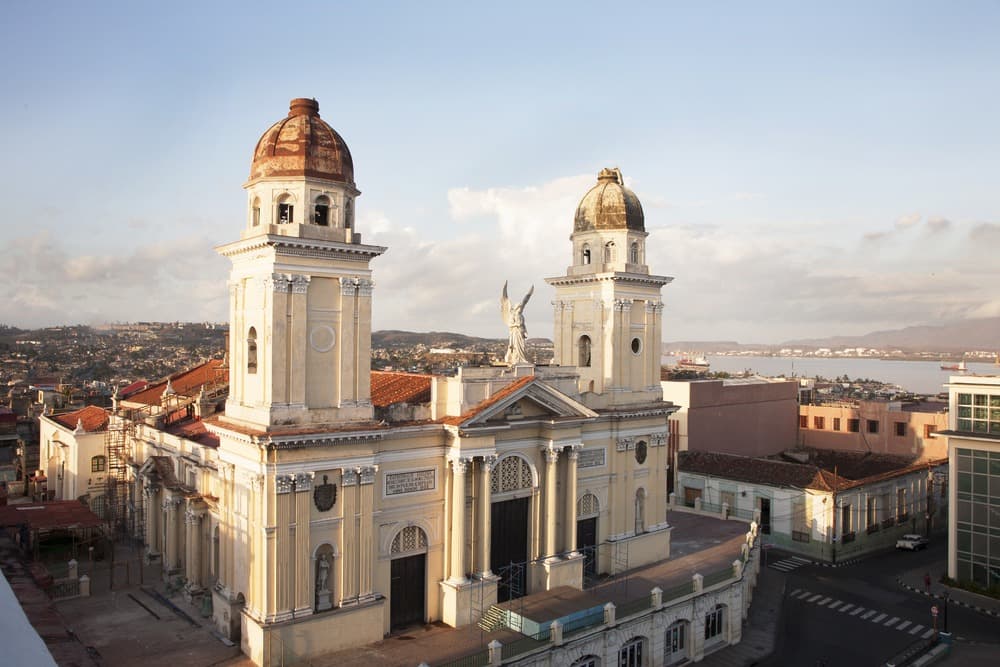
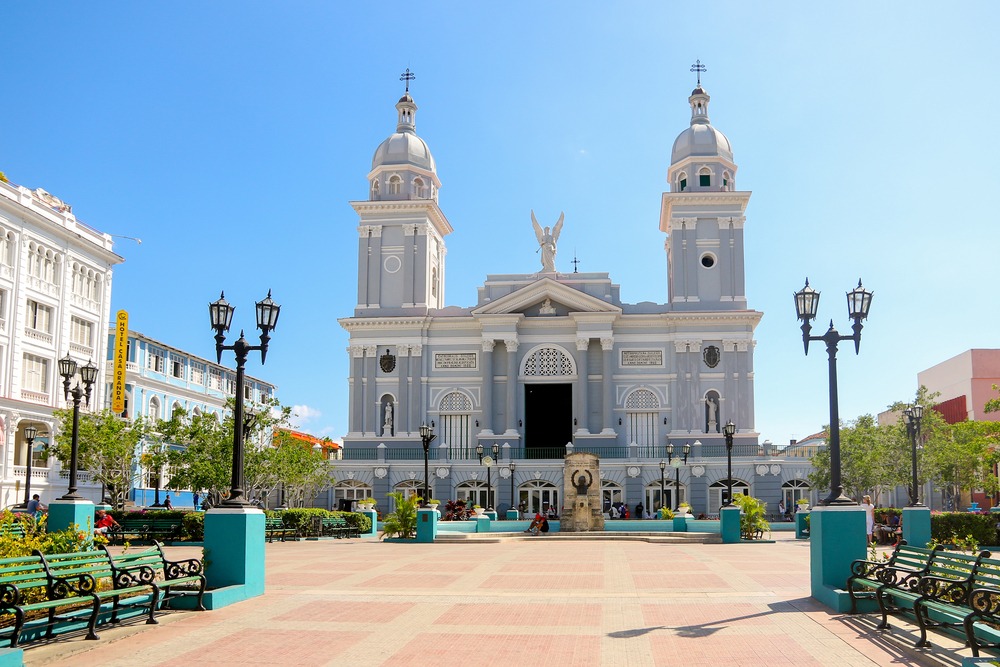
The Santiago de Cuba Cathedral, officially the Catedral Basílica de Nuestra Señora de la Asunción, dominates the south side of Céspedes Park in the heart of the historic center. Its pale ochre façade framed by two towers and crowned with a statue of an archangel holding a trumpet makes it an instant landmark of Santiago de Cuba. Rebuilt four times since 1528, it preserves the Cruz de la Parra, considered the sole material trace of Christopher Columbus's passage on the island.
Why Visit Santiago Cathedral
Three reasons make this visit compelling beyond a simple architectural stop:
- Stratified memory: each destruction (pirates, earthquakes, hurricanes) has left its mark on the current building, which is the fourth construction on the site.
- The Cruz de la Parra: this cross preserved inside is held as the sole material vestige of Christopher Columbus's passage to Cuba.
- An urban anchor point: the cathedral opens onto Céspedes Park, the logical starting point for exploring Santiago's colonial center.
The building is the seat of the Archdiocese of Santiago de Cuba and has held the title of minor basilica since 1882.
History: Four Constructions, Five Centuries
A Chapel in the Dawn of Colonization (1528)
The first construction dates to 1528, in the early days of Spanish colonization of Cuba. It was then a rudimentary chapel dedicated to Saint Catherine, oriented east-west according to the liturgical practice of the time.
The Destructive Passage of Henry Morgan (1662)
Already in the sixteenth century, pirates and privateers plundered the church repeatedly, which was then restored. In 1662, the Welsh pirate Henry Morgan attacked Santiago, pillaged the cathedral, and set it on fire. A new construction became necessary.
The Earthquake of 1766
The third cathedral was destroyed by the earthquake of June 11, 1766, one of the major tremors in the city's history.
The Current Building: Fourth Construction
Today's cathedral is the fourth construction. Reoriented north-south, it too suffered from the earthquake of 1852: the side naves, dome, and towers collapsed before being repaired. In 1874, a clock was added to the façade. The Holy See granted the building the title of minor basilica in 1882, and the Cuban State classified it a national monument in 1958.
What to See On Site
The Façade and Towers
The pale ochre neoclassical façade is distinguished by its two towers framing a statue of an archangel with outstretched wings holding a trumpet, above the main entrance. The 1874 clock marks one of the high points of the historic center.
The Interior with Five Naves
The interior is organized into five naves. The barrel ceiling, painted in light blue, structures the perspective. The color scheme alternates ochre, white, and sky blue; sculptures and wall decorations play with white, red, and gold.
The Cruz de la Parra
The centerpiece of the visit, the Cruz de la Parra is considered the sole material trace of Christopher Columbus's passage on the island. It is displayed inside the cathedral.
Practical Information
- Location: south side of Céspedes Park, in the heart of Santiago de Cuba's historic center.
- Access: on foot from most downtown hotels; the plaza is the urban heart of the city.
- Duration of visit: allow 30 minutes to 1 hour for the interior; longer if you combine with nearby museums.
- Dress code: clothing covering shoulders and knees is recommended, as in any active place of worship.
- Best time to visit: mass hours allow you to see the interior with doors open, with natural light revealing gilding and stained glass.
- Admission: generally free entry; a donation may be suggested.
Opening hours vary by season and the liturgical calendar: confirm with your accommodation the day before your visit.
What to See Nearby
The cathedral is part of a dense urban ensemble to be explored on foot:
- Céspedes Park: the main plaza of the historic center, lined with colonial buildings and the living heart of Santiagueros.
- House of Diego Velázquez: 100 meters from the cathedral, this mansion built between 1516 and 1530 for Cuba's first governor now houses a museum of Moorish influences. It displays French, British, Spanish, and Cuban furniture, Spanish ceramics, carved wooden trunks, and French porcelain.
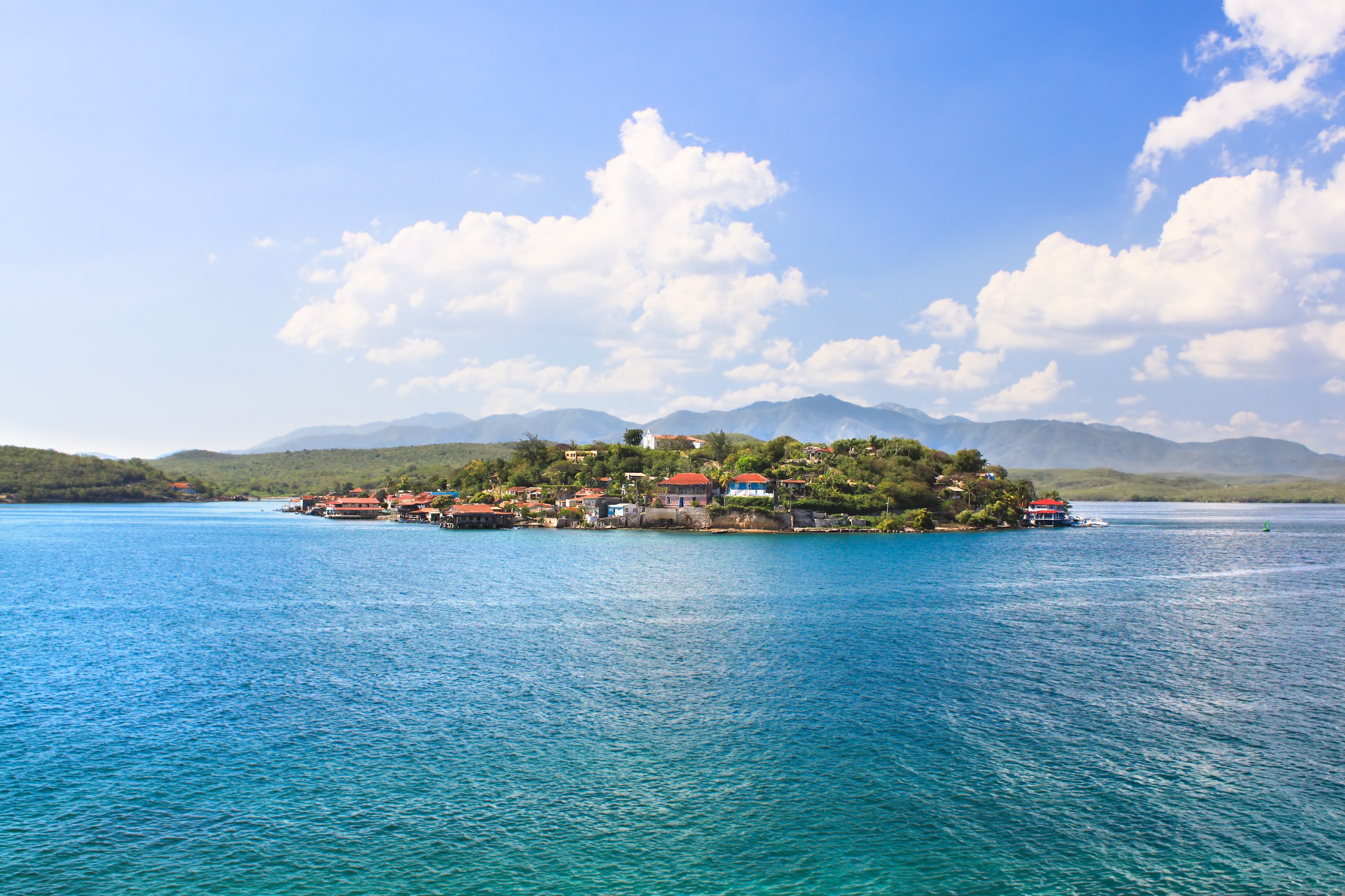
- Granma Islet: small island in Santiago Bay, accessible by boat from the port.
- Hummingbird House: another thematic stop in the region.
To extend the itinerary toward the country's center, the Che Guevara Mausoleum and Museum in Santa Clara makes for a coherent historical stop.
Frequently Asked Questions
Frequently asked questions
It occupies the south side of Céspedes Park, in Santiago de Cuba's historic center, seat of the archdiocese.
Four times. The first chapel dates to 1528, the second follows the raids including Henry Morgan's fire in 1662, the third was destroyed by the 1766 earthquake, and the fourth—the current building—was repaired after the 1852 earthquake.
It is a cross preserved in the cathedral, considered the sole material trace of Christopher Columbus's passage to the island of Cuba.
Yes, visits are possible during mass provided you maintain silence and respect the ceremony. These moments offer the best interior lighting, with doors open.
The House of Diego Velázquez, Cuba's first governor, stands 100 meters away and houses a museum of decorative arts with Moorish influences. Céspedes Park itself concentrates several notable colonial buildings.
Planning Your Trip
The cathedral fits naturally into a stay combining Havana, Santa Clara, and eastern Cuba. To build a custom itinerary including Santiago and its historic center, consult our Cuba travel experiences.
Interested in this visit?
We can include it in your personalised itinerary.