Iglesia del Cobre
Iglesia del Cobre
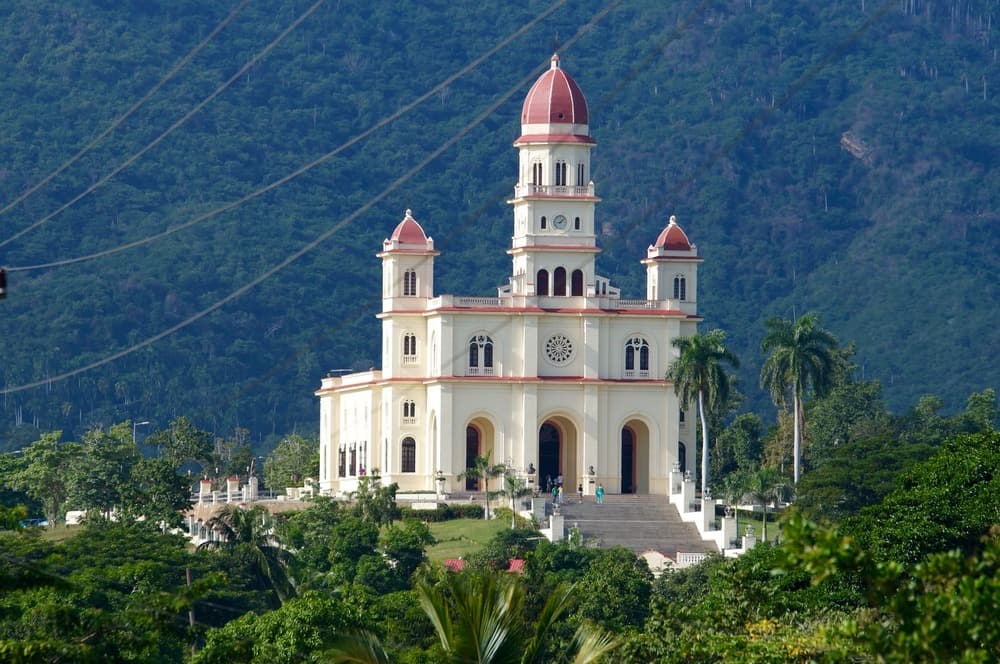
Sanctuary of the Virgin of Charity, patroness of Cuba, Iglesia del Cobre stands 27 km from Santiago, on Cerro de Maboa, facing the Sierra Maestra.
The Iglesia del Cobre, formally known as Basílica Santuario Nacional de Nuestra Señora de la Caridad del Cobre, is Cuba's principal Catholic sanctuary. Located in the village of El Cobre, approximately 27 km northwest of Santiago de Cuba, it houses the statue of the Virgin of Charity, nicknamed Cachita, the island's patron saint. The building stands atop Cerro de Maboa, surrounded by the foothills of the Sierra Maestra.
Why visit Iglesia del Cobre
The sanctuary brings together three complementary dimensions: religious, historical, and architectural. As the country's primary pilgrimage site, it attracts Cuban faithful from every province each year, as well as visitors seeking to understand the unique place of the Virgin of Charity in Cuban identity. The site also holds significance in the island's industrial heritage: El Cobre was the birthplace of the first copper mine exploited on the American continent, and the church is its direct heir. Finally, its ochre and white façade, perched on a hillside facing the Sierra Maestra, creates a singular setting that merits the journey from Santiago.
Historical notes
The sanctuary's origins trace back to an episode between 1611 and 1613. Two Indian brothers, Juan and Rodrigo de Hoyos, accompanied by a young Black boy named Juan Moreno, set out to gather salt in Nipe Bay on the island's northeast coast. Caught in a storm, they spot a statue of the Virgin floating on the water, attached to a plank bearing the inscription "Yo soy la Virgen de la Caridad" ("I am the Virgin of Charity"). The statue is recovered completely dry—a detail that would mark the tradition permanently.
A first rustic altar is erected in a hut at the Barajagua settlement, then the image is transferred to a chapel at the slave hospital of the mine in Real de Minas. In 1648, a hermitage is built near the copper mine's edge. This building would collapse in 1906 due to explosions from neighboring mining operations.
On May 10, 1916, at the request of Cuban War of Independence veterans, Pope Benedict XV bestows on the Virgin of Charity the title of Patron Saint of Cuba. The current sanctuary is built and inaugurated on September 8, 1927. On December 22, 1977, Paul VI proclaims it a minor basilica. On January 24, 1998, during his visit to Cuba, John Paul II crowns the Virgin on the Plaza Antonio Maceo in Santiago de Cuba. In 2011, a pilgrimage crosses the island to commemorate the 400th anniversary of the apparition.
What you'll see on-site
Exterior architecture
The basilica features a symmetrical façade in ochre and white tones, organized around three naves. The central nave is crowned by a dome that rises above two lateral bell towers, themselves topped with domes on square bases positioned at a lower level. Three full-arch arcs mark the main entrance. Large Gothic-influenced windows and a rose window reflect the building's eclectic character. Access is via an exterior staircase bordered by a wall punctuated with lamps.
The Virgin of Charity
Inside, in the central and upper part of the temple, the statue of Cachita is placed in a protected urn, visible from the main nave. It rests on a mobile altar of solid marble and silver, and wears the crown and mantle adorned with precious stones placed there by John Paul II in 1998.
The Capilla de los Milagros
Beneath the Camarín de la Virgen lies the Chapel of Miracles, where the faithful leave their offerings. You'll see accumulated jewelry, chains, Olympic medals, baby clothes, dresses, and all manner of personal objects that materialize a prayer or thanksgiving to the Virgin.
Practical information
- The sanctuary is open daily with broad hours covering morning and afternoon. Masses are held at specific times: it's best to inquire locally the day before.
- Entry is free. A contribution is appreciated for the sanctuary's upkeep.
- Appropriate dress required: shoulders and knees must be covered.
- Photography is permitted outside and in the nave; it is generally prohibited in the Capilla de los Milagros and during services.
- Allow 1 to 1.5 hours for the visit, longer if you attend a mass.
When to visit
September 8, the feast of the Virgin of Charity, is the year's major celebration. Thousands of pilgrims converge on El Cobre, and festivities span several days. The atmosphere is exceptional but the crowds make the visit more contemplative than touristic. To discover the sanctuary in calmer conditions, choose the dry season, November to April, avoiding midday and weekends. Since the Santiago region is one of Cuba's hottest areas, a morning visit remains your best compromise.
How to get there
El Cobre lies approximately 27 km northwest of Santiago de Cuba. From Santiago's center, take the old El Caney road, then turn left toward El Cobre. Several options exist: private or shared taxi from Santiago (the simplest choice, plan for round-trip with waiting time), local buses from the bus terminal, or organized excursions often combining Santiago and other nearby sites. The journey takes approximately 30 to 45 minutes depending on your mode of transport.
Nearby attractions
- Santiago de Cuba: the country's second city and historic capital of Oriente, a natural pairing with El Cobre.
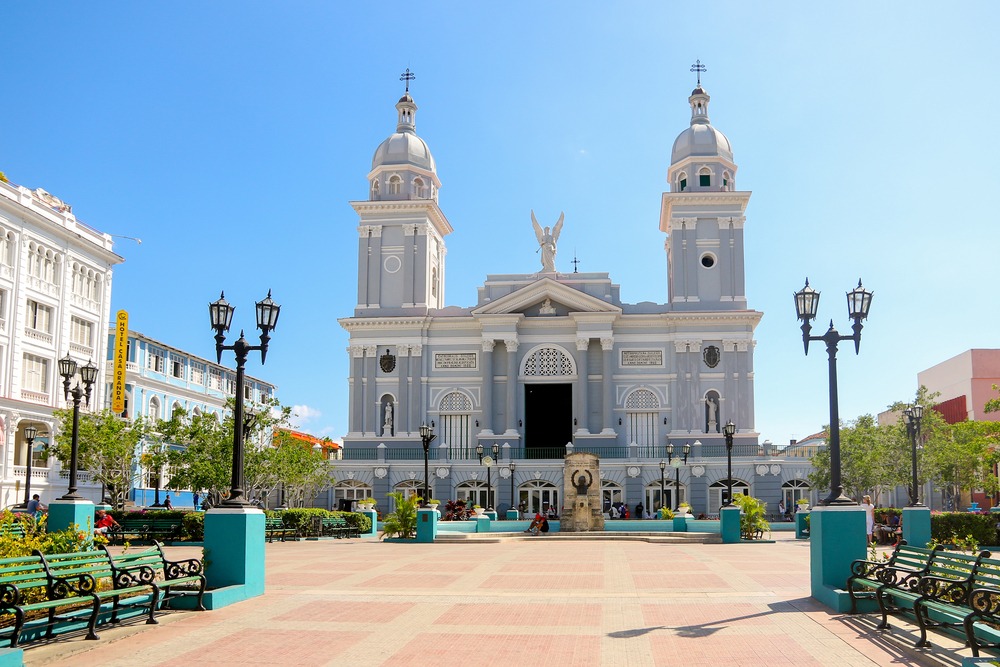
- Santiago Cathedral: the episcopal seat on Plaza de Céspedes, a logical complement to your religious visit.
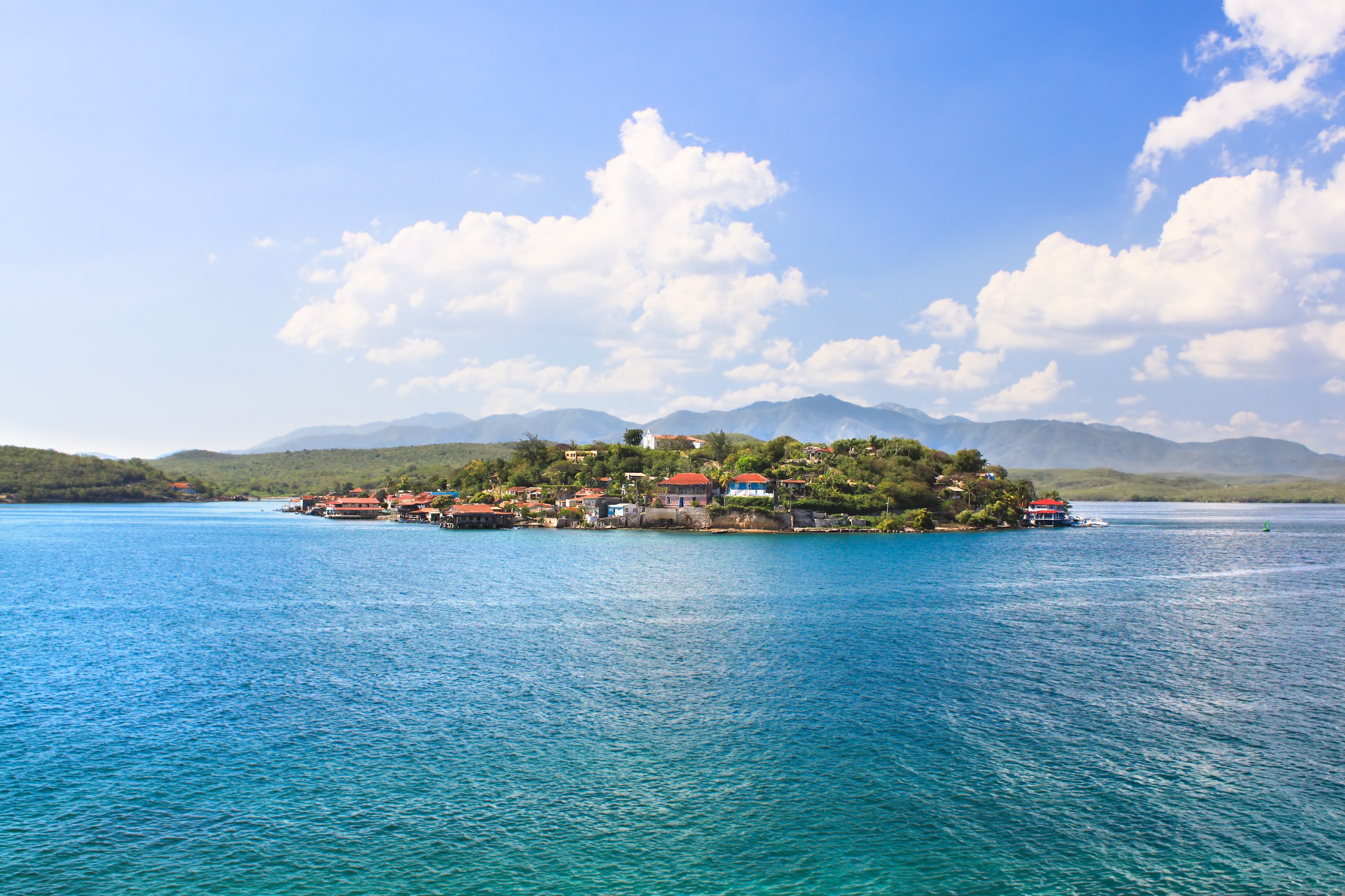
- Cayo Granma: a small fishing island in Santiago Bay, accessible by boat.
- Sierra Maestra: a mountain range framing El Cobre and rich in memories of the Cuban revolution.
Frequently asked questions
Frequently asked questions
Extending your visit
Iglesia del Cobre fits naturally into an itinerary centered on Cuba's Oriente region, between Santiago, the Sierra Maestra, and the southeast coast. To build a journey combining religious heritage, revolutionary history, and Caribbean landscapes, explore our Cuba itineraries.
Interested in this visit?
We can include it in your personalised itinerary.