Vedado District
Vedado District
Vedado brings together Plaza de la Revolución, the José Martí Memorial, the university, the Museo Napoleónico and the Malecón in Havana.
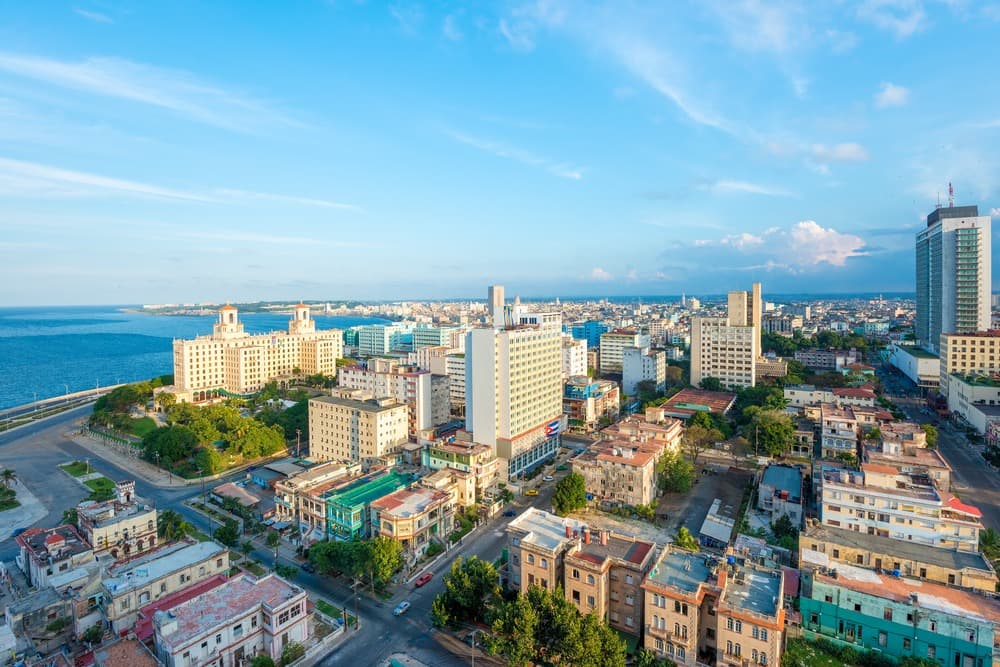
Vedado occupies the western edge of Havana, between the Malecón to the north and the Almendares River to the west. This residential and commercial district concentrates Art Deco skyscrapers from the 1920s–1950s, Plaza de la Revolución, the University of Havana, and several major museums. Plan for a half-day to a full day to explore it.
Why visit Vedado
Vedado offers a different face of Old Havana: wide avenues, modernist buildings, shaded parks, and architecture inspired by North American cities of the 1940s–1950s. The district brings together within a few square kilometers major sites of 20th-century Cuban history (Plaza de la Revolución, murals of Che and Camilo Cienfuegos), cultural institutions (University, Museo Napoleónico, Christopher Columbus necropolis), and the capital's most vibrant nightlife, centered around Calle 23 and La Rampa.
The Focsa Building, Cuba's tallest structure, and the José Martí Memorial dominate the district's skyline. The Malecón, which hugs the coast for 5 miles, serves as a natural promenade toward Centro Habana and Old Havana.
District history
The word vedado means "forbidden forest" or "nature reserve": the area was once forested and building was prohibited. The first houses date from 1860, but most structures were built between 1920 and 1950, when Havana became a major destination for North American tourism. Vedado filled with Art Deco buildings inspired by New York and Miami models.
During the 1950s, several hotels in the district housed casinos controlled by North American organized crime groups. Fidel Castro's rise to power in 1959 ended this activity: gambling was banned and foreign operators expelled. That same year, the former Civic Plaza was renamed Plaza de la Revolución.
Today, Vedado falls under the Plaza de la Revolución municipality and groups the consejos populares of Vedado, La Rampa, Vedado-Malecón, and Carmelo. It is home to roughly 175,000 residents. Avenue of the Presidents (Calle G) divides it into eastern and western halves.
What to see in Vedado
Plaza de la Revolución
Designed in 1920 by French urban planner Jean-Claude Forestier, who drew inspiration from Place de l'Étoile in Paris, the plaza extends over 172,000 square yards and can accommodate up to one million people during major gatherings. Originally called Civic Plaza, it was renamed Plaza de la Revolución in 1959. It remains the seat of several ministries and the site of official speeches.
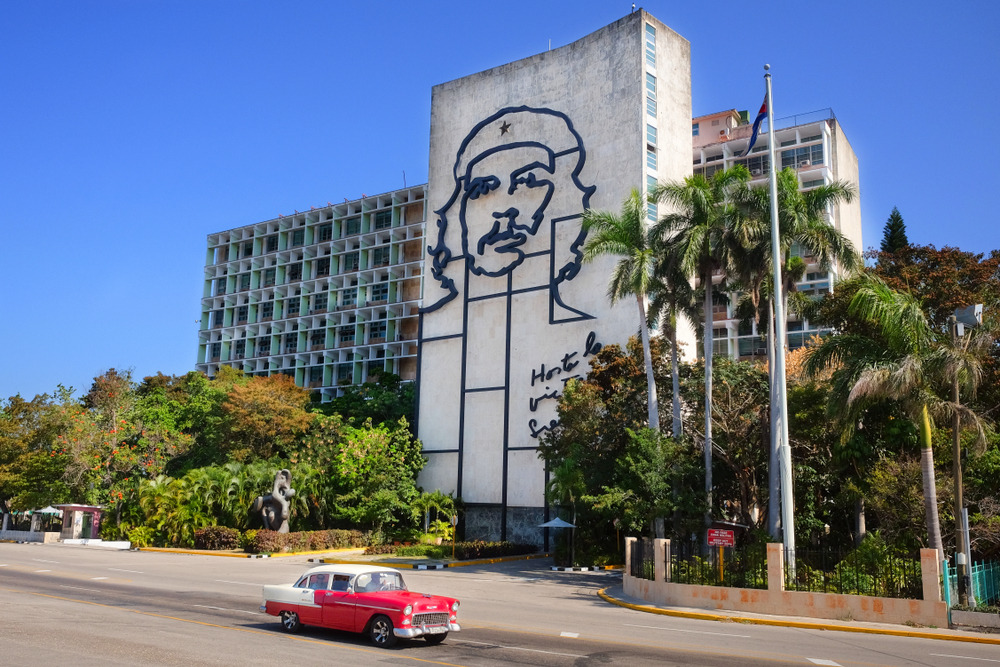
On the building of the Ministry of Interior, a metal mural of Che Guevara reproduces Alberto Korda's photograph accompanied by the phrase "Hasta la Victoria Siempre." On the telecommunications building, a similar mural depicts Camilo Cienfuegos.
José Martí Memorial
At the center of the plaza, the José Martí Memorial rises to 460 feet and features a six-pointed star plan measuring 258 feet in diameter, whose six pillars symbolize Cuba's former provinces. Before the monument stands a 56-foot marble statue of Martí seated and contemplative. On the ground floor, five halls house a museum dedicated to his life and work, including 79 Martí thoughts engraved in gold letters.
Built in 1958, the memorial has an observation deck at 423 feet, accessible by elevator (paid entry) or by 567 steps. The view spans all of Havana.
University of Havana
Founded in 1728 in Old Havana by the Dominican Order, the university was relocated to Vedado in 1902 in a new neoclassical building preceded by a grand monumental staircase. It was designated a National Monument in 1978. Fidel Castro, independence-minded priest Félix Varela, and philosopher Enrique José Varona studied here.
Museo Napoleónico
Located near the university in the former home of jurist and collector Orestes Ferrara, built in 1920 in the style of Renaissance Florentine palaces (Italian marble, wrought iron, precious woods), the museum displays nearly 7,000 objects related to Napoleon Bonaparte, assembled by Ferrara and sugar magnate Julio Lobo. On display are manuscripts attributed to Voltaire, paintings of the Battle of Waterloo, a pistol belonging to Napoleon, and furnishings from his bedroom. The 2011 renovation made it one of the most important Napoleonic collections outside France.
Necrópolis de Cristóbal Colón
In the southwestern part of the district, the Christopher Columbus necropolis covers 138 acres and ranks among the great cemeteries of the Americas. Buried here are independence fighter Máximo Gómez, politician Eduardo Chibás, and writer Alejo Carpentier. Notable sites include the Monument to Firefighters (1890) and the Chapel of La Milagrosa (1886, Neo-Romanesque style), a site of popular pilgrimage.
The Malecón and historic hotels
The Malecón runs along the coast for 5 miles, from Havana's port to the mouth of the Almendares River. It borders the northern edge of Vedado and offers an evening promenade favored by Havanans. Nearby: the Hotel Nacional (1930), whose Las Vegas-style casino once hosted American tourism figures before the Revolution, and the Hotel Habana Libre, the former Hilton inaugurated in 1958.
Nightlife and culture
Vedado concentrates Havana's main live music venues:
- La Zorra y el Cuervo: jazz club, Calle 23.
- El Gato Tuerto: bolero and filin concerts.
- Cabaret Parisien: variety show at Hotel Nacional.
- Submarino Amarillo: Beatles-themed club near Parque John Lennon.
The Saturdays of Rumba, held every other Saturday by the National Folkloric Ensemble on Calle 4 between Calzada and Línea, blend Afro-Cuban percussion, dance, and presentations on religions of African origin.
Practical information
- Duration of visit: a half-day for the main sites (Plaza de la Revolución, university, Malecón), a full day if you add museums and the necropolis.
- Admission fees: moderate. Entry to the José Martí Memorial and Museo Napoleónico are paid; the necropolis charges a modest entrance fee.
- Hours: museums and memorial typically close early evening and one day per week. Check on site before making the trip.
- Safety: the district is generally safe day and night, with standard precautions (personal effects, pickpockets around tourist hotels).
- Sun and heat: little shade on Plaza de la Revolución and the Malecón; bring a hat and water, especially between May and September.
Nearby areas
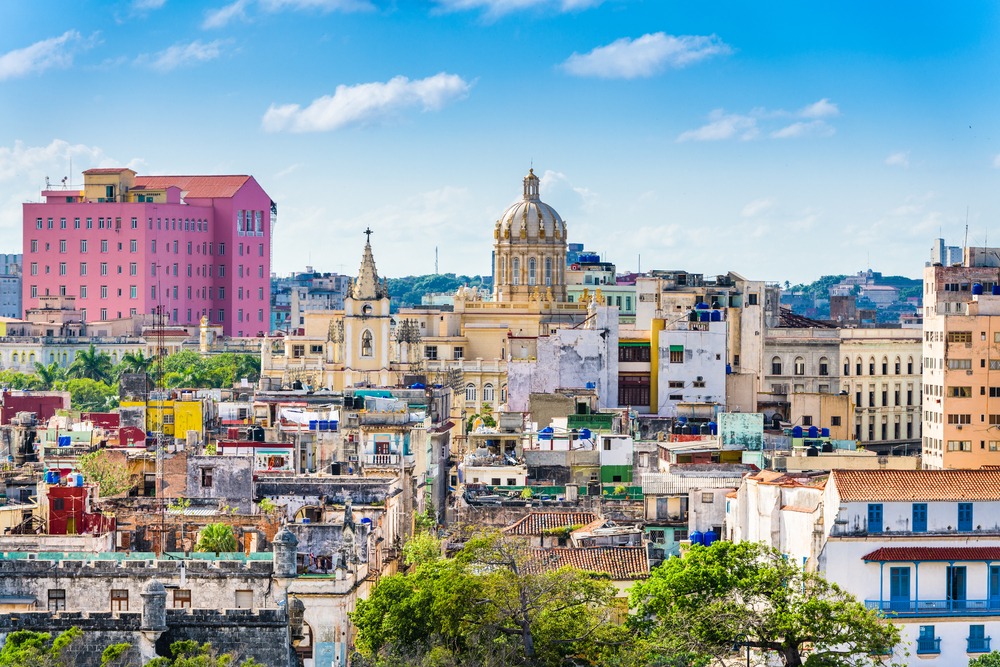
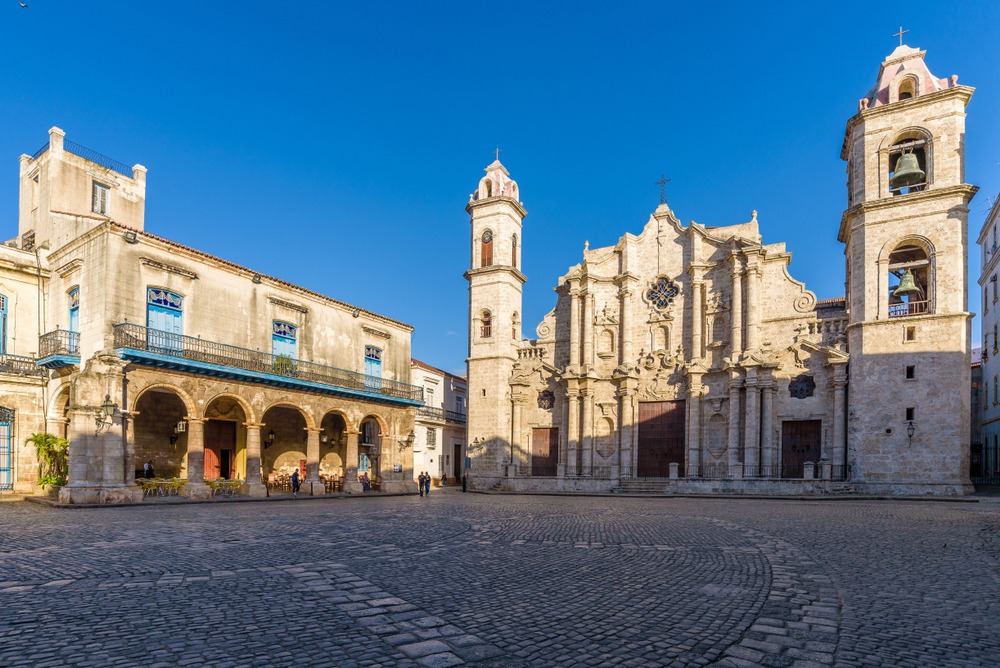
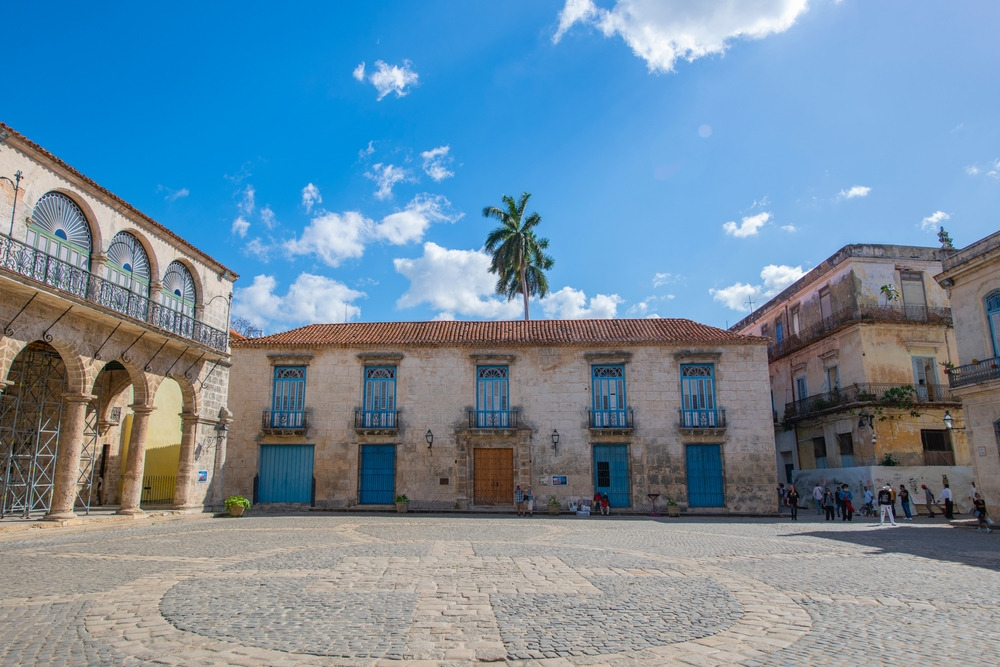
To the east, Centro Habana and Old Havana extend the visit with colonial urban fabric. To the west, beyond the Almendares River, the Miramar district lines embassies and villas from the 1950s. To explore other facets of Cuba, see also the Bay of Pigs, Jagua Castle near Cienfuegos, or the Santiago Cathedral.
How to get there
On foot
From Parque Central, count on about thirty minutes' walk along San Lázaro or the Malecón to reach Avenue of the Presidents.
By tourist bus
The T1 line of HabanaBus Tour connects Parque Central to Vedado and Plaza de la Revolución, with several stops in the district.
By taxi or vintage car
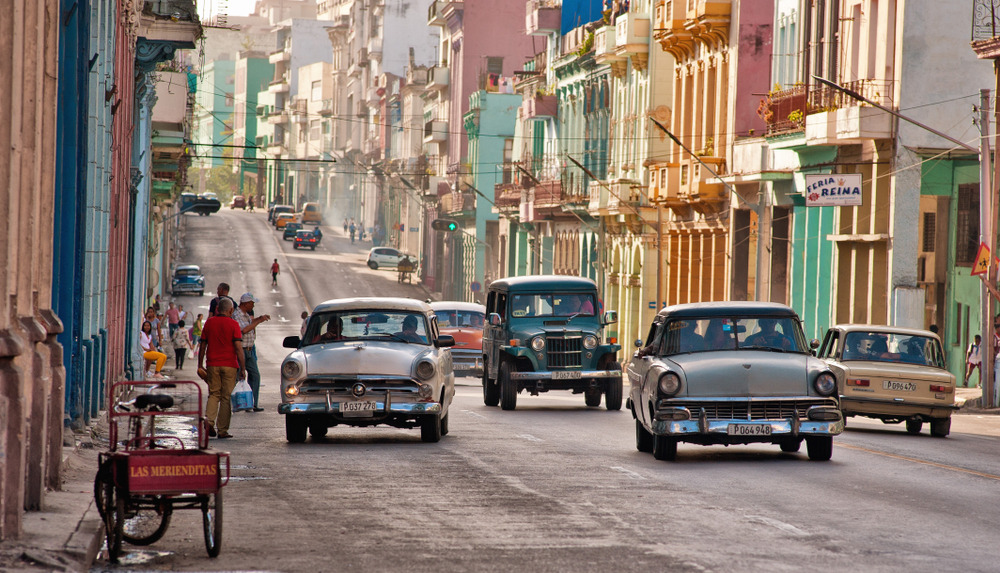
Official and shared taxis are plentiful. American convertibles from the 1950s offer guided tours of about two hours, passing the Malecón, Plaza de la Revolución, and Avenue of the Presidents.
Frequently asked questions
Frequently asked questions
A half-day suffices for Plaza de la Revolución, the university, and the Malecón. Plan a full day if you add the Museo Napoleónico, Christopher Columbus necropolis, and an evening of live music.
Yes, an observation deck at 423 feet is accessible by elevator (paid entry) or by 567 steps. The view spans all of Havana in clear weather.
The district is one of Havana's most lively after dark, centered around Calle 23, La Rampa, and the Malecón. Police presence is regular. Standard precautions suffice.
The simplest option is the HabanaBus Tour T1 line from Parque Central, or a taxi (about 15 minutes). On foot, the distance is too far to go directly.
The Museo Napoleónico for its unique collection in Latin America, and the José Martí Memorial museum to understand the tutelary figure of the Cuban nation.
Plan your trip
To include Vedado in a complete circuit across the island, consult our suggestions for traveling to Cuba.
Nearby
Interested in this visit?
We can include it in your personalised itinerary.