Old Havana
Old Havana
Historic heart of Havana, listed as a UNESCO World Heritage site in 1982: five colonial plazas, 900 heritage buildings, fortresses and baroque palaces on the western shore of the bay.
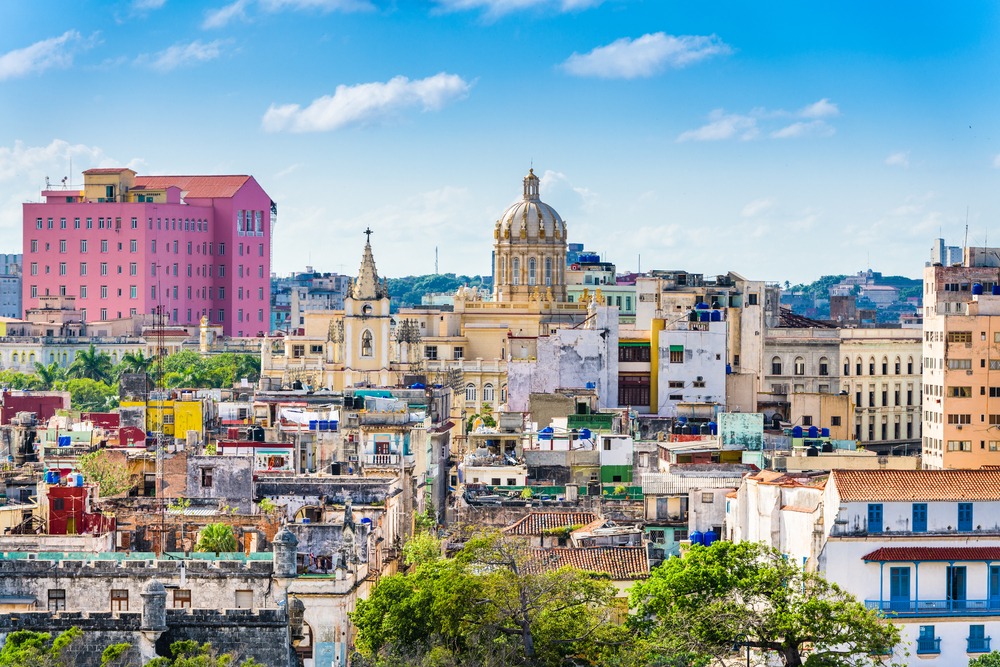
Old Havana (Habana Vieja) forms the historic heart of Cuba's capital. On the western shore of Havana's bay, this quarter concentrates nearly 900 buildings of heritage interest over a little more than 4 km². Listed as a UNESCO World Heritage site since 1982, it features baroque palaces, colonial churches, military fortresses and paved plazas inherited from five centuries of Spanish-American history.
Why visit Old Havana
Old Havana offers one of the best-preserved concentrations of colonial urban fabric in the Caribbean. Its appeal rests on three characteristics: an original urban layout that remains almost entirely intact (narrow streets, five major plazas arranged around the quarter), a coherent architectural mix combining Spanish baroque and 19th-century neoclassicism, and a complete port defence system, legacy of the great Spanish maritime routes. The quarter is home to approximately 95,000 residents, making it a heritage space that remains alive rather than museum-like.
History of Old Havana
The city was founded in 1519 by Spanish conquistadors, who exploited the natural harbour of the bay as a stopover for galleons linking New Spain to Seville. The strategic position quickly attracted corsairs: in 1555, French Huguenot Jacques de Sores plundered Havana and burned part of the city, abandoning it after finding only meagre plunder.
The episode prompted the Spanish Crown to seriously fortify the site. Work on the Castillo de la Real Fuerza, the island's first stone fortress, began in 1558. During the 17th century, the city grew thicker around this nucleus: convents, churches, aristocratic palaces and alleyways drew the plan still visible today. The oldest buildings thus date back to the first decades after the city's founding.
In the 20th century, building decay was slowed by the work of the Office of the Historian of Old Havana, whose restoration programmes enabled the gradual preservation and rehabilitation of the historic centre. This policy accompanied the inscription as a UNESCO World Heritage site in 1982.
What to see in Old Havana
The five major plazas
The spine of the quarter is organised around five plazas connected by paved streets:
- Plaza de Armas: the oldest, bordered by the Palacio de los Capitanes Generales
- Plaza Vieja: a civic and mercantile plaza, surrounded by restored 18th-century facades
- Plaza de San Francisco: opening onto the port, dominated by the basilica of the same name
- Plaza del Cristo: the most discreet, away from the main routes
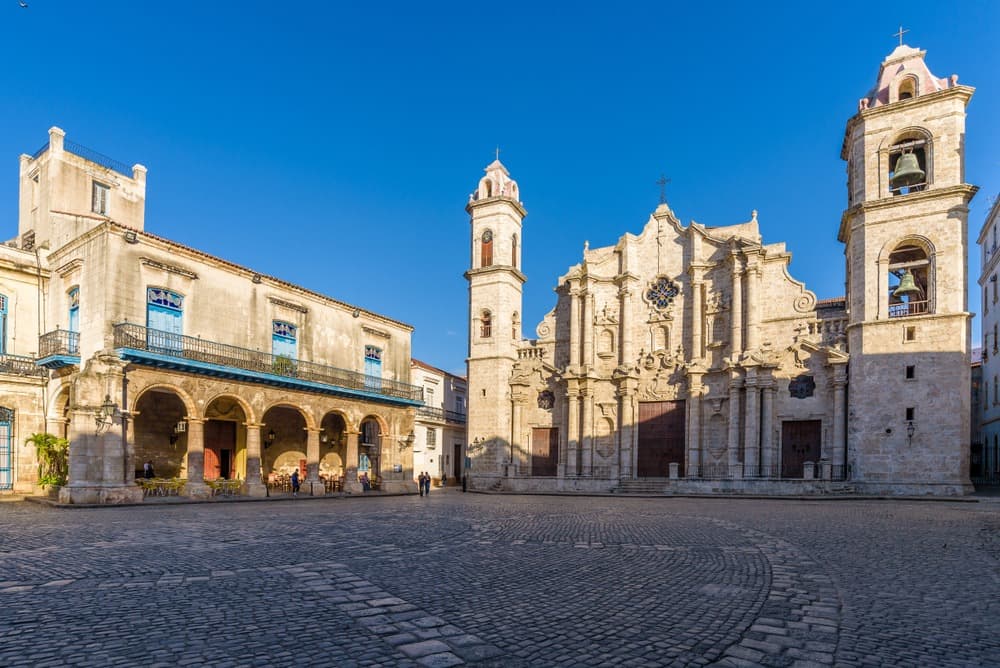
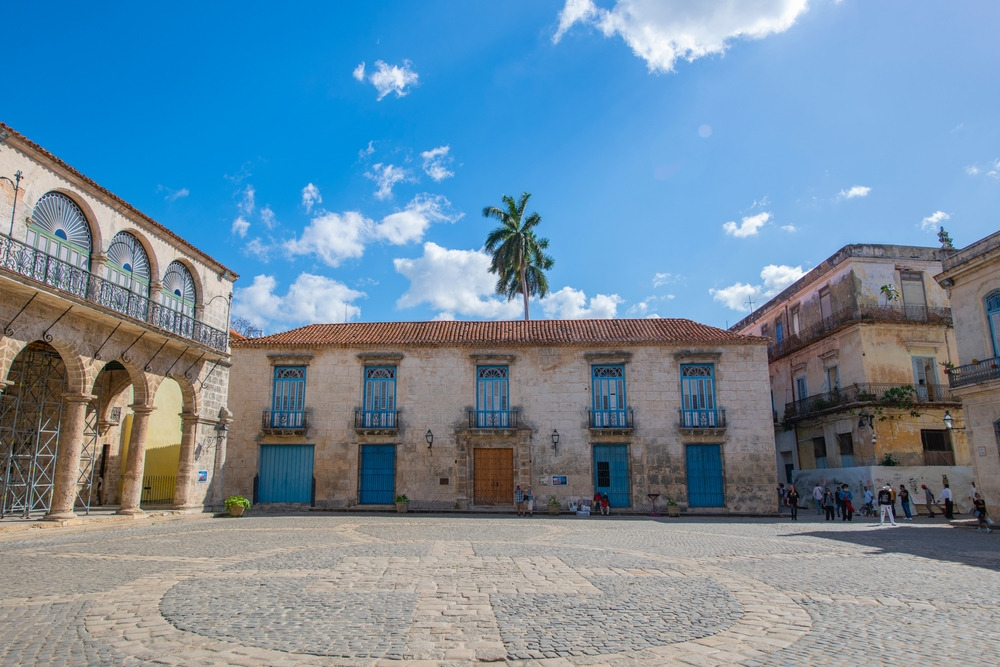
- Plaza de la Catedral: framed by the cathedral and several colonial palaces
The Model Museum
The Museo Maqueta de La Habana Vieja on Mercaderes Street presents a detailed scale model of the historic centre. It's a useful reference point early in your visit to locate monuments and itineraries. Mercaderes Street itself contains several thematic museums (rum, colonial art, maritime history).
The fortresses
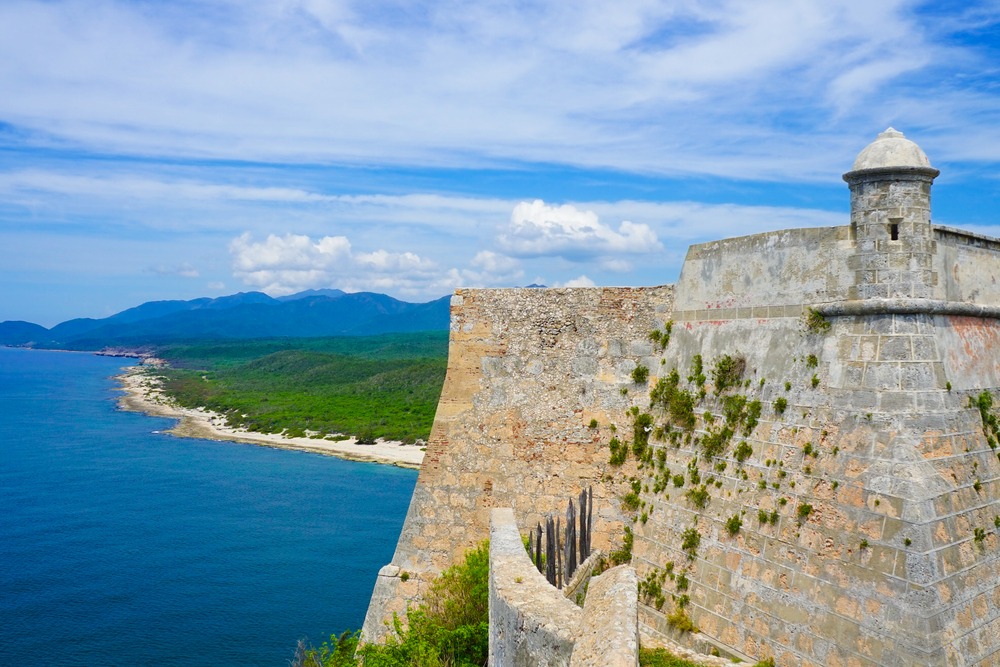
Port defence relies on a coherent ensemble that frames the entrance to the bay. On the western shore, the Castillo de la Real Fuerza ranks among America's oldest colonial fortresses. On the eastern shore, the Fortaleza de San Carlos de la Cabaña is one of the largest Spanish military works on the continent. The defensive system also includes the Castillo de San Salvador, the Castillo de los Tres Reyes del Morro, the Torreón de San Lázaro, the Castillo de Santa Dorotea de Luna de la Chorrera, the Garita de la Maestranza and the Cuerpo de Guardia de la Puerta Nueva.
The churches
The Basilica San Francisco, built between 1575 and 1738, exemplifies colonial baroque. The Cathedral of San Cristóbal on Plaza de la Catedral features a baroque exterior and a more restrained neoclassical interior. It housed the remains of Christopher Columbus from 1795 to 1898, before their repatriation to Seville.
The palaces
The Palace of the Marquis of Arcos on Plaza de la Catedral ranks among Cuba's best-preserved baroque civic buildings. The Palace of the Marquis of Aguas Claras, nearby, is organised around an Andalusian courtyard with a fountain. The Palacio de los Capitanes Generales on Plaza de Armas was the governor's residence, then the presidential palace in 1902, city hall in 1920, and today houses the Museo de la Ciudad.
Practical information
Most sites can be visited on foot: the quarter is compact and distances between plazas can be covered in minutes. Allow a full day for a comprehensive visit, two days if you enter several museums. Wear good walking shoes (the cobblestones are irregular) and bring water, as shade is rare in the plazas.
Museum hours and admission fees vary according to season and current policies; check locally or at your accommodation the evening before your visit.
When to go
The dry season, from November to May, remains the most comfortable period: stable temperatures, low rainfall, moderate humidity. Summer months (June to October) coincide with the hurricane season and heavy heat; outdoor visits are more challenging during midday hours.
How to get there
Old Havana is accessible on foot from most central accommodation. From more distant quarters or José Martí Airport, taxis remain the simplest option. For short trips within the quarter, bici-taxis and coco-taxis (small three-wheeled vehicles) are an economical choice suited to narrow alleyways.
Nearby
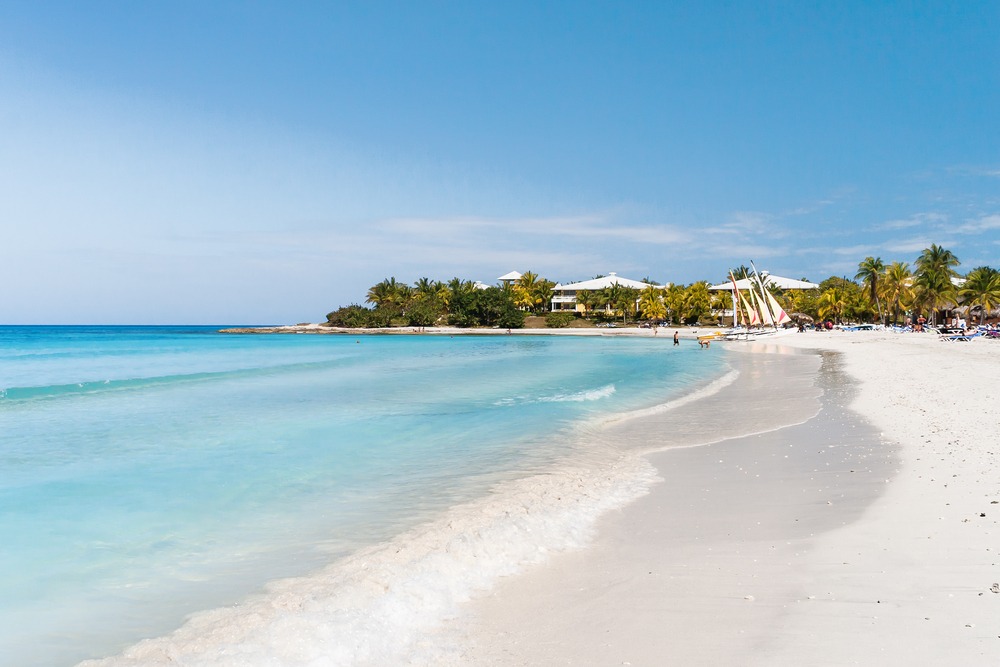
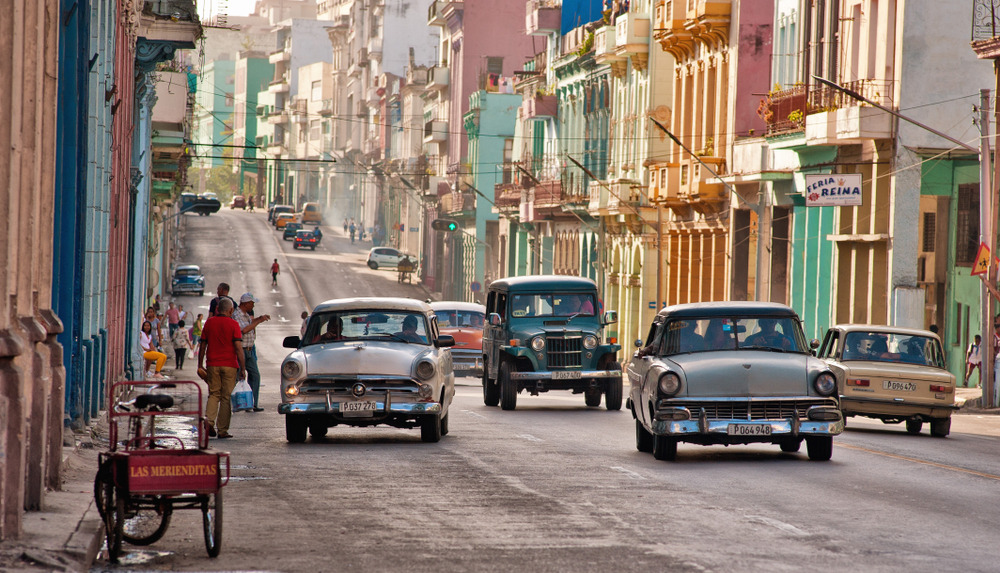
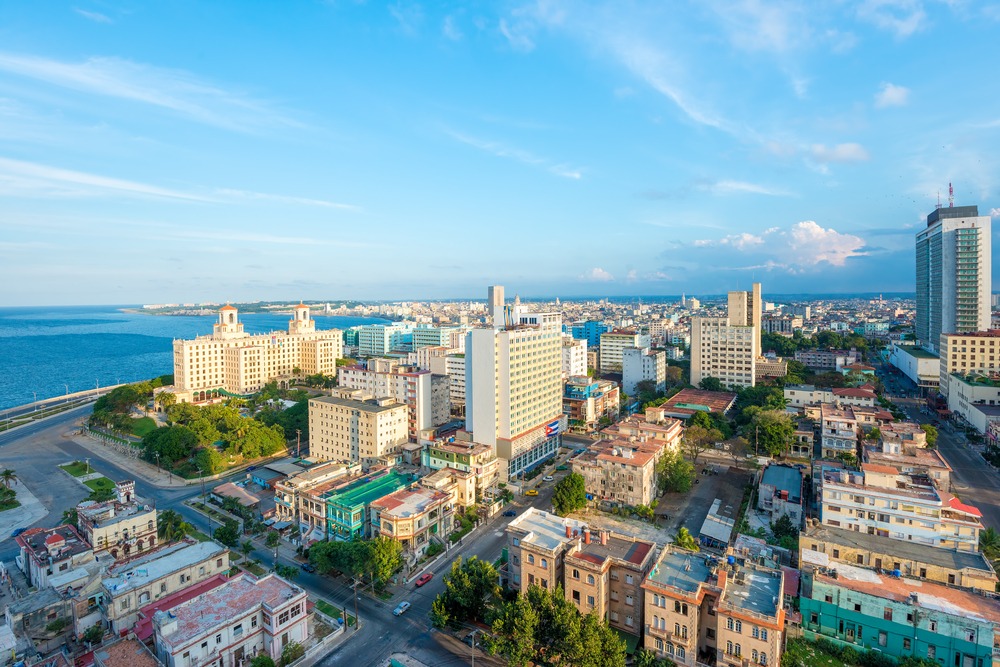
Beyond the boundaries of the historic quarter, several sites complement your visit. Centro Havana, immediately to the west, shows daily life in a less restored but more authentic Havana. Further afield, Cueva de los Portales and Playa Girón offer nature and historic memory contrasts to extend your Cuban stay.
Frequently asked questions
Frequently asked questions
One day allows you to tour the five plazas and enter two or three major sites. Allow two days to include several museums, the fortresses on the opposite shore, and to explore at leisure.
Yes. The quarter is compact and designed for walking. Bici-taxis and coco-taxis help reach more distant sites or during extreme heat.
The 1982 inscription recognises the exceptional preservation of the colonial urban plan, the stylistic coherence between baroque and neoclassicism, and the integrity of the port fortification system inherited from the Spanish empire.
From November to May, during the dry season. Summer months are possible but marked by heat, humidity and hurricane risk between August and October.
Prepare your trip
Old Havana is the classic starting point for any Cuban itinerary. To build a stay that combines urban heritage, beaches and countryside, check out our suggestions on our trips to Cuba.
Nearby
Interested in this visit?
We can include it in your personalised itinerary.