Che Guevara Mausoleum and Museum
Che Guevara Mausoleum and Museum
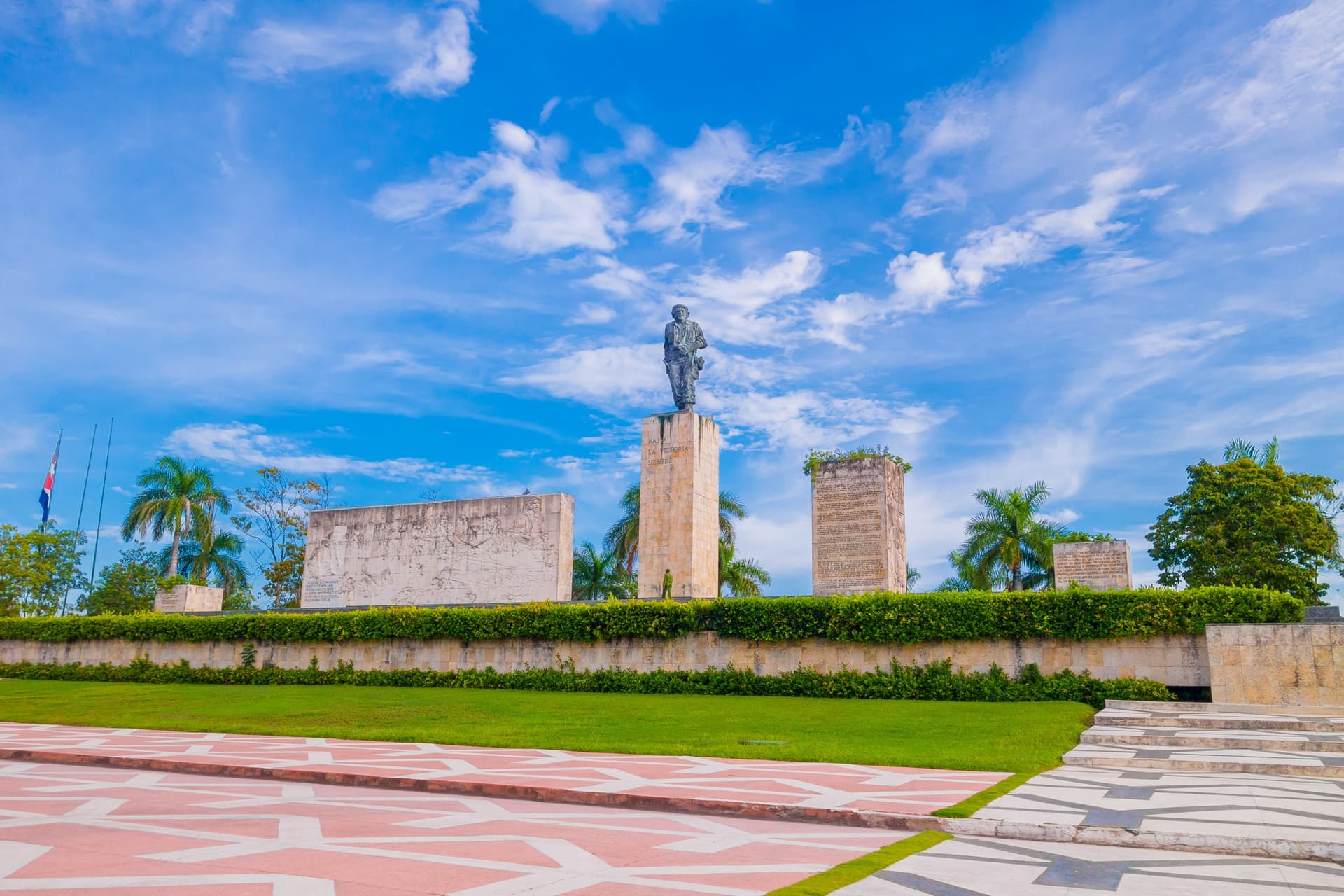
In Santa Clara, the Che memorial combines a mausoleum, crypt with 38 niches, biographical museum, and a monumental 7-meter bronze statue on the site of the 1958 battle.
The Ernesto Che Guevara Memorial stands in the western part of Santa Clara, on the Plaza de La Revolución. The complex brings together a mausoleum, a biographical museum, and a monumental bronze statue, dedicated to the Argentine guerrilla fighter and his companions who fell in Bolivia in 1967. Its official name: Conjunto Escultórico Memorial Comandante Ernesto Che Guevara.
Why Visit the Che Memorial
The site brings together in a single place three complementary dimensions of Cuban revolutionary memory: reflection (mausoleum and eternal flame), biographical knowledge (museum and personal objects), and symbolic reach (bronze statue facing South America). For those interested in 20th-century Latin American history or wishing to understand the Che's place in Cuban imagination, this is the most thoroughly documented site in the country.
The atmosphere here is deliberately subdued. Granite walls, soft lighting, silence requested: the design avoids grandiloquence and favors quiet reflection, even for visitors who do not share the historical figure's political ideals.
Site History and the Battle of Santa Clara
The choice of Santa Clara is no accident. It was here that the Che led, on December 31, 1958, a decisive battle against the troops of Fulgencio Batista. The central episode remains the assault on an armored train carrying reinforcements and military equipment toward the eastern part of the island. Hours after the city fell, Batista left Cuba.
The complex was built between 1982 and 1988 and inaugurated on December 28, 1988 in the presence of Raúl Castro. Its design brought together several architects and Cuban sculptor José Delarra. Nearly 500,000 residents of Santa Clara participated in the construction, contributing more than 400,000 hours of volunteer work.
On October 17, 1997, after the identification and repatriation of the Che's remains and those of several of his companions from Bolivia, Fidel Castro lit the eternal flame that burns today in the crypt. Five guerrilla fighters were never found: their names nonetheless appear on the commemorative niches.
What to See On-Site
The Bronze Statue
Inaugurated in 1987 on the occasion of the 20th anniversary of the Che's death, the bronze statue stands approximately 7 meters tall. It depicts Guevara in military uniform, rifle in hand, in a walking posture rather than an attacking one. The left arm is sculpted without a sling, in reference to a wound he refused to emphasize. The statue faces south, toward South America, echoing his ideal of Latin American unity. At its base, the engraved motto reads: "Hasta la victoria, siempre".
Nearby, a concrete block reproduces the farewell letter addressed to Fidel Castro in 1965, and a bas-relief traces several episodes of the Cuban Revolution.
The Mausoleum and Crypt
The crypt, maintained at constant temperature, holds 38 stone niches with names engraved in golden letters. The Che's tomb, marked with a star and illuminated by a light beam, occupies its center. Outside, the "Garden of Tombs" lines up 220 marble stelae facing the eternal flame, in memory of fighters who fell during various Guevarist campaigns.
The Biographical Museum
The museum, adjoining the mausoleum, traces Ernesto Guevara's life from his Argentine childhood to his death in Bolivia. The display follows several stages:
- his motorcycle journey across Latin America;
- his meeting with Fidel Castro in Mexico;
- the battles in the Sierra Maestra;
- the Battle of Santa Clara;
- his role as Minister of Industry in Cuba;
- his intervention at the UN and his missions in Africa.
The collection features personal objects: cameras, uniforms, rifle, doctor's notebook, asthma inhaler, childhood books, handwritten letters, beret, and tunic. The display offers a less iconic and more human reading of the figure, without masking his ideological weight.
Practical Information
- Opening days: Tuesday to Sunday, daytime hours. Closed Mondays. Exact hours vary; check on-site or with your guide.
- Admission: generally free entry, donations accepted. The separate Tren Blindado museum requires a separate ticket.
- Visit duration: allow 1.5 to 2 hours for the entire site (statue, crypt, museum).
- Interior rules: photography prohibited in the mausoleum and museum, silence requested, head uncovered.
- Crowding: the museum regulates visitor numbers; arriving early morning minimizes waiting time.
How to Get There
Santa Clara lies approximately 270 km east of Havana, on the central highway. Several options exist:
- Long-distance bus from Havana, Trinidad, or Cienfuegos (mainly Viazul company);
- Rental car or shared taxi, which allow you to combine Santa Clara with other stops in central Cuba;
- Train from Havana, slower and less reliable but possible.
The memorial is located west of downtown. A taxi from Vidal Park (historic center) takes about ten minutes.
Nearby Attractions
The memorial visit logically extends to the Monumento a la Toma del Tren Blindado, approximately 2 km to the east, where the original cars of the armored train derailed in December 1958 are displayed. Several personal effects of the Che are also presented there.
From Santa Clara, you can continue your itinerary toward Trinidad, Cienfuegos, and the Bay of Pigs, another major site of revolutionary memory. Further west, the Caguanes National Park offers a welcome natural contrast after Cuba's historical sites. To delve deeper into military history, the Jagua Castle near Cienfuegos is worth a visit.
Frequently Asked Questions
Frequently asked questions
Yes. They were identified in Bolivia and then repatriated to Cuba in 1997. Fidel Castro lit the eternal flame of the crypt on October 17 of that same year. Five of his fellow fighters, however, were never found.
No. Photography is prohibited in the mausoleum as well as in the museum. The outdoor statue and plaza are, however, open to photography.
Allow 1.5 to 2 hours for the statue, crypt, and museum. Add approximately 1 hour if you also visit the Tren Blindado.
The Viazul bus is the most popular option for travelers (approximately 4 hours travel time). Rental cars and shared taxis offer more flexible alternatives for combining multiple stops in central Cuba.
Memorial entry is generally free, with donations accepted. Cuban admission policies evolve: confirm with your guide or on-site.
To incorporate Santa Clara into a broader itinerary across the island, see our Cuba travel suggestions.
Interested in this visit?
We can include it in your personalised itinerary.