Caguanes National Park
Caguanes National Park
On Cuba's north coast, Caguanes National Park combines 79 caves, Taíno rock art, mangroves and coral cays within the Buenavista Biosphere Reserve.
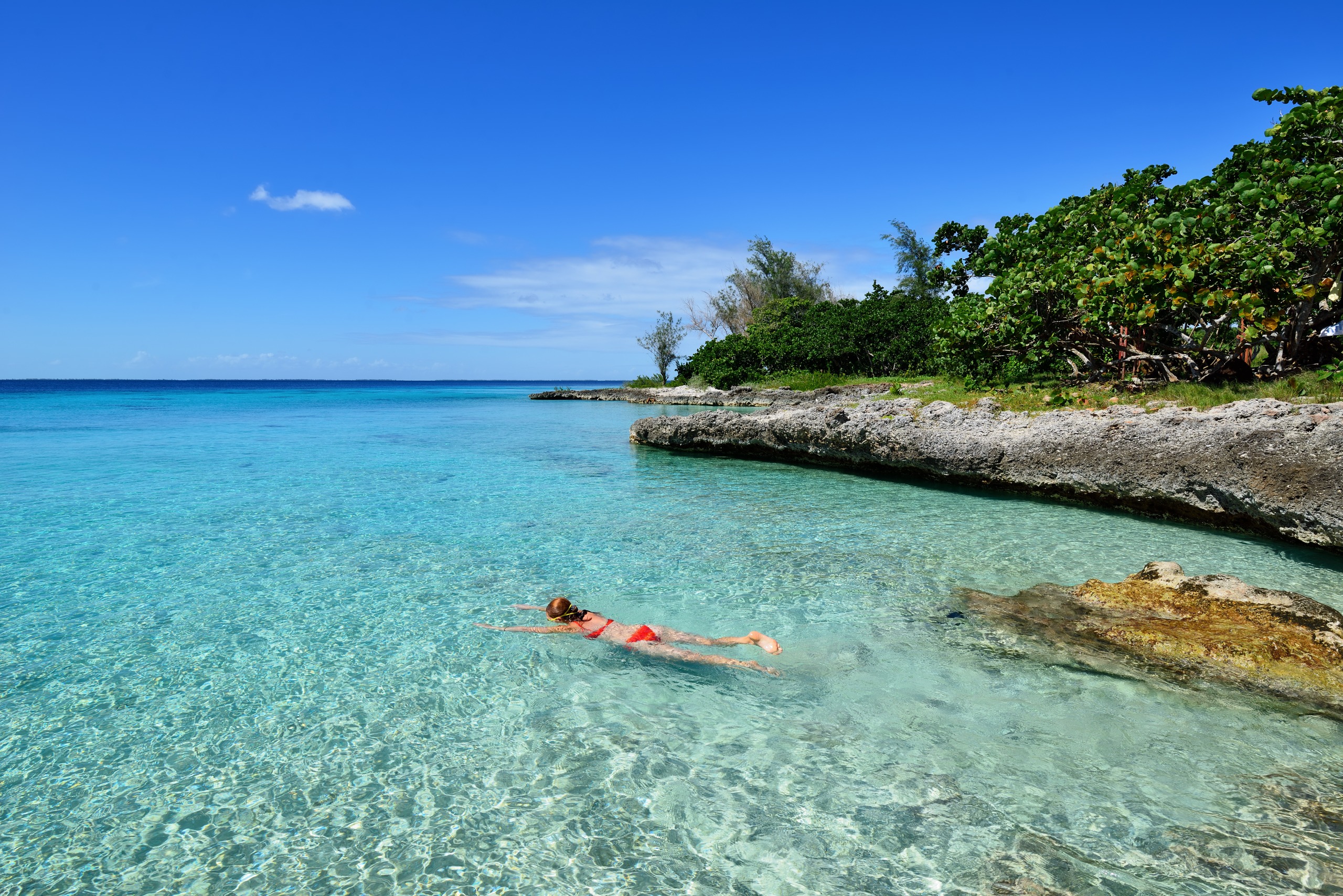
Caguanes National Park occupies a peninsula on Cuba's north coast, in Sancti Spiritus province, at the level of Yaguajay municipality. Spanning approximately 204 km², it combines mangroves, wetlands, karst formations and around a dozen coral cays scattered across Buena Vista Bay. Its reputation stems equally from its biodiversity and the density of its pre-Columbian archaeological remains.
Why visit Caguanes Park
Caguanes remains off the beaten path of major Cuban tourist circuits. Access is regulated, visits are mandatory with an accredited local guide, and visitors come for three main reasons: an underground network of nearly 11,500 meters of galleries, endemic fauna present even within the caves, and one of Cuba's most important collections of Taíno rock art. The park is part of the UNESCO-recognized Buenavista Biosphere Reserve and is listed among the Ramsar wetlands of international importance.
Status and history of the site
The territory was designated a national park in 2002, after a long period of degradation. In the 1990s, discharge from three neighboring sugar mills had severely affected bay water quality and caused aquatic bird populations to plummet. The gradual closure of these facilities allowed measurable ecosystem improvement: migratory species began returning from 2007 onward, and scientific monitoring continues today as part of the Buenavista Biosphere Reserve.
Long before this industrial history, Caguanes caves sheltered Cuba's indigenous populations. Thirty-five archaeological sites linked to the Taínos have been identified within the park's boundaries, and 29 prehistoric pictographs have been found in 18 different caves. Their dating, estimated within a broad range of 2,000 to 6,000 years, makes this one of the island's most significant rock art ensembles.
What to see and do
The cave network
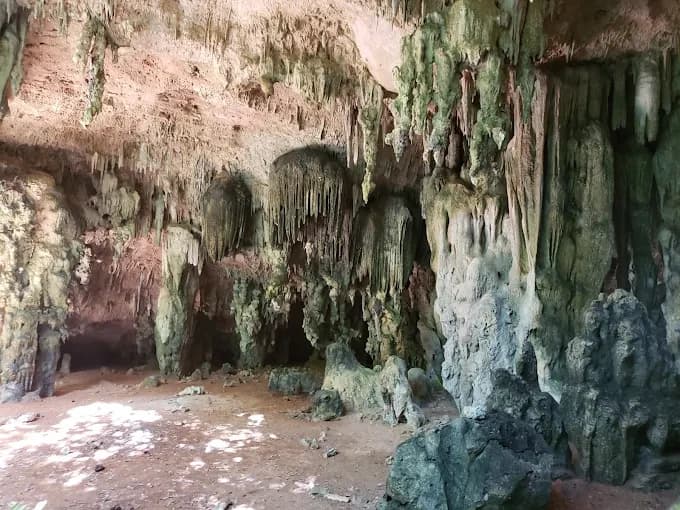
The park contains approximately 79 caves with nearly 11,500 meters of combined galleries, some partially submerged. A few cavities are open to accompanied visitors:
- Ramos Cave, famous for its pictographs and considered the archaeological emblem of the site.
- The great Humboldt Cave, the largest in the network open to the public.
- Pirate Cave, linked to legends of the north coast.
- Cueva del Agua, which harbors a species of blind fish adapted to underground life.
Fauna and flora
The park records over 200 tracked animal and plant species, including 24 endemic species. Birdlife is particularly well represented with more than 112 bird species observed, including flamingos, spoonbills, herons and pelicans. Nineteen bat species have been recorded in the caves, including the fishing bat, mariposa and Gervais's funnel-eared bat. The Cuban hutia, an endemic rodent, frequents wooded areas. A scientific curiosity worth noting: the pseudoscorpion Antillobisium tomasi, blind and unpigmented, has been described in only one cave within the park.
Along the coast, the waters are home to manatees, iguanas and sea turtles, and Buena Vista Bay contains the ten coral cays known as Cayos de Piedra. The Ciénaga de Guayaberas, a vast marshy zone, serves as a buffer area between terrestrial and marine habitats.
Possible activities
- Guided hikes across the peninsula, through semi-deciduous forests and mangroves.
- Guided spelunking in one or more caves depending on water levels.
- Boat excursions to the Cayos de Piedra and exploration of mangrove channels.
- Birdwatching, most productive between November and April.
Practical information
Visits are exclusively with an accredited local guide; there are no free-access marked trails. Rates and durations vary depending on chosen activities (caves only, boat trip, full day): plan generally a half day for a targeted visit, a full day if you combine caves and navigation. Booking is arranged from Yaguajay or through an agency in Sancti Spiritus. Bring closed-toe shoes, a headlamp, water and insect repellent.
When to go
The dry season, from November to April, is considerably more favorable: milder temperatures, less aggressive mosquitoes, easier navigation in the bay and passage of migratory birds. The wet season remains feasible but certain caves may be inaccessible due to water levels.
How to get there
The park is reached by road from Mayajigua, passing through the village of Maximo Gomez, then taking the Mayajigua-Nela road. The rural community of Nela is located approximately 9 km from the park entrance. Allow 1.5 hours from Sancti Spiritus and about 2.5 hours from Santa Clara. There is no direct public transport: a rental car or a transfer organized by an agency remain the most reliable options.
What to see nearby
Caguanes fits naturally into a broader itinerary across central and southern Cuba. Within a day's drive, you can continue to the Bay of Pigs, a site of historical significance and diving, or to Jagua Castle overlooking Cienfuegos Bay. Further east, the hummingbird house and Santiago Cathedral complete a nature and heritage tour.
FAQ
Frequently asked questions
No. Access is regulated to protect ecosystems and archaeological sites. Visits are mandatory with an accredited local guide, typically from neighboring communities.
The dry season, from November to April, offers the best conditions: easier navigation in the bay, fewer mosquitoes and passage of migratory birds.
A half day is sufficient for a targeted cave visit; allow a full day if you add a boat trip to the Cayos de Piedra.
The park contains 35 archaeological sites linked to the Taínos and 29 prehistoric pictographs spread across 18 caves, including Ramos Cave. It is one of Cuba's most important rock art collections.
From Sancti Spiritus, allow approximately 1.5 hours via Mayajigua, then Maximo Gomez and the Mayajigua-Nela road. The park entrance is located 9 km beyond Nela.
Prepare your journey
Caguanes fits naturally into an itinerary centered on Sancti Spiritus province and central Cuba. To build a custom tour combining nature, archaeology and colonial heritage, consult our dedicated page on Cuba travel.
Interested in this visit?
We can include it in your personalised itinerary.