Jobo Rosado
Jobo Rosado
A 40 km² reserve in the Sierra de Meneses y Cueto, near Yaguajay: trails, caves, biodiversity and the legacy of Camilo Cienfuegos' column.
Jobo Rosado is a small rural village and natural reserve spanning 40 km² located in the north of Sancti Spíritus province, approximately 13 km from the municipal seat of Yaguajay. A place of memory for the Cuban Revolution and recognized biodiversity zone, this mountainous territory of the Sierra de Meneses y Cueto remains off the beaten tourist path and appeals to travelers interested in nature, hiking, and the contemporary history of Cuba.
Why visit Jobo Rosado
Three main reasons warrant a detour to Jobo Rosado. First, the historical significance of the site: it was here that Camilo Cienfuegos established in 1958 the Northern Front of Las Villas, a key stage in the revolutionary campaign. Second, the ecological richness of the reserve, which is home to more than 300 plant species and nearly 400 animal species recorded across a karst landscape dotted with caves, waterfalls, and natural pools. Finally, the rural character of the place, where Cuban cooperative agriculture, forest trails, and mountain hamlets offer an image far removed from the classic circuits of Havana or Trinidad.
History: Camilo Cienfuegos and the Northern Front of Las Villas
On October 8, 1958, invasion column no. 2 "Antonio Maceo," led by commander Camilo Cienfuegos, reached the Jobo Rosado area after a long march from the Sierra Maestra. Two rebel encampments were rapidly established there.
The first, at Jobo Rosado itself, became the headquarters of the Northern Front of Las Villas, tasked with coordinating military operations in this part of the island's center. The second, located at Montalvo, temporarily housed Cienfuegos before he launched his strategic march toward Yaguajay, the city where one of the final battles before the fall of Batista's regime would take place. A commemorative monument has been erected on the site of the former encampment and marks this moment in the conflict today.
What to see and do
The managed resources reserve
The protected area covers approximately 40 km² and constitutes the natural heart of the territory. According to official inventories, it contains 305 plant species (229 genera, 77 families), including 18 orchid species, as well as 389 animal species (324 genera, 147 families): 262 invertebrates, 127 vertebrates, including 203 insects, 87 birds, 35 mollusks, and 21 reptiles. Birdwatchers observe notably the grassquit, the Cuban trogon, and the Cuban screech-owl, a small owl endemic to the Antilles.
The trails
Chalet Los Álamos, a former plantation house located near Meneses, serves as the starting point for the main hikes:
- The Maria Goya trail, which combines forest landscapes and revolutionary historical sites.
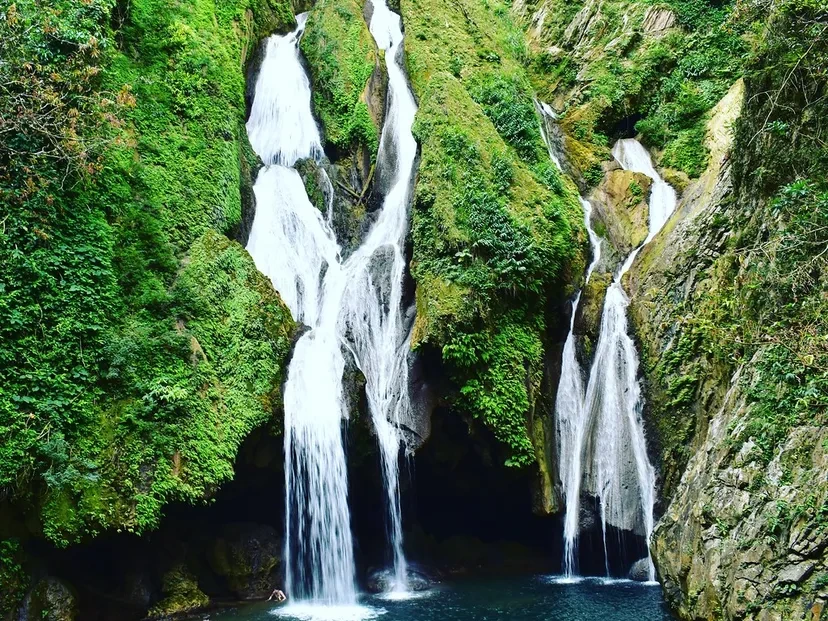
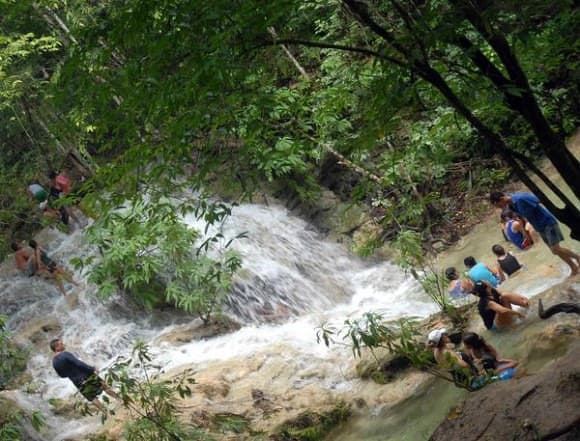
- The Solapa de Genaro, a short walk of approximately 1 km through tropical savanna, leading to waterfalls and pools suitable for swimming.
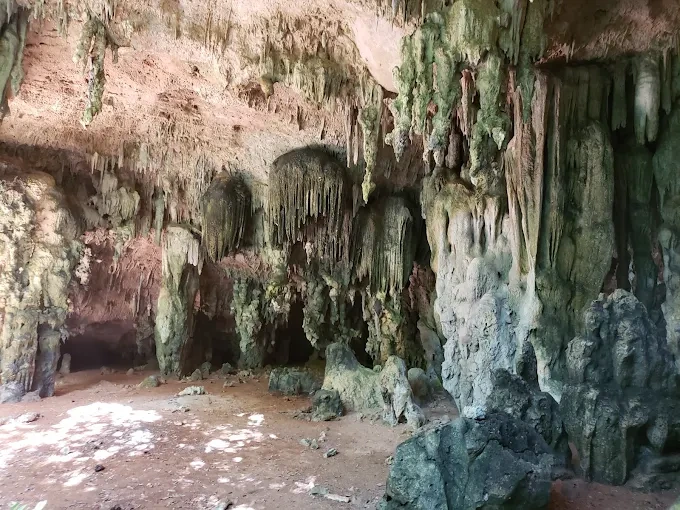
- The Cueva de Valdés trail, 800 m long, which crosses semi-deciduous forest before reaching a cave carved into the karst landscape.
For experienced hikers, three-day treks allow for deeper exploration of the reserve, its forests, hills, and savannas. Good physical fitness is required and guidance by a local guide is recommended.
The village and cooperatives
The village of Jobo Rosado falls under the Turquino I municipal council and spans approximately 5 km² at an average altitude of 204 meters. Its economy relies on two cooperative structures, UBPC Jobo Rosado and CCS Camilo Cienfuegos, dedicated to subsistence agriculture. Several national programs—the Turquino Plan, Energy Revolution, Battle of Ideas—have contributed to equipping the locality with schools, libraries, bakeries, and drinking water networks. Environmental management falls under the National Enterprise for Flora and Fauna Protection.
Practical information
Visiting the reserve is organized primarily from Chalet Los Álamos, which offers rustic accommodation and serves as a base for guided hikes. Circuits are most often led by local operators, as independent access remains difficult due to lack of detailed signage. Plan for hiking shoes, lightweight long-sleeved clothing, mosquito protection, water, and snacks. For duration, allow a half-day for short trails and three days for the complete reserve trek.
When to visit
The climate is humid tropical, with variations depending on altitude. The dry season, from November to April, offers the most favorable conditions for hiking: passable trails, milder temperatures, and better visibility. The rainy season, from May to October, makes some routes muddy and rivers more difficult to cross, but it is also when vegetation is densest and birdwatching remains very active. Bird enthusiasts should plan for early mornings year-round.
How to get there
Jobo Rosado is located approximately 60 km from Sancti Spíritus, the provincial capital, and roughly 130 km from Trinidad. Car rental or private taxi remain the most practical options, as the area is poorly served by public transportation. From Yaguajay, plan for about ten kilometers on secondary roads to reach the village. A local guide or driver familiar with the region greatly facilitates access to Chalet Los Álamos and the trail starting points.
What to see in the region
Central Cuba offers several extensions to a stay at Jobo Rosado. Yaguajay, site of the final battle led by Cienfuegos in December 1958, houses a museum dedicated to this episode. Sancti Spíritus, one of the first cities founded by the Spanish in Cuba, retains an interesting colonial center. Further south, Trinidad and its Valley of the Sugarmills constitute a classic cultural stop. On the southern coast, the Jagua Castle near Cienfuegos illustrates 18th-century Spanish military architecture.
Frequently asked questions
Frequently asked questions
In the north of Sancti Spíritus province, in the municipality of Yaguajay, approximately 13 km from the municipal seat, in the Sierra de Meneses y Cueto. The area is located about 60 km from Sancti Spíritus and 130 km from Trinidad.
A local guide is strongly recommended. The trails are poorly marked and a guide enables identification of fauna and flora, particularly endemic bird species.
The dry season, from November to April, offers the best conditions for hiking. The wet season is possible but trails are more difficult.
Yes, Chalet Los Álamos, a former plantation house near Meneses, offers rustic accommodation serving as a base for hikers. Other options exist in Yaguajay and Sancti Spíritus.
Jobo Rosado housed the headquarters of the Northern Front of Las Villas in October 1958, led by Camilo Cienfuegos, shortly before the Battle of Yaguajay. A commemorative monument marks the location of the former encampment.
Plan your trip
Jobo Rosado naturally integrates into an itinerary centered on central Cuba, between Sancti Spíritus, Trinidad, and the northern coast. To build a custom circuit blending nature, history, and culture, consult our suggestions for Cuba travel itineraries.
Interested in this visit?
We can include it in your personalised itinerary.