José Marti Park in Cienfuegos
José Marti Park in Cienfuegos
Historic heart of Cienfuegos and founding point of the city in 1819, José Marti Park concentrates commemorative monuments and neoclassical architecture listed as UNESCO World Heritage.
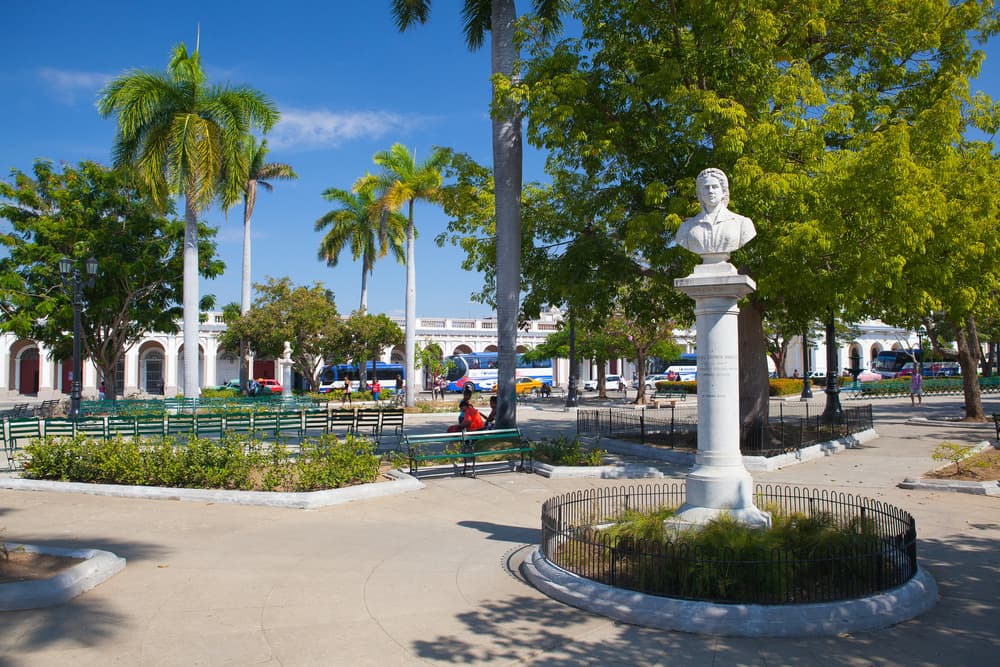
José Marti Park occupies the historic heart of Cienfuegos, a city founded in 1819 on Cuba's southern coast. As the founding plaza of the urban layout, lined with neoclassical buildings and dotted with commemorative monuments, it forms the central point of the historic center inscribed as a UNESCO World Heritage Site in 2005.
Why visit José Marti Park
This park of approximately 2 hectares concentrates the urban, political, and architectural history of Cienfuegos. In just a few steps, you traverse two centuries: the marble rosette marking the zero point of the city's foundation, the triumphal arch erected by workers in 1902, the statue of José Marti signed by Italian artist Giovanni Nicolini in 1906, and a procession of busts and monuments dedicated to local figures.
Surrounding the plaza rises one of the best-preserved neoclassical ensembles in the Caribbean: cathedral, government palace, Tomás Terry Theater, Ferrer Palace. This architectural coherence justified the UNESCO listing of Cienfuegos's historic center in 2005.
History of the park
Cienfuegos was founded on April 22, 1819, under the name Fernandina de Jagua. Frigate captain Félix Bouyón chose a majagua tree (a tropical hibiscus) as the starting point for the city's layout. Around this landmark, the first 25 blocks of the city were drawn. Today, a white marble rosette inlaid in the ground materializes this founding moment: the bay appears in blue, the fields in green, the district in light brown, and the city in dark brown. A compass rose marks Cienfuegos's zero point.
The plaza was initially named Plaza de Ramirez, in honor of Don Alejandro Ramirez, the island's general administrator. Thirty years after its creation, it was enlarged to nearly 2 hectares, becoming a space of power bordered by a church, the governor's palace, the town hall, a hospital, and barracks.
Over the ages, it changed names several times:
- Plaza de Ramirez
- Plaza Real de San Fernando
- Plaza de la Reina
- Plaza de Recreo
- Plaza de la Independencia
- Salón Serrano
On October 10, 1906, it was officially renamed José Marti Park in honor of the poet and hero of Cuban independence. The marble statue of José Marti, sculpted by Italian artist Giovanni Nicolini, was inaugurated that same year. A major restoration in 1925 established the harmonious image we know today.
The park was also a place of political engagement. On September 5, 1957, it became one of the key focal points of an armed popular uprising against the dictatorship of Fulgencio Batista, an episode that permanently anchored the site in national memory.
What to see on site
Monuments in the park
The park's sculptural inventory developed over nearly a century:
- The two marble lions purchased in New York in 1862 on the orders of governor José de la Pezuela, framing the eastern entrance on tall pedestals.
- The Salón Serrano, a paved promenade named in honor of captain Francisco Serrano.
- The statue of José Marti (1906), signed by Giovanni Nicolini.
- The Triumphal Arch, at the western end, erected in 1902 by the local labor movement: it is Cuba's only triumphal arch, built to commemorate the birth of the Republic.
- The bandstand built in 1921, which still hosts concerts.
- The bronze bust of Antonio Reguera Acea (1920), a local patriot.
- The monument to Ramón Maria de Labra (1919).
- Sculptures dedicated to poets Antonio Hurtado del Valle and Clotilde del Carmen Rodriguez (1921).
- The monument to physician Alfredo Méndez Aguirre (1937).
- The bust of philanthropist Nicolás Salvador Acea (1944).
Vegetation accompanies this memorial journey: royal palms, flamboyant trees, ceibas, and majaguas.
Buildings around the plaza
The plaza is bounded by San Carlos Street (Avenue 56), San Fernando Street (Avenue 54), Santa Isabel Street (Street 29), and San Luis Street (Street 27). Four buildings deserve particular attention:
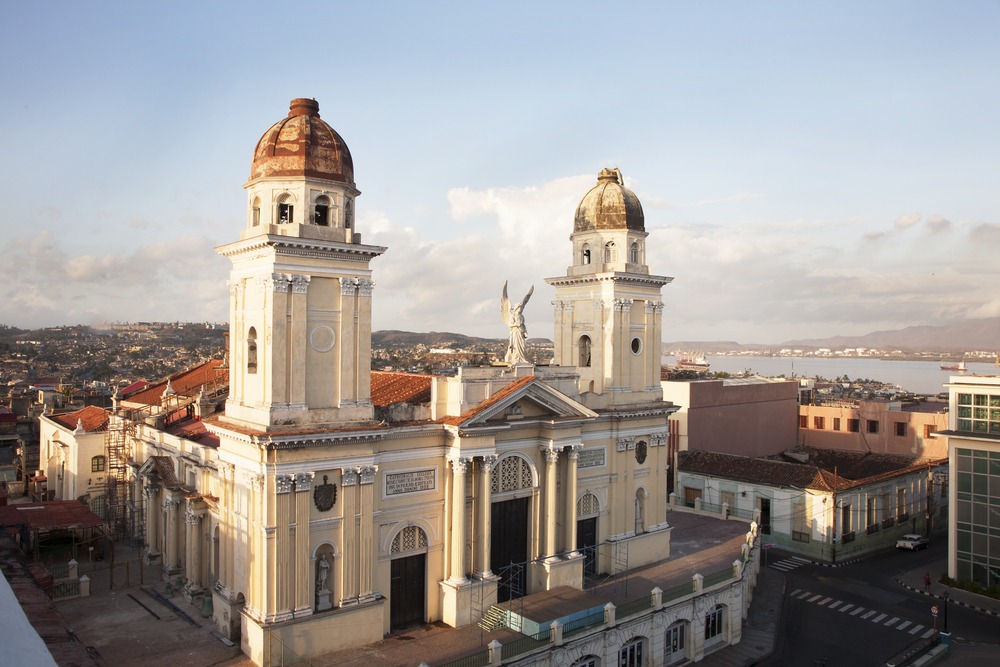
- The Cathedral of the Purisima Concepción, constructed between 1833 and 1869, recognizable by its two asymmetrical bell towers and stained-glass windows depicting the twelve apostles.
- The Palacio de Gobierno, inspired by the Capitol in Havana, which today houses the provincial government seat.
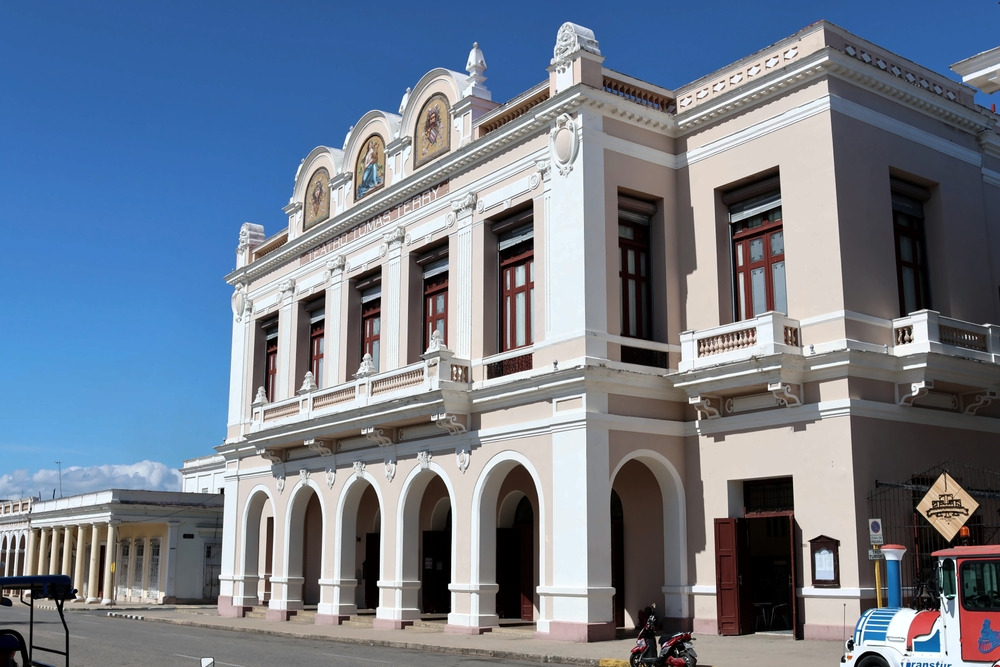
- The Tomás Terry Theater, in Italian style, adorned with Venetian mosaics and featuring a U-shaped hall. It hosted Caruso, Sarah Bernhardt, and Jorge Negrete.
- The Ferrer Palace, built by José Ferrer Sirés, which houses the Benjamin Duarte House of Culture. Its dome offers a panorama of the city.
- The former San Lorenzo College, founded thanks to Nicolás Jacinto Acea, which became the 5 de Septiembre secondary school.
Practical information
- Access: the park is located in the heart of Cienfuegos's historic center, within walking distance of most accommodations in the colonial quarter.
- Admission: free access at all times; some surrounding buildings (Tomás Terry Theater, Ferrer Palace) charge a modest entry fee.
- Duration of visit: allow 1 to 2 hours to tour the park and linger at the monuments; half a day if you include visits to neighboring buildings.
- Best time to visit: the dry season, from November to April, offers the most pleasant conditions. Late afternoon is the best time to enjoy the light on neoclassical facades and local activity.
- Heritage status: the park is listed as a National Monument (the exact date is subject to disagreement among sources, around 1978-1982); Cienfuegos's historic center has been inscribed as a UNESCO World Heritage Site since 2005.
To combine in the region
José Marti Park naturally fits into a stay in Cienfuegos province and more broadly in central Cuba:
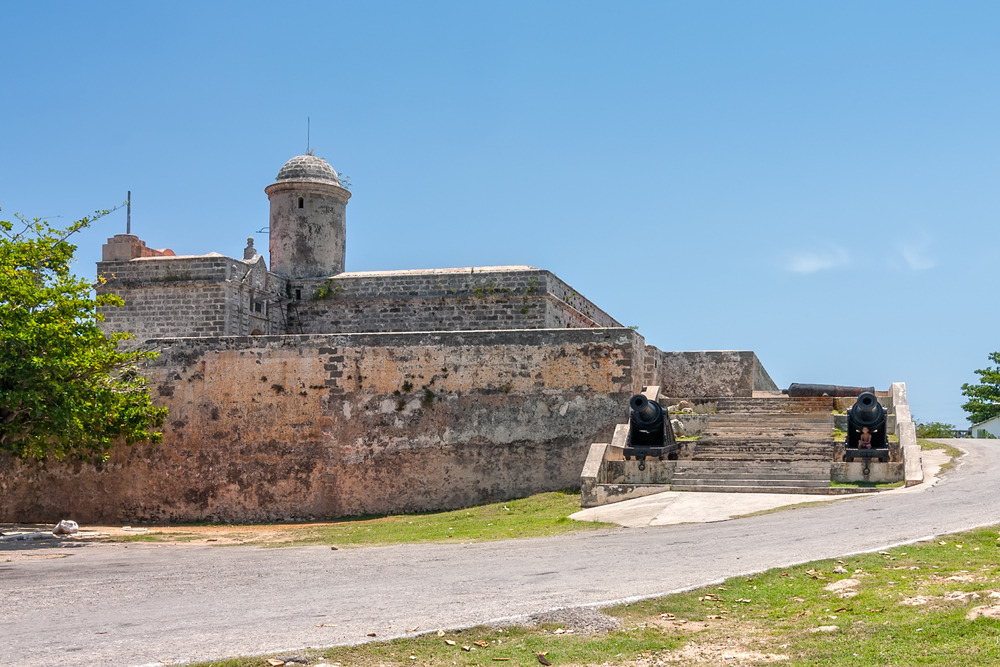
- The Jagua Castle, an 18th-century fortress that guarded the entrance to Cienfuegos Bay.
- The Bay of Pigs, east of the city, for its history and diving sites.
- The Museo de Historia Municipal, to deepen your understanding of Cuban historical context.
- The city of Cienfuegos as a whole, including the malecón and the Punta Gorda neighborhood.
Frequently asked questions
Frequently asked questions
The park itself is not individually inscribed, but it constitutes the heart of Cienfuegos's historic center, which was inscribed as a UNESCO World Heritage Site in 2005. It also benefits from National Monument status at the Cuban level.
The plaza was officially renamed on October 10, 1906, in honor of José Marti, a poet, thinker, and major figure in Cuban independence. Previously, it bore several successive names, including Plaza de Ramirez, Plaza Real de San Fernando, and Plaza de la Independencia.
One to two hours are sufficient to walk through the park and observe its monuments. If you wish to visit the Tomás Terry Theater, the cathedral, and climb to the dome of the Ferrer Palace, allow half a day.
This rosette marks Cienfuegos's zero point, at the location where frigate captain Félix Bouyón chose a majagua tree as a reference point to map the city's first 25 blocks in 1819. The colors represent the bay (blue), the fields (green), the district (light brown), and the city (dark brown).
Late afternoon is particularly appreciated: the light highlights the neoclassical facades and the park comes alive with local residents. Concerts at the bandstand typically take place in the evening.
Preparing your trip
To incorporate Cienfuegos and its José Marti Park into a comprehensive itinerary across the island, explore our tailor-made journeys to Cuba designed with our local experts.
Interested in this visit?
We can include it in your personalised itinerary.