Laguna Guanaroca
Laguna Guanaroca
Brackish lagoon 12 km from Cienfuegos, a protected wildlife refuge renowned for its flamingos, mangroves and the Siboney legend that gave it its name.
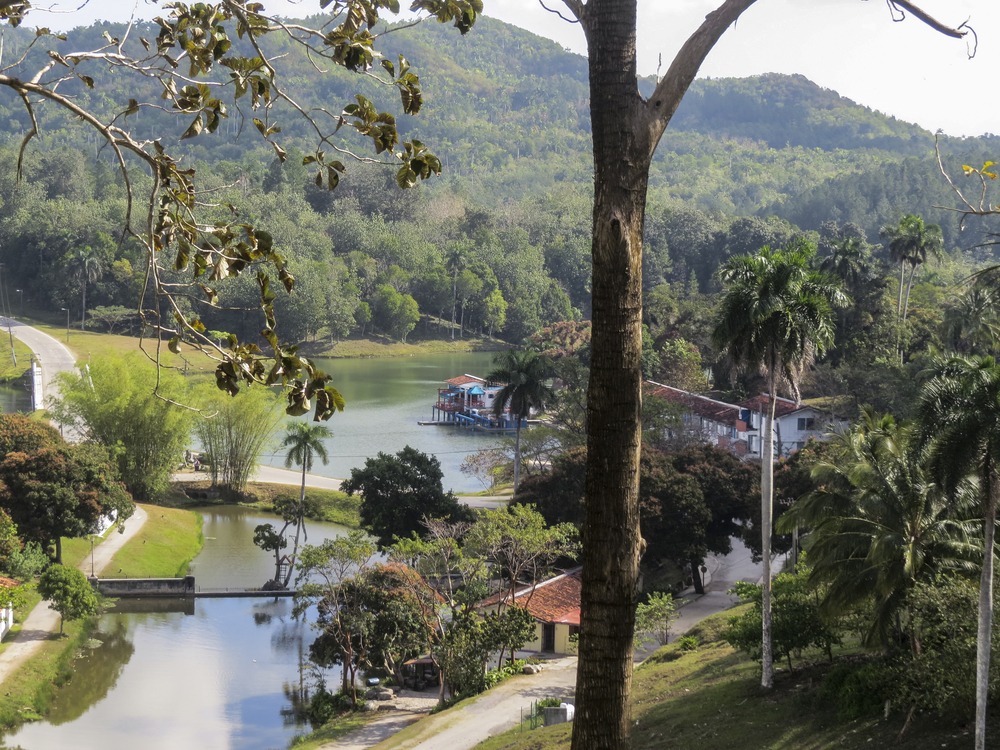
Twelve kilometers east of Cienfuegos, in south-central Cuba, Laguna Guanaroca is a brackish lake spanning 2.2 square kilometers, formed by the Arimao River before it flows into Cienfuegos Bay through a 900-meter canal. This mixed ecosystem, fed by both fresh river waters and the salty waters of Jagua Bay, harbors one of Cuba's largest flamingo colonies and stands as a major ecological and cultural site in the province.
Why visit Laguna Guanaroca
The lagoon is part of the Laguna Guanaroca - Yaguanabo - El Nicho Wildlife Refuge, a protected complex spanning over 3,000 hectares of land and marine waters. It is the only area with this status in Cienfuegos province, and one of the few places in Cuba where flamingos can be observed at close range on their feeding grounds.
Beyond its birdlife, the lagoon offers ecological interest (endemic and threatened species), historical significance (early colonial presence on Cayo Ocampo) and mythological richness (Siboney tales about the origins of its waters). Visits, guided by local experts, last approximately two hours and combine walking with rowing through the mangrove channels.
History and legend
The Siboney legend of Guanaroca
For the indigenous Siboney people, the lagoon was born from a foundational tragedy. According to the tale, Guanaroca, the first woman on Earth, was created by Mayora, the Moon. She united with Hamao, the first man begotten by Huion, the Sun. From their union came Imao. Consumed by jealousy, Hamao took the child, hid him in a calabash (güiro) and abandoned him in the forest, where he perished.
When Guanaroca found the calabash and her son's body, her tears formed the rivers, the seas and the lagoon that bears her name. As the calabash fell, it released abundant marine life. For the Siboney, Guanaroca is also the creator of dew and the protector of love.
Cayo Ocampo and Spanish conquest
At the heart of the reserve lies the islet of Cayo Ocampo, named after a Spanish navigator who circumnavigated Cuba. Between 1513 and 1514, it allegedly hosted the headquarters of Diego Velásquez and his captains—it was from this vantage point that the decision to found Trinidad and Sancti Spíritus was made. The first Spanish governor of the island is also believed to have passed through in 1515. The islet is further considered a possible origin of the name Jagua, formerly given to the region.
What to see
Flamingos and birdlife
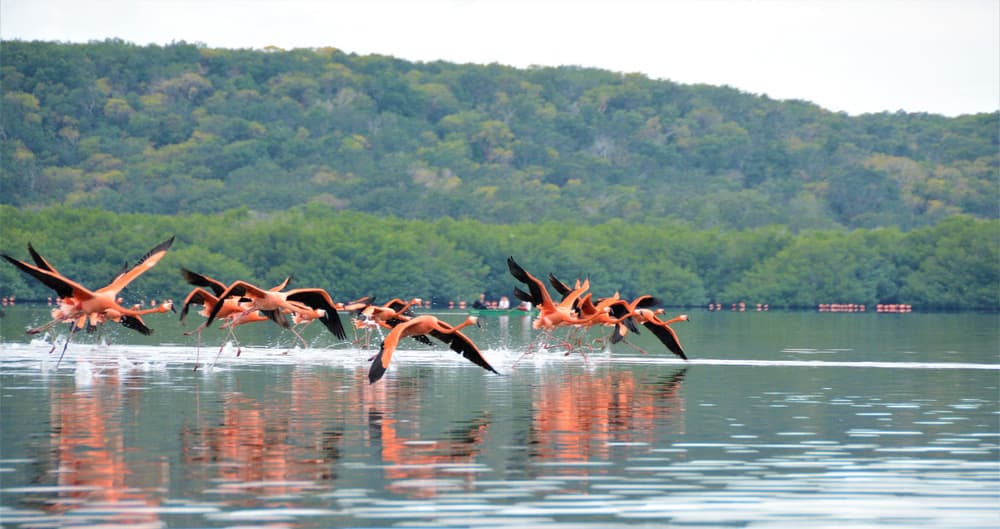
The reserve is home to approximately 170 bird species, including 8 endemic ones. Flamingo colonies rank among Cuba's largest, observable from the shores and viewing platforms. You'll also encounter pelicans, herons, ibises, wild ducks, todies and the tocororo (Cuban trogon), the national bird of the country.
Flora and mangroves
The lagoon is bordered by well-preserved mangroves and 65 recorded endemic plant species. Among the species present: avocado trees, lemon trees, pear trees, as well as the güira, whose dried fruit is used to craft maracas, an emblematic instrument of Cuban music.
Terrestrial and aquatic wildlife
The reserve documents over 200 animal and insect species: 7 mammals, 3 amphibians, 11 reptiles, approximately 600 marine mollusks and nearly 100 species of fish, crustaceans and turtles. Two threatened species have been observed here: the West Indian manatee and the hawksbill turtle. The lagoon also hosts breeding zones for hutias and iguanas.
Conservation
The ecosystem's balance is fragile: aquatic species such as white shrimp, tilapia, mojarra and snook are sensitive to salinity levels. CITMA (Cuba's environmental ministry) oversees reforestation efforts, mangrove protection and manual maintenance of canals fed by the Arimao River, ensuring a consistent supply of fresh water.
Practical information
Access to the lagoon is exclusively with a local guide, and an entrance fee applies. Allow approximately two hours for the visit. The route begins on foot along the Güira Trail, which leads to the boat landing through fruit trees and forested areas frequented by hummingbirds. The second part takes place by rowboat, through mangrove channels to the opposite shore.
Bring a hat, sunglasses, sunscreen, water and insect repellent: dense vegetation and the open rowboats expose you to insects and sun. Binoculars are highly recommended for birdwatching.
When to visit
The best period for birdwatching is winter and spring, when migrations are active and bird diversity is greatest. Early morning offers peak bird activity and favorable light. During the rainy season (summer), mosquitoes are more prevalent and some trails may be wet.
How to get there
The lagoon is located 12 kilometers east of Cienfuegos, on the road connecting the city to Rancho Luna. From central Cienfuegos, count on about twenty minutes by taxi or rental car. No regular public transport serves the site directly: visitors typically arrange a private taxi, shared taxi or organized excursion. Departures begin from the refuge entrance at the start of the Güira Trail.
Nearby attractions
The Cienfuegos region offers several sites to complement a lagoon visit:
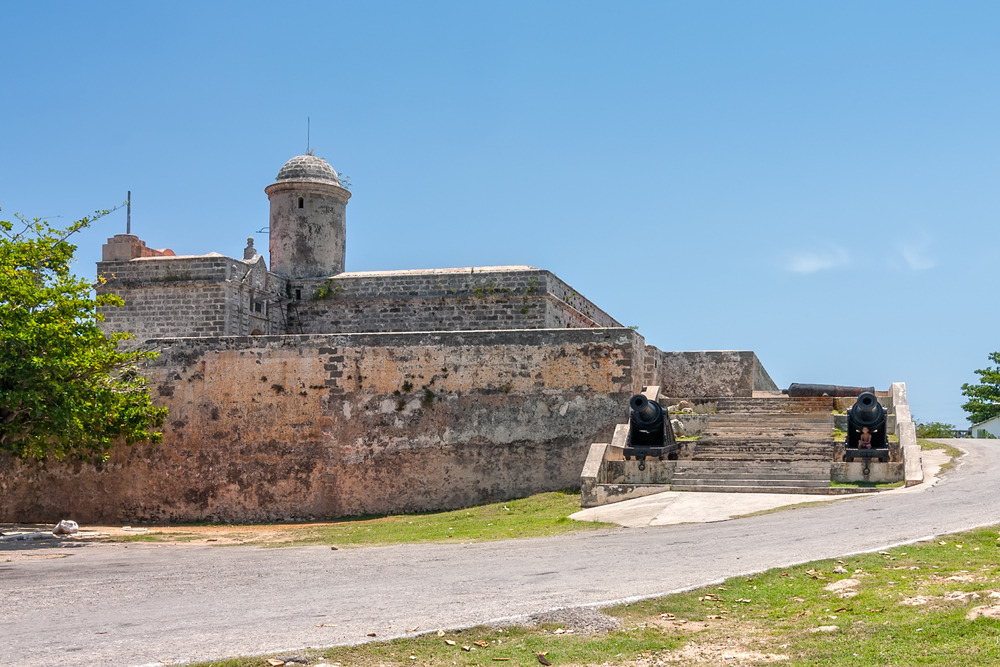
- Jagua Castle: an 18th-century colonial fortress guarding the entrance to Cienfuegos Bay.
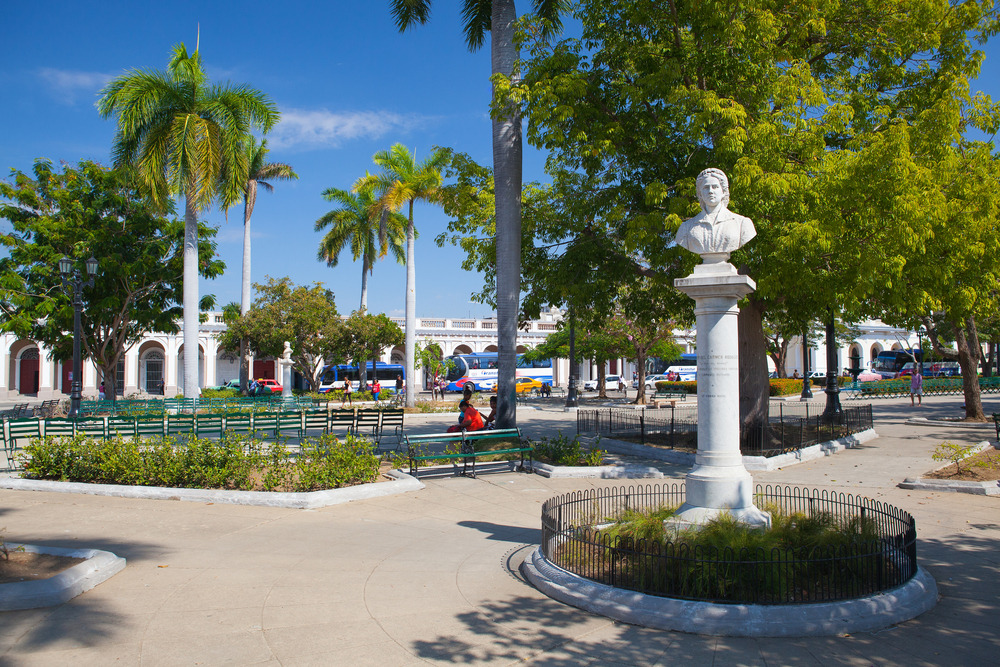
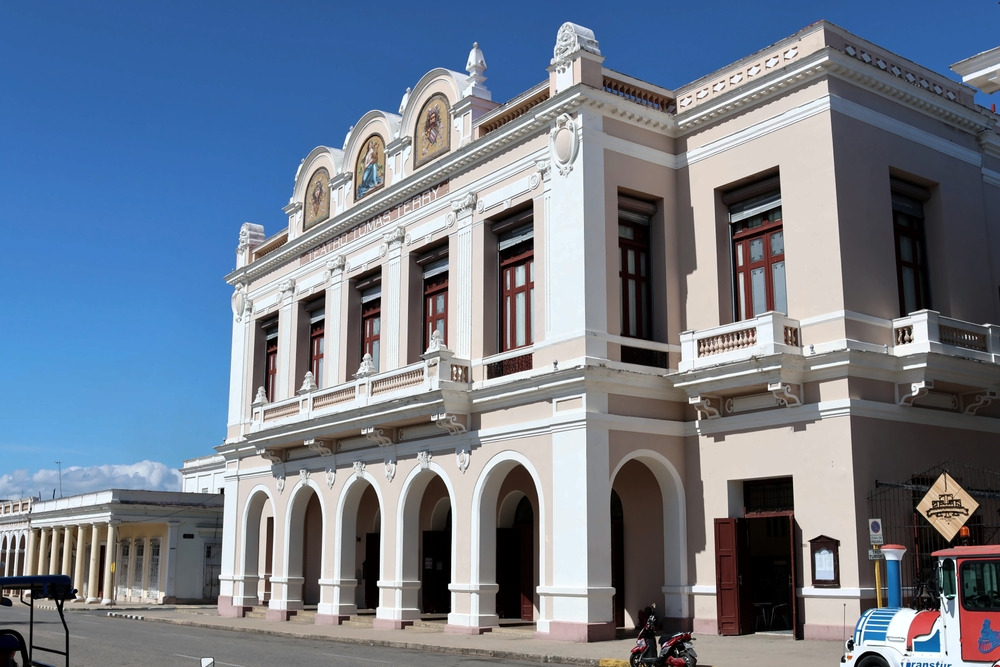
- Cienfuegos: its UNESCO-listed historic center, the Paseo del Prado and Punta Gorda.
- Cueva de los Portales: a historic cave located further west in Pinar del Río province.
Frequently asked questions
Frequently asked questions
No. Access to the protected site is exclusively with a local guide from the refuge, with payment of an entrance fee.
Allow approximately two hours, split between a walk on the Güira Trail and a rowboat journey through the mangrove channels.
Flamingos are present year-round, but their numbers and proximity vary with tides, time of day and season. Winter and spring offer the best viewing conditions.
Yes, the route is short and the rowboat allows for calm navigation. However, bring sun protection and insect repellent, along with some water for the walk.
Winter and spring coincide with migrations and offer the greatest bird diversity. Early morning remains the most favorable time across all seasons.
Plan your trip
Laguna Guanaroca fits naturally into an itinerary in Cienfuegos province, complementing Jagua Castle and the city's historic center. To craft a custom trip including this site and other natural or heritage destinations across the country, explore our Cuba travel ideas.
Interested in this visit?
We can include it in your personalised itinerary.