San Severino Castle
San Severino Castle
A 17th-century Spanish fortress at the entrance to Matanzas Bay, San Severino Castle is home to the National Museum of the Slave Route (UNESCO).
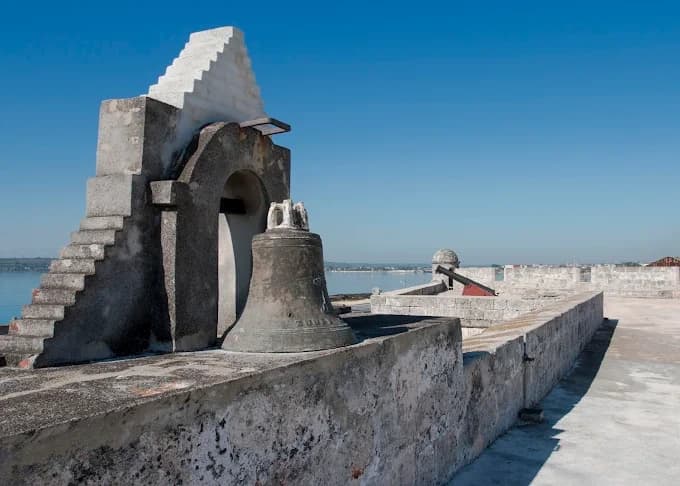
San Severino Castle stands at the entrance to Matanzas Bay, on the northern coast of Cuba. Built by Spanish colonists in the late 17th century to protect maritime access to the city, this bastion now houses the National Museum of the Slave Route, integrated into the UNESCO programme. Stone walls, dry moats, angular bastions: military architecture here dialogues with an Afro-Cuban memory that the museum seeks to convey.
Why visit San Severino Castle
San Severino brings together three narratives in a single place. That of a strategically important 18th-century fortification, a representative example of Spanish military architecture in the Caribbean. That of a political prison, which successively held independentists from the Soles y Rayos de Bolivar, the accused from the Ladder Trial and opponents of republican regimes. That, finally, of the slave trade, of which the fort was both a landing point and a worksite where African slaves laboured. For those interested in Cuban colonial history and the island's African heritage, the visit is a dense and well-documented entry point.
History
Origins and foundation
The idea of fortifying Matanzas Bay dates back to the mid-17th century, when Governor Francisco Gedler de Catalayud y Toledo submitted a coastal defence project to King Philip IV. The proposal was rejected in favour of Havana, deemed a priority. In 1682, a new plan, designed by military engineer Juan de Ciscara, was approved.
The official founding of Matanzas took place on 12 October 1693. The following day, 13 October 1693, Governor Severino de Manzaneda laid the first stone of the fort, which then took the name of San Carlos de Manzaneda before becoming the Castillo de San Severino.
Construction and military architecture
Work, launched in 1693, was interrupted in 1697 due to lack of funds. Engineer Antonio Arredondo relaunched the project in 1731, and the fort was completed between 1745 and 1746. The building exemplifies 18th-century Spanish military architecture: square plan, towers at the four corners, angular bastions, dry moats, drawbridge and cannons facing the sea. Its imposing silhouette earned it the name "castle".
Destruction and reconstruction
In 1762, when the English took Havana, Commander Antonio Garcia de Solis blew up the fort with black powder to prevent its capture. Severely damaged, the building remained abandoned for about a decade. The reconstruction, directed by Joaquín de Perazas, lasted from 1772 to 1789 and restored the castle to its defensive role.
Successive functions
The castle subsequently served various purposes:
- Customs buildings between 1774 and 1793;
- Command of Matanzas' defensive system between 1818 and 1850, integrated into a complex of fortifications including San José de la Vigia, El Morrillo and Peñas Atlas;
- Military prison from 1821 onwards, hosting independentists from the Soles y Rayos de Bolivar (1823), those accused in the Ladder Trial (1844), then patriots during the 1895 war of independence and opponents under the Republic (1902-1958).
The imprint of slavery
The fort's construction was largely carried out by African slaves and their descendants. On the stones, marks carved record the daily tasks imposed upon them. In the 18th century, the site also served as a landing point for slaves destined for sugar plantations in the Matanzas region, one of the areas most marked by the slave trade in Cuba.
Slavery was practised in Cuba from 1511 to 1886. Nearly 40% of African slaves sent to Spanish colonies landed on the island, making Matanzas a central place for Afro-Cuban memory.
Heritage recognition
Originally, the bay's waters reached the castle's gate. The construction of a road in 1910 isolated it from the shore. After a long period of abandonment, the fort was partially restored in the 20th century, then designated a National Monument of the Republic of Cuba in 1978. On 16 June 2009, the National Museum of the Slave Route was inaugurated there, integrated into the UNESCO programme "The Slave Route" launched in 1997 at Haiti's initiative.
What to see on site
The museum's four rooms
- The Commandant's House introduces the visit with a presentation of the fortified site, its construction and its role in Matanzas' defence.
- The archaeological room gathers objects and colonial remains, witnesses to the daily life of inhabitants and slaves.
- The slavery room brings together photographs, maps and objects evoking the living conditions, resistance and spirituality of slaves. Several pieces evoke the calimbo, branding with a hot iron symbolising dehumanisation.
- The Orishas room, the most unique, is dedicated to the divinities of Afro-Cuban religion. It brings together life-size sculptures representing the worlds of each Orisha, as well as ritual drums used in ceremonies.
The fort's exterior spaces
- The bastions and moats, still visible, open onto Matanzas Bay.
- The cells and dungeons recall the site's carceral function.
- The chapel and inner courtyard regularly host cultural and commemorative events.
Exhibitions and cultural programming
The museum presents the exhibition Afro-America: the third root, a collection of 14 sculptures by Cuban artist Lorenzo Padilla dedicated to African influence in Ibero-American cultures. The proximity of Camilo Cienfuegos University, which hosts students from some twenty African countries, fuels a programme of exchanges, conferences and celebrations such as Africa Day. The site also hosts events linked to Santería, Palomonte and abakuá societies, as well as traditional music concerts.
Practical information
The museum is open Tuesday to Sunday, during the day. Hours vary by season, so it is advisable to check with the local tourist office before visiting. Admission is at a moderate rate, with a small surcharge if you wish to photograph the collections. Explanations are primarily in Spanish, sometimes in English: the presence of an English-speaking guide is a real asset to grasp the historical and symbolic significance of the site. Allow approximately 1.5 to 2 hours to tour the rooms and explore the exterior.
How to get there
The castle is located on the northern shore of Matanzas Bay, about 2 km from the city centre. From the centre, you can reach the site by taxi (short ride, negotiated in advance), by bicitaxi if you're feeling adventurous, or by rental car if you're exploring the region. From Havana, Matanzas is accessible in about 1.5 to 2 hours by road via the Vía Blanca. Many travellers combine the visit with a stay in Varadero, located about thirty kilometres to the east. To plan your itinerary, consult our Matanzas guide.
Nearby
The Matanzas region and western Cuba offer several natural extensions to your visit:
- The Bay of Pigs, south of the province, for its contemporary history and diving sites;
- Caguanes National Park, a biosphere reserve rich in caves and mangroves;
- The Castillo del Morro in Santiago, another major Spanish fortification, to compare defensive architectures.
Frequently asked questions
Frequently asked questions
The castle is located in Matanzas, on the northern coast of Cuba, at the entrance to the bay, about 2 km from the city centre.
The fort has housed the National Museum of the Slave Route since 2009, organised into four rooms: the Commandant's House, archaeological room, slavery room and Orishas room. The visit also includes the bastions, cells and inner courtyard.
Allow approximately 1.5 to 2 hours to tour all the rooms and explore the fort's exterior spaces.
The fort was built largely by African slaves, whose carved marks in the stone still testify to this. In the 18th century, it also served as a landing point for slaves destined for sugar plantations in Matanzas. The current museum is part of the UNESCO programme "The Slave Route".
Labels are written primarily in Spanish, sometimes in English. The presence of a private English-speaking guide is recommended to fully enjoy the historical and symbolic content.
Preparing your trip
San Severino Castle naturally integrates into a circuit combining Havana, Matanzas and Varadero, with a possible opening towards the Bay of Pigs. To build an itinerary that blends colonial history, Afro-Cuban memory and nature, consult our suggestions for travel to Cuba.
Interested in this visit?
We can include it in your personalised itinerary.