Guaimaro Estate Museum in Trinidad
Guaimaro Estate Museum in Trinidad
A former 18th-century sugar estate transformed into a Sugar Museum, Guaimaro preserves European frescoes, a private chapel, and the remains of slave barracks.
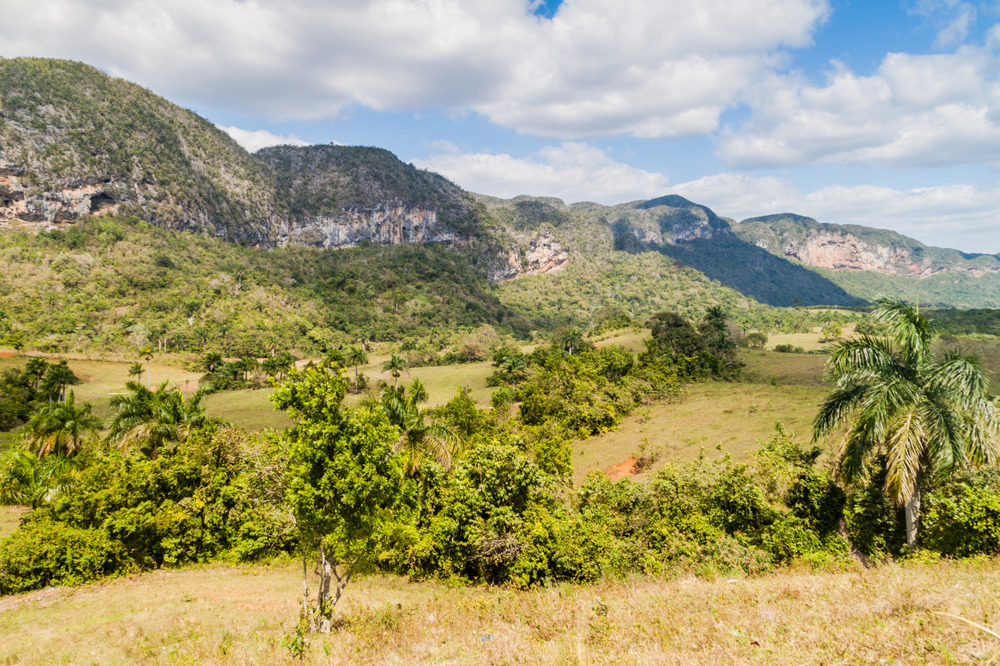
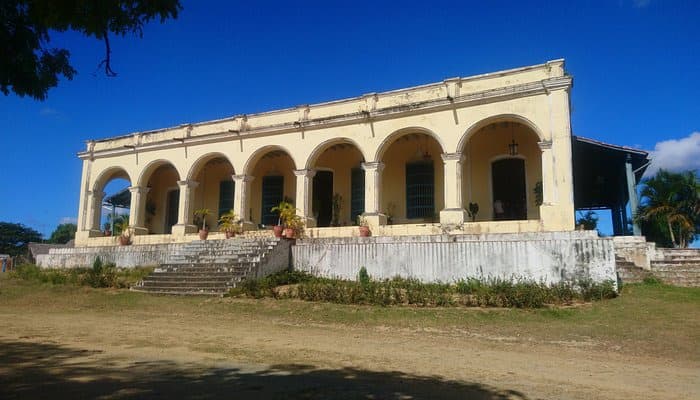
About twenty kilometers from Trinidad, on the road to Sancti Spiritus, the former Guaimaro estate occupies a singular place in the Valle de los Ingenios. This 18th-century colonial residence, today transformed into a Sugar Museum, preserves the furnishings, frescoes, and industrial vestiges that tell the story of Cuba's golden age of sugar—and its dark underside: an enslaved labor system whose material traces remain on site.
Why visit Hacienda Guaimaro
Guaimaro stands apart from other estates in the Valle de los Ingenios through three rare features. First, its European wall frescoes signed in 1859 by Italian artist and architect Daniel Dall'Aglio, one of the most sought-after decorators of Trinidad's grand houses. Second, its private chapel—unique in the valley—adjoining the main house and preserved with its original liturgical objects. Third, the presence on the very grounds of former slave barracks and a cemetery, a few hundred meters from the master's residence, where chains, shackles, and period instruments are on display.
This contrast between the opulence of the residence and the vestiges of enslaved people's living conditions makes Guaimaro an essential site for understanding the economic and human reality of Cuba's 19th-century sugar industry.
History of the Borrell family and the estate
The estate was built in the late 18th century by the Borrell family, one of the most powerful lineages in the Trinidad region. It was José Mariano Borrell y Lemus, third generation, who gave the domain its definitive form and made it one of the valley's most productive estates.
By 1827, Guaimaro achieved a record 8,200 arrobas of sugar produced in a single harvest. In 1830, the estate employed 360 enslaved men housed in the barracks and 18 enslaved women assigned to domestic work in the main house. This organization reflects the industrial scale of Cuba's sugar production at the time.
The Borrell fortune grew further through investments in the Trinidad railroad, then in full development. Don Mariano married Maria Concepción Villafaña, who was 15 years old at the time of their wedding. Local tradition claims he fathered more than 15 illegitimate children with enslaved women on his property, to whom he allegedly left land and money upon his death—a narrative transmitted through local guides and family archives, best understood as oral tradition rather than documented historical fact.
The legend of the Lagunita treasure chests
A persistent legend, recounted by site guides, speaks of a family conspiracy to eliminate Don Mariano. Learning of his wife's and sons' schemes, the master allegedly had 24 bronze chests shipped from England, filled them with gold, and buried them on his Lagunita property before having the 12 enslaved workers who participated killed to preserve the secret. Successive excavations have never uncovered a single chest—only pottery fragments, agricultural tools, and torture instruments.
What to see on the site
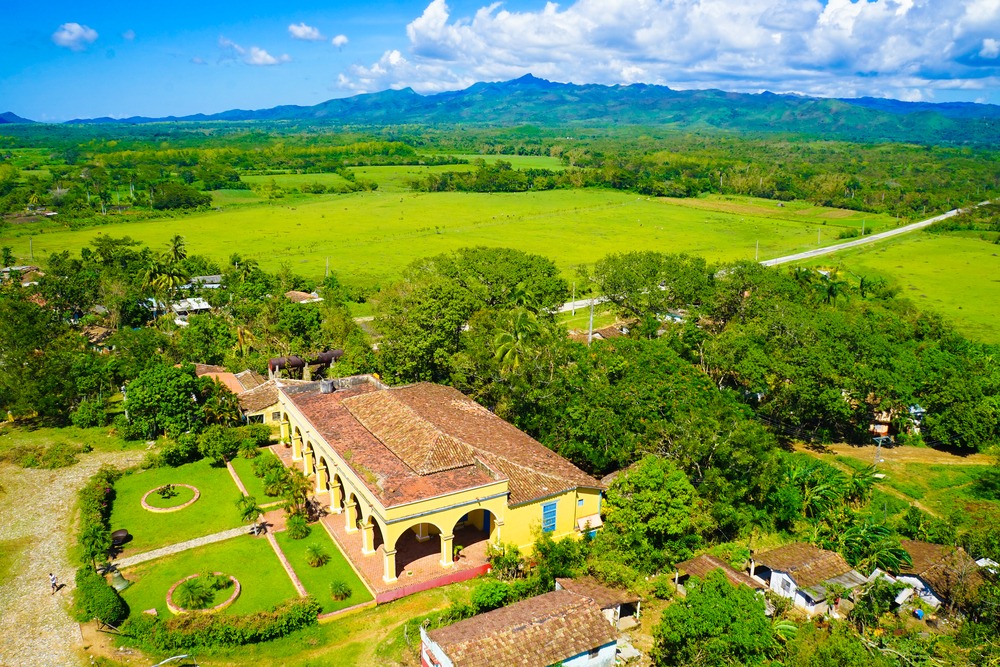
The visit encompasses the master's house, its outbuildings, and surrounding industrial vestiges.
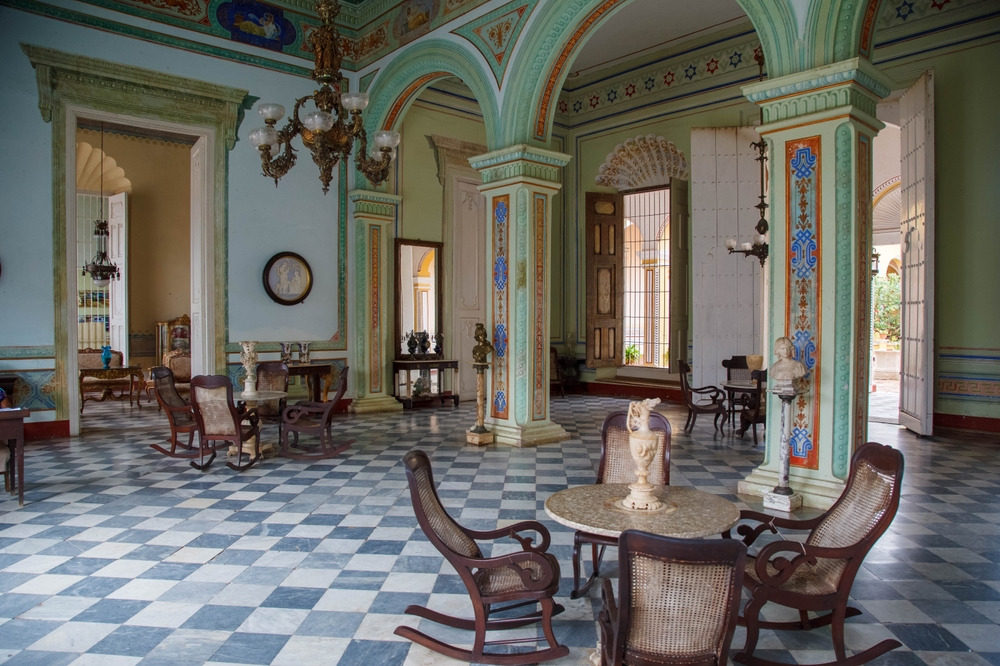
- The main hall: adorned with Daniel Dall'Aglio's frescoes (1859) depicting bucolic landscapes, ruined castles, and neoclassical buildings. These decorations had been covered when the house served as refuge for families displaced by a hurricane, then later restored.
- Two interior bedrooms and two despachos (offices) where estate business was conducted, with period furnishings reconstituted.
- The private chapel, unique in the valley, adjoining the main house. It preserves a Roman missal on a bronze lectern inlaid with emeralds, a French porcelain holy water font, a replica of the Christ from Trinidad's cemetery, and a Bible adorned with precious stones.
- The trapiche (sugar mill), warehouses, and industrial vestiges, undergoing restoration, which recall the site's productive purpose.
- The former slave barracks and cemetery, a few hundred meters away: chains, shackles, and torture instruments are displayed by local residents alongside work tools.
Guides readily recount the house's haunted reputation—footsteps, moved chairs, fleeting shadows. These stories belong to the site's oral tradition and form part of the visiting experience.
Restoration and conservation program
Since 2000, the Office of the Conservator of Trinidad and the Valle de los Ingenios has led a restoration program for the valley's major sites. Guaimaro has benefited from this initiative alongside Buena Vista and San Isidro de los Destiladeros. The most significant restoration of the main house began in 2014, marking Trinidad's 500th anniversary, under the direction of the Aldaba company. The residence was then transformed into the Sugar Museum.
Practical information
A visit to the museum and its outbuildings typically takes 1 to 2 hours, depending on your interest in exterior vestiges (barracks, cemetery, mill). Admission is modest and hours vary by season; it is recommended to check with the Trinidad Conservator's Office before visiting, as certain areas may be closed for restoration work.
Bring water, closed-toe shoes for the exterior grounds, and some cash for local guides who often provide commentary on site.
How to get there from Trinidad
Guaimaro is located approximately 20 km from Trinidad, on the road to Sancti Spiritus, in Sancti Spiritus province. Several options are available:
- The Valle de los Ingenios tourist train, which traverses the valley from Trinidad and stops at several estates. This is the most authentic option, provided you verify the departure schedule (occasionally interrupted for maintenance).
- Shared or private taxi from Trinidad: about thirty minutes' travel. Negotiate waiting time on-site and return before departure.
- Rental car, convenient for combining Guaimaro with other valley sites in a single day.
When to visit
The site is accessible year-round. July and August offer particular advantages: the house is then included in guided tours organized by the Conservator's Office, which open access to certain areas and provide in-depth commentary on the frescoes and chapel. The dry season (November to April) remains most comfortable for the site's exterior grounds.
Nearby attractions
- Trinidad: colonial city designated a UNESCO World Heritage site, the logical starting point for exploring the valley.
- Buena Vista and San Isidro de los Destiladeros: two other estates part of the restoration program, to combine with Guaimaro.
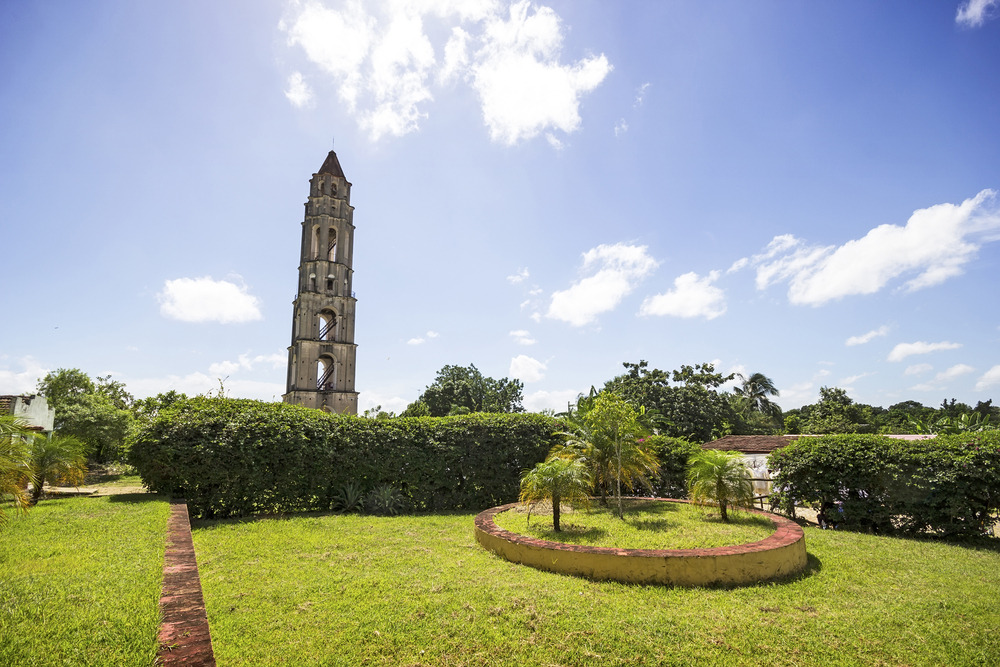
- Manaca Iznaga and its 45-meter tower, an icon of the Valle de los Ingenios.
Frequently asked questions
Frequently asked questions
Plan 1 to 2 hours to explore the master's house, chapel, mill, and the slave barracks vestiges located a few hundred meters away.
On-site guides typically provide commentary in Spanish, sometimes in English. For commentary in English, it is better to book through a Trinidad agency or include the visit in an organized tour.
The tourist train experiences periodic interruptions for maintenance. Inquire upon arrival in Trinidad, and have a taxi option as backup.
No excavation has ever confirmed the existence of the 24 chests buried at Lagunita. The narrative is part of the estate's oral tradition and feeds the imagination of visitors, but is not historically documented.
Yes, though part of the tour addresses slavery with explicit objects (chains, torture instruments). Prepare younger visitors for this content.
Plan your trip
Hacienda Guaimaro fits naturally into an itinerary combining Trinidad and the Valle de los Ingenios. To build a customized journey including the sugar valley, Havana, and Cuba's coastlines, explore our Cuba travel suggestions.
Interested in this visit?
We can include it in your personalised itinerary.