Getting Around Cuba
Traveling in Cuba means experiencing your journeys as a genuine part of the adventure. Beyond its iconic cities and palm-fringed beaches, the island offers a variety of transportation methods that are as diverse as they are enriching. Depending on your budget, itinerary, and preferences, you'll find options suited to your needs, whether for leisure or professional travel.
Traveling in Cuba means experiencing your journeys as a genuine part of the adventure. Beyond its iconic cities and palm-fringed beaches, the island offers a variety of transportation methods that are as diverse as they are enriching. Depending on your budget, itinerary, and preferences, you'll find options suited to your needs, whether for leisure or professional travel. Exploring these different possibilities will help you choose the most practical, economical, or immersive solution to make the most of your stay.
Taxis
The taxi is one of the most flexible ways to get around Cuba, whether for moving around the city, reaching another province, or taking a day trip excursion. They are easily found in major cities and most tourist areas. Before taking a taxi in Cuba, be sure to agree on the price with the driver. Rates may increase in the evening, especially in tourist areas.
Official taxis
Easy to spot thanks to their yellow color and "TAXI" logo, they are equipped with meters and offer reliable service. Their rates are higher than private taxis, but quality and safety are generally assured.
Private taxis
Often vintage or modern cars belonging to individuals, they offer more flexibility and can be reserved for personalized trips. The price is negotiated before departure and varies according to distance, duration, and number of passengers.
Urban shared taxis (collectivos)
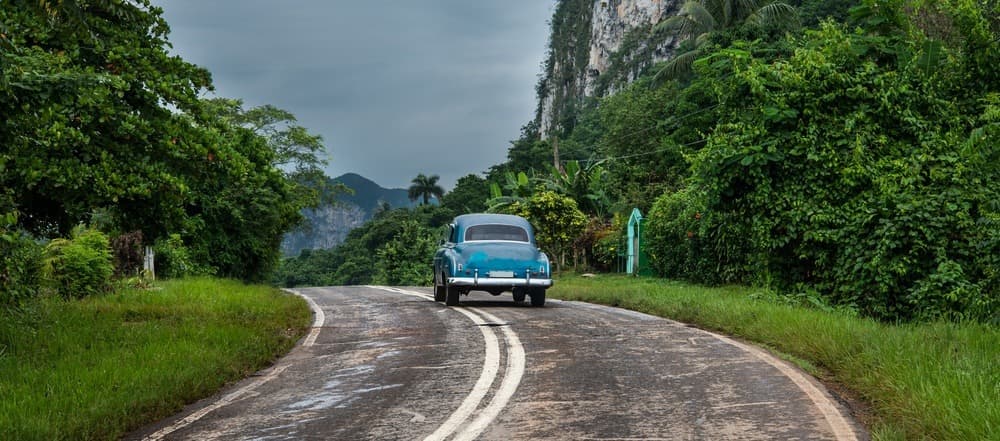
Known as almendrones or boteros, these vintage American cars follow fixed routes and depart once all seats are occupied.
Intercity shared taxis (collectivos)
A widely used solution when Viazul buses are full, they allow you to travel quickly between two cities. Bookable through local guest houses, they pick you up and drop you off at your desired address. Prices are typically fixed, but it's wise to inquire with several drivers. In the eastern part of the country, they are less numerous, but buses are more readily available.
Buses
In Cuba, buses are the primary means of transportation for getting around: safe, economical, and practical for connecting most cities and tourist sites. Viazul, designed for foreign travelers, operates long-distance connections with air-conditioned vehicles, reclining seats, and ample luggage space. Restrooms are provided on longer routes, though they don't always function. Tickets can be booked online or at the station. During high season (and holidays), plan several days or weeks in advance.
Note that through their website, ticket purchase must be made at least 7 days before departure, and each route is purchased separately. Computer systems can be slow: allow some extra time. Many travelers book all their routes upon arrival to guarantee a seat, at the cost of reduced flexibility. Fares remain affordable (payment possible in CUP or foreign currency), and travel is free for children under 5 years old, and half-price for those aged 5 to 11.
Additionally, other operators supplement Cuba's bus offering: Transtur, Cubanacan Cubatour, and Gaviota sell round-trip excursions (with guide aboard, lunch often included) through travel agencies. Conectando offers hotel-to-hotel shuttles and, in certain heavily touristic areas, a day pass allows you to change lines at will. Alongside the tourist network, guaguas (provincial buses) primarily serve Cubans: heavily crowded, less comfortable, and sometimes packed, they nevertheless offer a local immersion experience.
Car Rental
Opting for car rental is the most flexible solution to discover Cuba at your own pace, especially if you plan to explore remote or underserved regions. To avoid any unpleasant surprises, it's advisable to book several weeks or even months in advance, preferably through a travel agency.
The country has several national companies: Cubacar and Havanautos (Transtur group), Via (Gaviota group), and Rex, the latter offering better-maintained vehicles and online booking service. International agencies such as Avis, Hertz, or Europcar are also present in major cities and airports. Rates vary depending on season, rental duration, and vehicle type, and often include government tax. Most rental companies provide insurance and 24/7 breakdown service.
However, a few precautions are necessary: watch your vehicle at night, be prepared to find cars patched together with salvaged parts, and avoid driving after dark, especially outside urban areas.
Bike Rental
Bike rental is a more economical and eco-friendly alternative, ideal for short trips around the city or tours of tourist areas. Rates are affordable and formulas flexible, ranging from half-day to several days. You'll find basic models as well as more modern bicycles, often equipped with comfortable seats, fenders, and luggage racks.
Bikes are perfect for exploring city centers, but also for venturing onto mountain trails or rural roads. Cycling paths are numerous and repair workshops are found everywhere. However, some tourist areas restrict their use. Helmets are not mandatory, but strongly recommended, as is using a lock, since bike theft is not uncommon. As with cars, avoid riding at night for safety reasons.
Trains
Cuba's railway network, managed by Ferrocarriles, covers much of the island and connects Havana to most provincial capitals, including Santiago and Santa Clara. Despite this extensive coverage, it remains outdated, slow, and subject to frequent delays, which explains why tourists rarely choose it. Schedules are irregular and comfort often basic, though fares are very low. Train travel in Cuba is above all an authentic experience, close to locals' daily lives, and sometimes full of surprises.
Three types of services are available: the faster and air-conditioned tren especial, the slow and basic tren regular, and the tren lechero, which stops in every village along its route. The more adventurous will see this as a unique opportunity to explore the country differently, but must arm themselves with patience and stay vigilant, particularly regarding baggage security, especially on long overnight journeys.
Air Transportation Options
Cuba has several airlines, including Cubana de Aviación, Aerogaviota, Aerocaribbean, and Aerotaxi, offering domestic and international flights at generally affordable rates. Havana remains the main hub, with regular connections to about a dozen other airports in the country, notably Santiago, Holguín, Guantánamo, and Varadero. Reservations should be made in advance, especially during peak seasons, and it's best to plan ahead of any international connection due to possible delays. Tickets are sold online, through agencies, or directly in hotels.
Additionally, Cubana de Aviación also offers helicopter flights, mainly to quick-access destinations or islands like Isla de la Juventud. Though costly, this option saves precious time, with modern aircraft and experienced pilots.
Even more original, airships are a unique air transport alternative in Cuba. Used for passenger and cargo transport, they offer comfort, safety, and panoramic views of the island at a relatively accessible cost. Well-equipped and capable of covering long distances, they appeal to those seeking an unconventional travel experience away from traditional routes.
Unique Transportation Methods to Discover
In Cuba, several original transportation methods allow you to explore the country differently, often on a budget. In the cities you'll find:
- Cocotaxis, small yellow vehicles shaped like coconuts
- Bicitaxis, pedal-powered tricycles with passenger seats
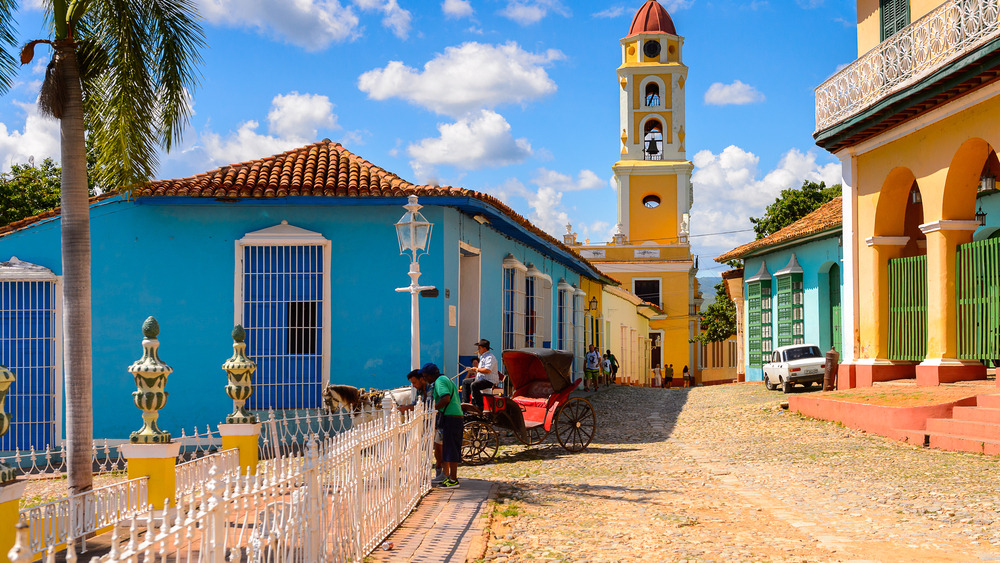
- Horse-drawn carriages, very common in certain provinces
- Vintage scooters, available for rent in a few tourist areas.
Furthermore, hitchhiking, called botella locally, is a real institution, organized like a carpooling system with sometimes agents in charge of managing queues. Camiones, trucks adapted for passenger transport, represent a very affordable, though basic, alternative, ideal for meeting locals.
Finally, to connect certain cities or access the cayos, the ferry is also a safe and pleasant option. Some can be found notably at Havana, Cienfuegos, Gibara, and Santiago, as well as specific connections like Surgidero de Batabanó to Isla de la Juventud or Palma Rubia to Cayo Levisa. These crossings allow you not only to travel, but also to enjoy superb views of Cuba's coastline.