Cays and Beaches
From the all-inclusive resorts on the northern pedraplenes to the casas at Playa Girón overlooking the coral wall, Cuba's coastline is chosen based on available time and the rest of your journey.
Cuba boasts more than 5,700 kilometers of coastline and nearly 4,200 islands, only a portion of which is developed for beach tourism. Our English-speaking team identifies two main regions: to the north, the Sabana-Camagüey archipelago, accessible by causeways known as pedraplenes, and to the south, a string of cays—Largo, Iguana, and Rosario—reached by flight from Havana or by boat from the Zapata Peninsula. The difference is concrete: in the north, you arrive by car after a circuit; in the south, dedicated air logistics are required.
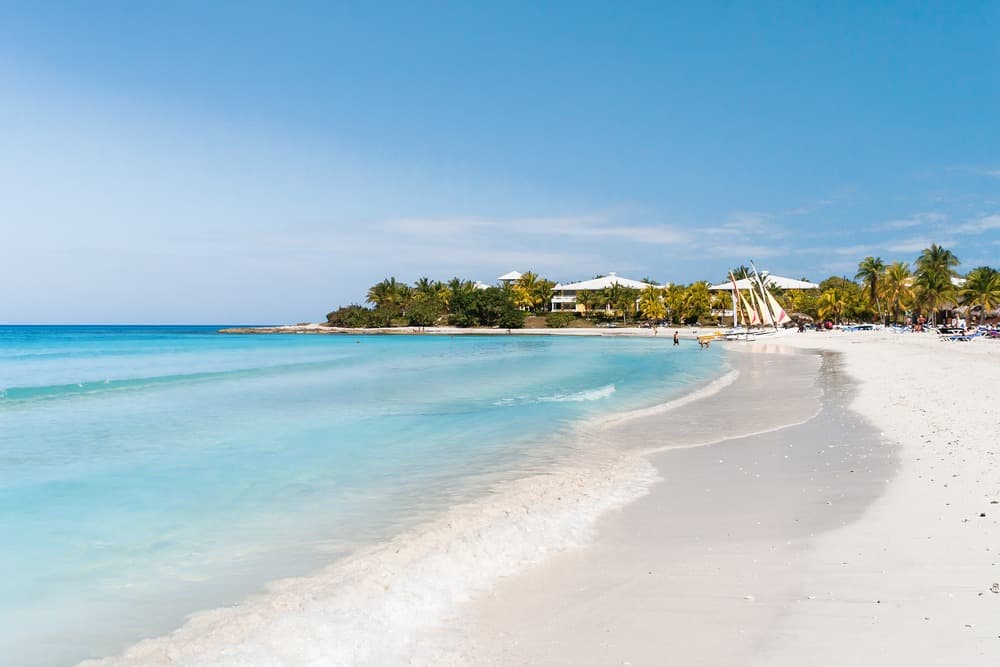
Cayo Coco, Guillermo, and Santa María, connected to Morón and Caibarién by pedraplenes stretching 17 to 48 kilometers, concentrate the majority of resorts. The sand is exceptionally fine, water temperatures hover around 26 to 28°C year-round, and the coral barrier—the second longest in the western hemisphere after Belize—runs just hundreds of meters from shore. Playa Pilar, at the western tip of Guillermo, takes its name from Ernest Hemingway's yacht, which anchored in these waters during the 1940s. At Santa María, the Las Coloradas beach stretches uninterrupted for 13 kilometers.
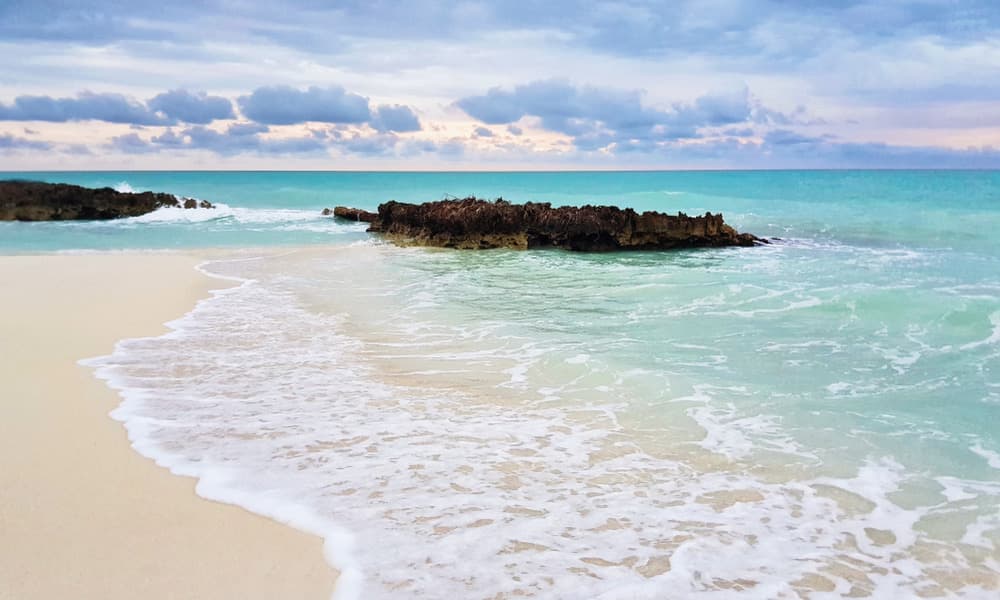
Cayo Largo del Sur, to the south, functions as a quasi-enclave: around thirty hotels, a small airfield, no permanent residents outside hotel staff. Playa Sirena and Playa Paraíso, on the western tip, rank among the few Cuban beaches facing due south with shallow waters extending several hundred meters offshore. The island is also a nesting ground for green and loggerhead sea turtles, monitored from May through September by a protection center on the island.
For those preferring to avoid all-inclusive formula, Playa Girón and Playa Larga, in the Bay of Pigs (Matanzas Province), offer an alternative. You stay in a casa particular with locals, eat grilled fish at roadside paladares, and the coral wall begins just 20 or 30 meters from shore. La Cueva de los Peces, a natural cenote connected to the sea by an underground tunnel, and Punta Perdiz rank among Cuba's best snorkeling spots accessible from shore. Further east, Playa Ancón, 12 kilometers from Trinidad, naturally extends a visit to the colonial old town.
Along the eastern Caribbean, Playa Maguana near Baracoa and the beaches of Guardalavaca Bay in Holguín Province present another face: nearby hills, denser vegetation, fishing villages where life doesn't revolve around tourism. It was at Guardalavaca that archaeologists uncovered the Taíno burial site of Chorro de Maíta, the most important in the Antilles. Local cuisine pairs fish with congrí rice and fried plantain, sometimes accompanied by cucurucho, a coconut confection unique to the eastern region.
Choosing a beach in Cuba thus depends less on sand quality—which is uniformly beautiful—than on logistics: available duration, circuit starting point, desire for hotel comfort or contact with locals. We typically schedule this beach portion at the end of your stay, usually after cultural stops in Havana, Viñales, or Trinidad.
Must-See
Playa Pilar and Cayo Guillermo. Exceptionally fine sand and a shallow lagoon stretching two kilometers at the western tip of the cay. The accessible reef via catamaran from the beach lets you spot barracudas and stingrays in less than an hour of navigation.
Diving at Playa Girón. The Punta Perdiz wall drops from 5 to 35 meters just a few strokes from shore, with elkhorn corals and schools of parrotfish. Stay in a casa particular at the village and dive with a local club that runs zodiacs three times daily.
Cayo Largo and Sea Turtles. On the island's western tip, the protection center monitors green turtle nesting from May through September. Opportunity to witness the release of young turtles at dawn with center biologists.
Chorro de Maíta near Guardalavaca. Taíno burial site with 108 skeletons excavated in situ, 4 kilometers from Holguín's beaches. The associated museum reconstructs a pre-Columbian village, bringing rare historical depth to this coast.
Playa Ancón from Trinidad. Twenty minutes' drive from the old town, a 4-kilometer sand spit facing the Casilda Peninsula. An interesting compromise to combine colonial heritage in the morning and swimming in the afternoon without changing accommodation.
When to Visit
The dry season, December through April, remains the most comfortable window: daytime air temperatures between 24 and 28°C, water at 25–26°C, generally clear skies, and moderate trade winds. December through February can, however, bring cold fronts from the north, called frentes fríos, which rough up the sea on the northern coast (Varadero, Cayo Santa María) for 2 to 4 days and make diving difficult. March and April often offer the best underwater visibility, reaching 30 meters at Girón sites.
From May through October, water warms to 28–29°C and marine life becomes more active, but the official hurricane season runs June 1 through November 30, with peak risk August through mid-October. Rainfall concentrates in late afternoon in June and September. We avoid scheduling extended beach stays in September, statistically the month most exposed to hurricanes on the northern coast and Cayo Largo.
Practical Tips
We recommend 3 to 5 nights on the beach at the end of your circuit, rarely more: beyond that, the all-inclusive formula on the northern cays tends to exhaust travelers who came for Cuban culture. Cayo Santa María and Cayo Coco combine naturally with Trinidad and the Center (4 to 5 hours by road via Remedios) or with Santiago and the East via domestic flight. Cayo Largo requires a round-trip flight from Havana, to be arranged 2 months in advance as flights are limited. Playa Girón and Playa Larga fit in one or two nights between Havana and Trinidad, on the direct route.
Comfort levels vary considerably: 4- and 5-star resorts at the cays with international standards, simple but welcoming casas particulares at Girón or Baracoa, mid-range hotels at Guardalavaca. Families with young children generally prefer the northern cays for lagoon safety and continuous dining. Divers, snorkelers, and travelers seeking contact with Cubans tend toward the Bay of Pigs or Playa Maguana. Our English-speaking team in Havana adjusts the choice based on your profile and season.