Topes de Collantes
Topes de Collantes
Just 15 km from Trinidad, Topes de Collantes unfolds 200 km² of highland jungle, swimmable waterfalls and endemic fauna. The nature counterpoint to your Cuba journey.
A true paradise for nature lovers and hiking enthusiasts, the Topes de Collantes Natural Park has everything to appeal to travelers. Lush valleys, dense forests, rivers, waterfalls, mountains and more await you at the gates of Trinidad. Topes de Collantes also welcomes you with various entertaining tourist activities to enhance your trip to Cuba. We'll mention its beach resort, its hiking and mountaineering trails. Include Topes de Collantes Natural Park in your Cuba travel itinerary for an unforgettable vacation.
The Topes de Collantes Natural Park
Located approximately 15 km from the city of Trinidad, the Topes de Collantes natural park delights tourists and offers a fine sample of Cuba's natural wealth. It sits within the Escambray mountain range, at 800 m elevation and 130 km east of Havana. In the mountainous areas of Escambray stand Potrerillo Peak at 931 m elevation and the highest summit of San Juan at 1,140 m. This mountain chain spans three Cuban provinces: Villa Clara to the north, Cienfuegos to the west, and Sancti Spíritus to the east.
Spanning 200 km², this natural park encompasses five "smaller" parks whose natural riches are nearly identical: endemic fauna and flora, waterfalls, natural pools, hiking trails, and more. The difference between them lies in the difficulty levels of the hikes. You'll find:
- El Cubano Park, approximately 3.5 km from Trinidad, therefore accessible on foot
- Codina Park
- Guanayara Park
- Altiplano Park
- And finally El Nicho Park
Nestled in the southern part of Topes de Collantes are two important ecosystems that are Cuba's pride. Indeed, the Valley of Los Ingenios (or Valley of the Sugar Mills) and the city of Trinidad are designated as UNESCO World Heritage Cultural Sites in 1988.
Topes de Collantes, a Testament to Cuban Natural Wealth
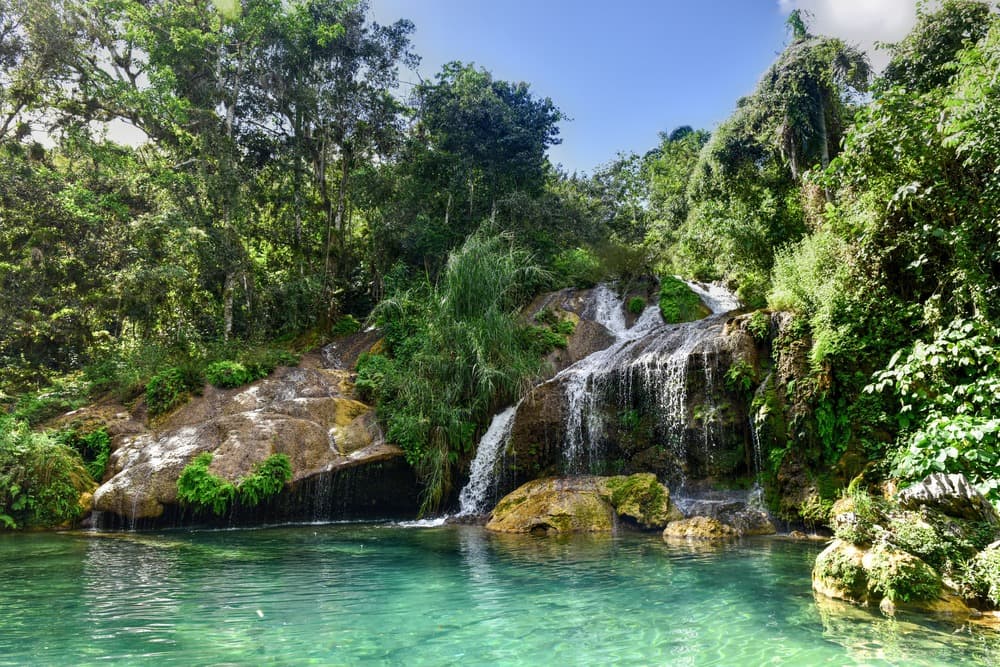
Among Cuba's top tourist attractions, Topes de Collantes is synonymous with caves, waterfalls, rivers, canyons, a myriad of plants and animals, natural pools with crystalline waters, and more. Its hills and mountains are surrounded by Mariposa or Hedychium coronarium, Cuba's national flower. This flower announces its presence through its sweet fragrance between June and September. The park is home to more than 40 species of indigenous orchids and 100 species of ferns. You'll also find plantain and wild bananas, bamboo, palm trees, jasmine, begonias, and more. Beneath the shadows of 40-meter-tall pine and eucalyptus giants grow 40 species of coffee; altogether making this tropical jungle a true marvel.
In Topes de Collantes' fauna, we first mention Cuba's national bird, the tocororo or Cuban Trogon (Priotelus temnurus), with plumage recalling the colors of the Cuban flag: blue, red, and white. The park also harbors numerous endemic island birds such as wild parakeets. You'll also find in this second Eden the Cuban ivory-billed woodpecker (Campephilus principalis bairdii) and the Cartacuba (Todus multicolor).
Thus, beyond its stunning natural landscape, Topes de Collantes Natural Park also holds high scientific value, particularly in botany and ecology, thanks to the high endemism of its fauna and flora.
A Touch of History
Topes de Collantes was founded in 1514 by dignitary Diego Velázquez. From 1958 onward, the park served as a refuge for rebels led by Che Guevara during the revolution. Later, anti-Castro groups sought shelter there. Today, it has become a Protected Natural Area, a category granted by the National Center for Protected Areas thanks to its exceptional climatic conditions and natural riches.
Salto de Caburní and Vegas Grandes
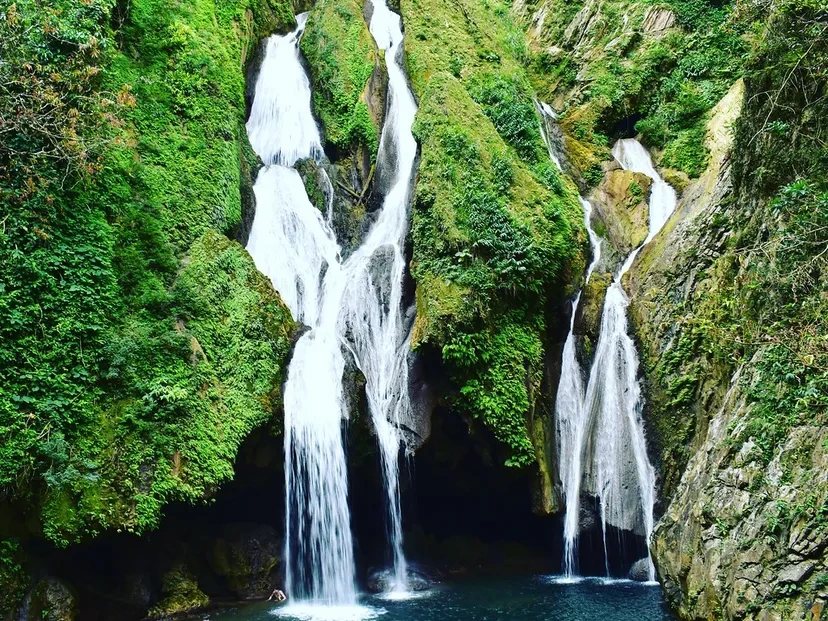
Let's begin with the easiest and most well-known hiking trails: Salto de Caburní and Vegas Grandes. A round-trip hike to the Vegas Grandes waterfalls covers 4 km, while the trek to Caburní Falls spans 5 km. Use this path toward Caburní to appreciate the lush landscapes before reaching the waterfalls cascading into a magnificent natural pool.
On the banks of the Vega Grandes river sits Parque La Represa, a 1 km² park housing an arboretum containing more than 300 exotic species. While you're there, don't miss seeing the tallest and oldest mahogany tree in the country.
El Nicho Natural Park
One of Cuba's greatest treasures, El Nicho natural park is a veritable little paradise. Beyond its 1.5 km hiking trail, this park also features a magnificent waterfall with crystalline waters, located in the Hanabanilla River. After traversing the "Kingdom of Waters" path, you'll be richly rewarded with a peaceful and refreshing swim in El Nicho's natural pool or with delicious meals from the local restaurants.
Consider taking excursions and hikes to the other smaller parks within Topes de Collantes to enhance your stays in Trinidad's Cuban lands.
La Batata
To enjoy breathtaking views of the surroundings, La Batata is located 3 km from town. This path leads to a system of underground caves featuring multiple levels of natural ponds.
Waters with Medicinal Virtues
Visit the Hacienda or Codina Farm for therapeutic mud baths. Indeed, the waters of Topes de Collantes Park are also renowned for their medicinal properties. Beyond treatments, also appreciate the orchid collection and the ornamental and medicinal garden of the location.
Climate
Topes de Collantes Natural Park enjoys an exceptional climate that is actually responsible for
Topes de Collantes Natural Park is 15 km from the city of Trinidad. If you land and stay in Havana, you'll need 4 hours of driving to reach the park. If you're already in Trinidad, simply take a taxi (round-trip) or join a small group excursion.
Want to discover this destination?
Our local advisors design your tailor-made trip.