Valley of Los Ingenios
Valley of Los Ingenios
Located 12 km from Trinidad, the Valley of Los Ingenios preserves the legacy of the Cuban colonial sugar industry, inscribed on the UNESCO World Heritage list since 1988.
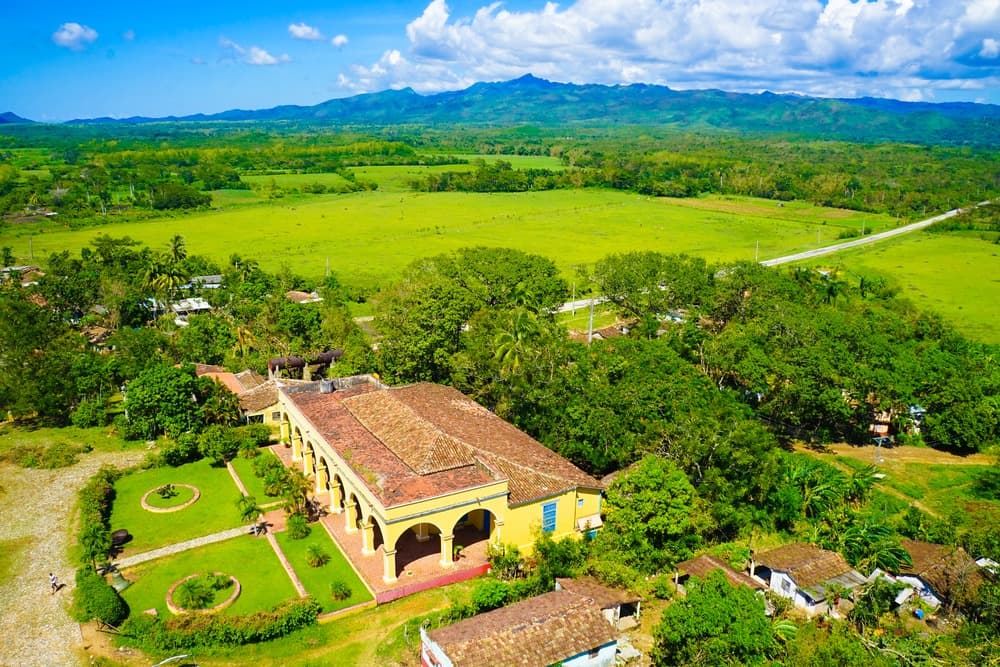
Twelve kilometers northeast of Trinidad, the Valley of Los Ingenios preserves the memory of the sugar industry that brought prosperity to this Cuban region between the eighteenth and nineteenth centuries. Watchtowers, haciendas, mill ruins, and former slave quarters dot an agricultural landscape inscribed on the UNESCO World Heritage list in 1988, jointly with Trinidad.
Why visit the Valley of Los Ingenios
The valley stretches between Trinidad and Sancti Spíritus across an area of 225 km² and a length of approximately 40 km. It comprises three contiguous valleys: San Luis, Santa Rosa, and Meyer. This agricultural expanse contains the best-preserved remnants of the colonial Caribbean sugar system.
UNESCO describes it as "the richest and best-preserved testimony of the sugar agro-industrial process in the Caribbean during the eighteenth and nineteenth centuries and of the slavery phenomenon" and as "remarkable testimony to the development of the sugar industry". The visit thus combines landscape reading, colonial history, and the memory of slavery, all within a short distance of one of Cuba's best-preserved colonial towns.
History of the sugar valley
Between the eighteenth and nineteenth centuries, the sugar industry brought prosperity to the valley and the neighboring town of Trinidad. At the peak of exploitation in the nineteenth century, more than 50 sugar mills operated simultaneously. In 1827, more than 11,000 enslaved people were counted working in the mills and sugarcane fields—a figure that underscores how profoundly the region's wealth was built on the slave trade and forced labor.
Activity gradually declined from the late nineteenth century onward, then accelerated in the 1990s. Today, 75 ruined sugar mills remain in the valley, accompanied by mill buildings, haciendas, and watchtowers that form the core of the sites of interest.
What to see
Torre Manaca-Iznaga
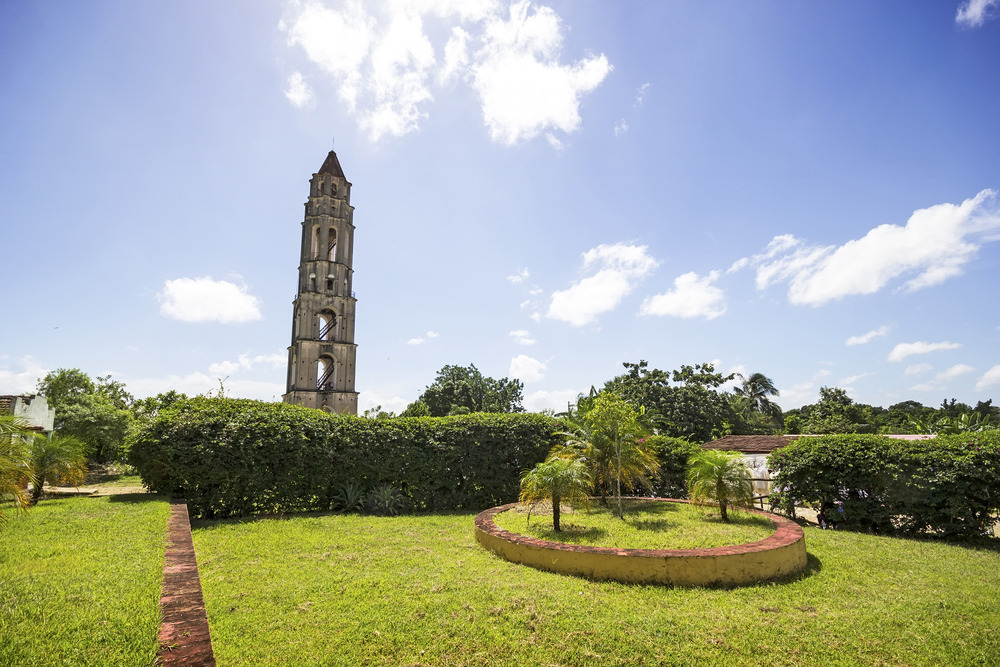
Built in 1816, this 45-meter-high tower is the valley's emblematic landmark. It served to surveil enslaved people working in the sugarcane fields and to detect escape attempts. A bell installed at its summit announced the beginning and end of the working day and sounded an alarm in case of fire. On clear days, Trinidad can be seen from the top, 15 km away.
Casa Guachinango
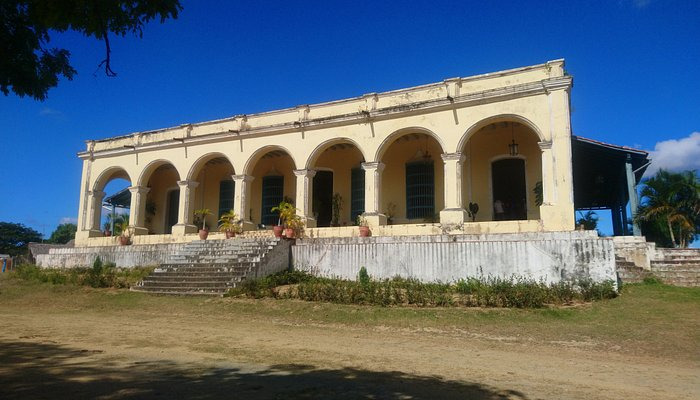
Approximately 3 km from Torre Manaca-Iznaga, Casa Guachinango is a former hacienda built by Don Mariano Borrell toward the end of the eighteenth century. The building now houses a restaurant where visitors can pause during their tour. Below flows the Rio Ay, whose banks are suitable for horseback riding.
The ruined sugar mills
Scattered throughout the three valleys, the 75 ruined sugar mills, along with their houses and former slave quarters, illustrate the spatial organization of the colonial sugar system: the master's house, the mill, the fields, and the servile dwellings were arranged around each estate.
Practical information
- Duration: allow 5 to 6 hours for a standard excursion from Trinidad, minimum half day for a car tour.
- Heritage railway: approximately 15 km journey departing from Trinidad, with stops at Torre Manaca-Iznaga and Casa Guachinango. The original steam train, subject to frequent breakdowns, has been replaced with a diesel model; service frequency may vary, so it is best to check on-site.
- Rates: moderate for the heritage railway and tower access (tower climb is paid). Meals additional at Casa Guachinango.
- What to bring: water, hat, closed-toe shoes for climbing the tower, cash (CUP).
When to visit
The dry season, from November to April, offers the most stable conditions: clear skies, better visibility from the top of Torre Manaca-Iznaga, and manageable temperatures for walking. The rainy season, from May to October, offers greener landscapes but brings tropical showers and humid heat that makes the day more taxing. Late mornings and early afternoons are the busiest periods.
How to get there
The natural gateway to the valley is Trinidad, 12 km away. Three main options:
- Heritage railway from Trinidad station: the most iconic option, with stops at main sites.
- Private car excursion or taxi, often with lunch included at Casa Guachinango—practical for setting your own pace.
- On horseback, from Trinidad or from within the valley itself, notably along the Rio Ay.
Walking between Torre Manaca-Iznaga and Casa Guachinango is possible by following the railway line for approximately 3 km.
Combine with nearby attractions
- Trinidad: the UNESCO-listed colonial town, the logical base for exploring the valley.
- El Nicho: waterfalls and natural pools in the Sierra del Escambray.
- Jobo Rosado: nature reserve north of Sancti Spíritus.
- Jagua Castle: eighteenth-century fortress near Cienfuegos.
Frequently asked questions
Frequently asked questions
A standard visit by heritage railway from Trinidad takes 5 to 6 hours. By private car, you can compress the visit into a half day or extend it to a full day with lunch at Casa Guachinango.
The service runs daily from Trinidad in principle, but has experienced interruptions in recent years due to mechanical issues. It is recommended to check availability with your accommodation or agency in Trinidad the day before departure.
Yes, the 45-meter tower is ascended by an internal wooden staircase. Access is paid and offers a clear view of the valley and, on clear days, Trinidad 15 km away.
The dry season, from November to April, guarantees the best visibility and more comfortable days. The humid season (May–October) brings greener landscapes but comes with heavy heat and showers.
Inscribed in 1988 jointly with Trinidad, the valley is considered by UNESCO "the richest and best-preserved testimony of the sugar agro-industrial process in the Caribbean during the eighteenth and nineteenth centuries and of the slavery phenomenon".
Plan your trip
The Valley of Los Ingenios is almost always visited as part of a stay in Trinidad and integrates easily into an itinerary combining the south coast, the Sierra del Escambray, and Cienfuegos. To craft a bespoke journey, explore our Cuba travel ideas.
Nearby
Interested in this visit?
We can include it in your personalised itinerary.