Tomás Terry Theatre
Tomás Terry Theatre
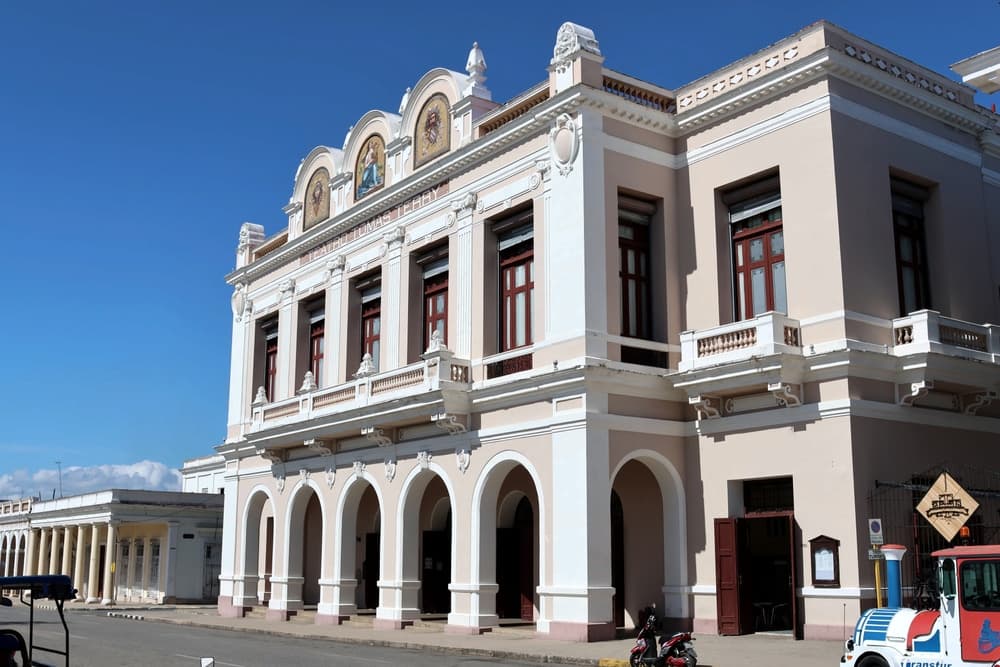
Inaugurated in 1890 facing Parque José Martí, the Tomás Terry Theatre in Cienfuegos is one of Cuba's grand Italian-style theatres, designated a national monument.
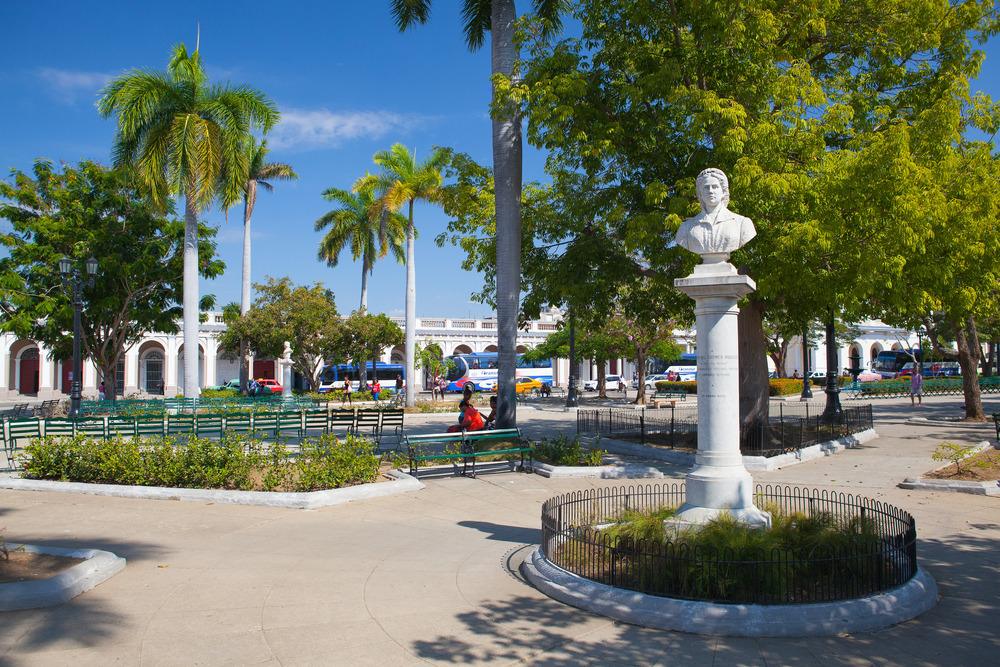
Facing Parque José Martí, in the historic centre of Cienfuegos listed as a UNESCO World Heritage site, the Tomás Terry Theatre stands at the corner of avenue 56 and calle 27. Inaugurated in 1890, it ranks among the "Eight Great Theatres" of colonial Cuba and remains one of the best-preserved Italian-style theatres in the Caribbean.
Why visit the Tomás Terry Theatre
The building offers several reasons to stop by, beyond its role as a mere architectural landmark on the main square:
- A horseshoe-shaped auditorium seating 950, modelled on the Italian colosseum style, preserved in its original state.
- Three gilded mosaics on the façade, executed by the Salviati workshop in Venice.
- A painted ceiling signed by Camilo Selava, a rare artwork in a 19th-century Cuban theatre.
- A stage graced by Sarah Bernhardt, Enrico Caruso, Anna Pavlova and Alicia Alonso.
- An active programme: opera, theatre, dance, and a biennial monologue festival.
Visits take place during the day, usually with a guide, and can easily be combined with a tour of Parque José Martí and the cathedral, just across the way.
History: a sugar magnate's promise
The theatre's story hinges largely on one man: Tomás Terry y Adams. Born in Venezuela to an Irish father, he built one of Cuba's greatest fortunes in the 19th century, first through the slave trade, then via the sugar industry, banking and commerce. A former mayor of Cienfuegos, at his death in 1886 he was Cuba's richest man.
In 1863, Terry had offered the city 60,000 pesos to finance a theatre, with 10,000 earmarked for a school for poor children. The project never materialized during his lifetime. His heirs revived the commitment, creating a civil society called the "Sucesión de Don Tomás Terry", which allocated 115,000 pesos for construction. His widow, Teresa Dorticós Gómez, contributed half of that amount.
The winning design came from Lino Sánchez Mármol, a military engineer from Santiago de Cuba. The foundation stone was laid on 19 December 1887, at the site of the old Isabella II Theatre. Work was completed in late 1889 and the official opening took place on 12 February 1890, with heirs present from Paris. The theatre was declared a national monument in 1978.
What you'll see on your visit
The façade and Venetian mosaics
The neoclassical façade faces Parque José Martí. Three gilded mosaics from the Salviati workshop in Venice represent comedy, tragedy and Terpsichore, muse of dance. The two-level side pavilions and flat roofs bordered by balustrades once served as terraces for the public.
The rococo foyer
The foyer, in 1900 rococo style inspired by 18th-century France, functions as a tribute to the patron. Notable features include:
- A marble statue of Tomás Terry, shown seated.
- Murals of nude children embodying Poetry and Music.
- Allegories of Industry and Commerce.
- Pompeian and Egyptian motifs.
- Medallions with the initials T.T. in gilt letters on a garnet ground.
The auditorium
The hall follows the Italian colosseum model, horseshoe-shaped, on four levels, seating 950. Materials remain original: Carrara marble, hand-carved parquet, ornate Cuban wood, and ceiling suspended in plaster on a metal frame.
The central ceiling, painted by Camilo Selava, depicts The Dawn surrounded by 23 allegorical figures. It includes portraits of the poetess Gertrudis Gómez de Avellaneda and composer Gaspar Villate.
The stage and curtains
The stage measures 24 metres wide by 19 metres deep. Its gilded proscenium is topped by a harp-shaped mask, added by Mateo Torriente in 1965. The intermediate curtain, also painted by Camilo Selava, depicts "Repose", an Oriental composition centred on a reclining woman, a flute player and a sleeping tiger. Complementary ornaments are the work of Juan Ruiz, a Havana decorator. The main velvet curtain trimmed in gold, hangings and furnishings were made in Paris.
A theatre still alive
Over the decades the theatre has hosted Sarah Bernhardt, Enrico Caruso, Anna Pavlova, Antonio Gades and Alicia Alonso, alongside Cuban figures such as Silvio Rodríguez and Jorge Negrete. Since 2003, it has hosted the National Festival of Cuban Monologue every two years, featuring performances, workshops and discussions. Current programming alternates between opera, theatre, dance and symphonic concerts.
Practical information
- Address: avenue 56 and calle 27, facing Parque José Martí, historic centre of Cienfuegos.
- Hours: open during the day for guided visits, typically morning until late afternoon. Check locally, as hours vary depending on rehearsals and programming.
- Admission: modest entrance fee, payable in local currency (the CUC was discontinued in 2021).
- Duration: allow 30 to 45 minutes for a guided tour, longer if you attend a performance.
- Good to know: interior photography is generally permitted outside performances. Ask at the box office about evening shows, often available at a discount.
What to see nearby
Cienfuegos and its surroundings offer several sites to complement your theatre visit:
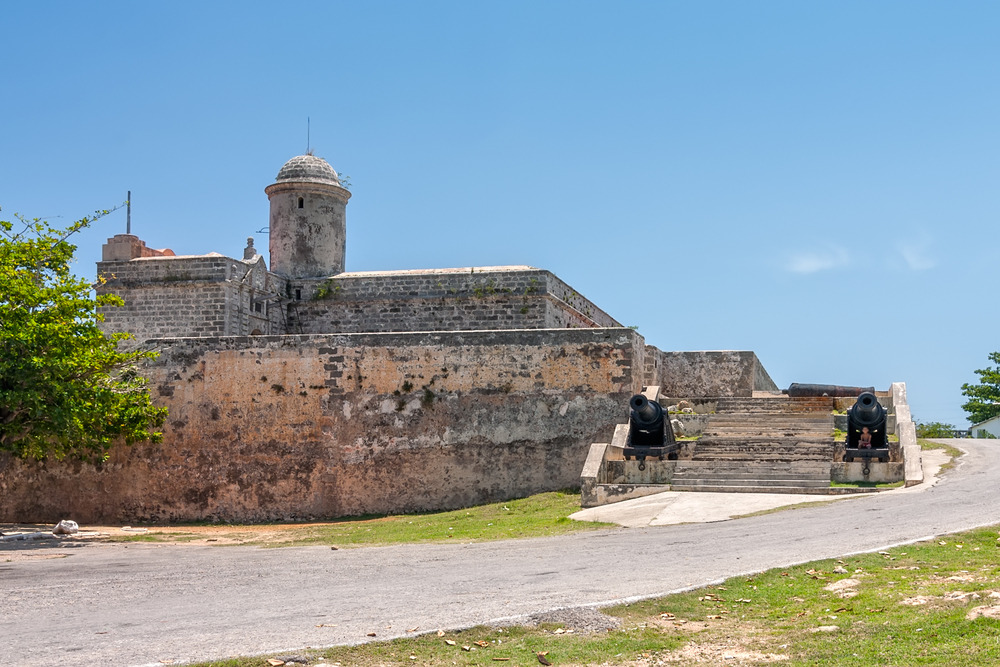
- Jagua Castle, an 18th-century Spanish fortress at the bay entrance.
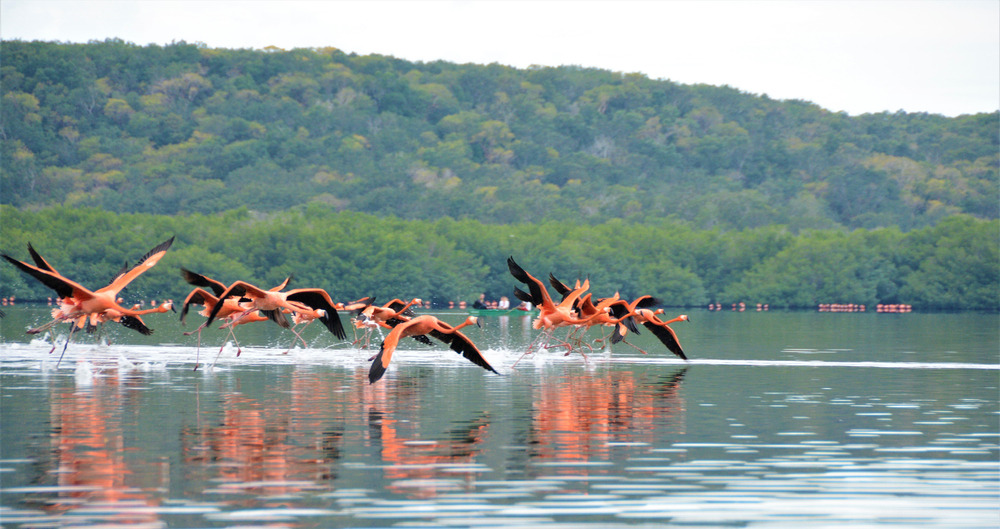
- Laguna Guanaroca, a nature reserve known for its flamingos.
- El Nicho, a series of waterfalls and pools in the Escambray mountains.
- Jobo Rosado, a protected area ideal for hiking.
Frequently asked questions
Frequently asked questions
Yes. Daytime guided tours allow you to explore the foyer, auditorium and view the painted ceiling and stage curtains, outside rehearsal times.
Allow 30 to 45 minutes for a guided tour. If you attend a performance, plan for 2 to 3 additional hours.
Yes. It regularly programmes opera, theatre, dance and music, and has hosted the National Festival of Cuban Monologue every two years since 2003.
The convertible peso (CUC) was discontinued in 2021. Payment is now made in Cuban pesos (CUP), sometimes in foreign currency at certain tourist sites.
The theatre faces Parque José Martí, the heart of the UNESCO historic centre. The cathedral, Palacio Ferrer and Paseo del Prado are all within easy walking distance.
Plan your trip to Cuba
The Tomás Terry Theatre fits naturally into an itinerary combining colonial cities, the Escambray mountains and Caribbean coastline. To build a bespoke trip including Cienfuegos and its surroundings, consult our Cuba circuits.
Nearby
Interested in this visit?
We can include it in your personalised itinerary.