Alturas de Banao Natural Park
Alturas de Banao Natural Park
Protected area of the Sierra del Escambray, 20 km from Sancti Spiritus: marked trails, waterfalls, orchids and endemic fauna away from the beaten path.
Alturas de Banao Natural Park is a protected area of more than 6,000 hectares located in the Sierra del Escambray, roughly 20 km south of Sancti Spiritus. Humid forests, karst mogotes, waterfalls and endemic wildlife make it a prime exploration ground for hikers and naturalists, well away from Cuba's main tourist circuits.
Why Visit Alturas de Banao
The reserve protects dense biodiversity across vertical terrain, peaking at 842 meters. It is home to more than 1,200 plant and animal species, many of which appear on endangered species lists. Trails traverse multiple vegetation zones and lead to natural pools, waterfalls and a historic site linked to the Cuban guerrilla campaign.
Three features set Alturas de Banao apart from other protected areas in the Guamuhaya massif:
- Rare vegetation studied for decades by Cuban botanists at the La Sabina Biological Center.
- The presence of emblematic endemic birds such as the tocororo (Cuba's national bird), the zunzún and the cartacuba.
- Low visitor numbers, which preserve the wild character of the trails.
What to See and Do
La Sabina Biological Center
The logical starting point for any visit, the Casa de Guardabosques de La Sabina serves as both visitor center and research base. The site maintains 62 varieties of orchids and 249 species of ferns, along with rare plants such as Tabernaemontana citrifolia, locally called "rooster's egg." The genera Podocarpus, Guzmania, Vaccinium and Begonia are represented here; Begonia banaoensis, critically endangered, exists nowhere else on Earth.
Hiking Trails
Two marked routes depart from La Sabina:
- Sendero La Sabina – Poza de los Enamorados: an easy walk leading to a natural pool perfect for swimming. Suitable for most hikers.
- Sendero La Sabina – Casa de la Gallega: a more demanding 6 to 7-hour round-trip route that crosses humid forest and offers the best chances of spotting wildlife (tocororo, jutias, endemic amphibians).
Some sections can be covered on foot or by mule depending on season and trail conditions.
Waterfalls and Water Features
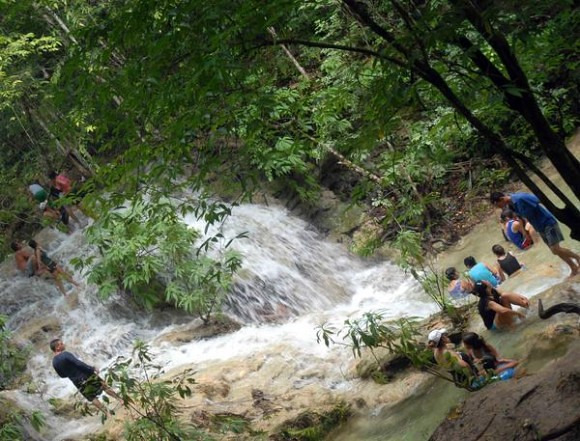
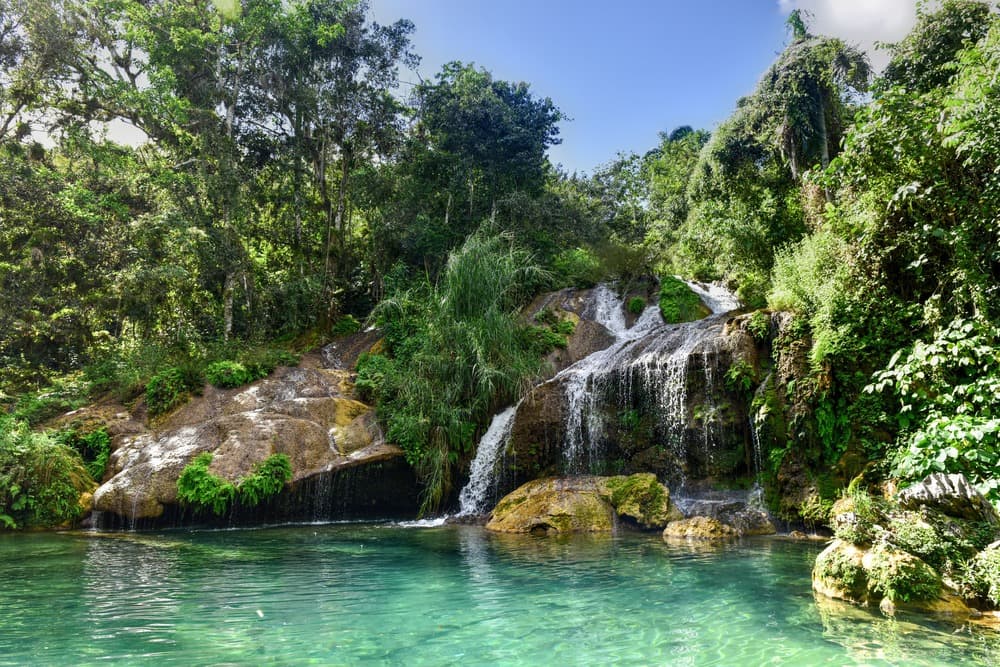
The Rio Banao and Rio Cayajana cross the park and feed several falls accessible from the trails: Las Cortinas, La Bella and Cortina Blanca. Salto del Caburni, the massif's most famous waterfall, sits on the edge of the neighboring Topes de Collantes protected area; it can sometimes be reached from Banao via a combination of routes reserved for experienced hikers.
Caja de Agua and Wildlife
The Caja de Agua zone holds the reserve's highest concentration of endemic species. On the fauna side, you may observe the zunzún, cartacuba, tocororo and several parrot species. Endemic rodents (jutias) roam the understory, and rivers still harbor the manjuari, a fish considered a prehistoric relic. Fossils of extinct monkeys and sloths have been unearthed in the region.
El Pedrero, Memory of the Guerrilla
Nearby, El Pedrero served as Che Guevara's headquarters during the Las Villas campaign. The site, nicknamed "Comandancia del Guerrillero Heroico," adds a historical dimension to the visit for travelers interested in Cuban revolutionary history.
When to Go
The dry season, from November to April, remains the most comfortable period: moderate temperatures, passable trails, rivers at reasonable levels. From May to October, the rainy season makes paths slippery and some access difficult, but vegetation reaches its peak and waterfalls are more powerful.
How to Get There
Access is from Sancti Spiritus, about twenty kilometers away. You must reach the rural community of Banao, then continue to the Casa de Guardabosques de La Sabina, the sole starting point for hikes in the reserve. The final road is in poor condition: a suitable vehicle or organized transfer is recommended.
Practical Information
- Management: the reserve is administered by the National Enterprise for Flora and Fauna Protection, distinguished as Vanguardia Nacional for over 30 years.
- Equipment: hiking boots, waterproof clothing, plenty of water, insect repellent, binoculars for wildlife observation.
- Local guide: essential off marked trails and recommended even on main routes to identify fauna and flora.
- Connectivity: no mobile coverage, no modern tourist infrastructure. Bring cash and supplies before arriving.
- Accommodation: basic shelters on site, sometimes hammocks. Most visitors return to sleep in Sancti Spiritus.
What Else to Explore in the Region
Alturas de Banao fits naturally into an itinerary centered on central Cuba:
- The colonial city of Sancti Spiritus, one of the seven earliest towns founded by the Spanish on the island.
- The Museo de Historia Municipal, useful for placing the region in Cuban history.
- The Château de Jagua in Cienfuegos, reachable by continuing west.
- The Bay of Pigs, another natural and historic stop in central Cuba.
Frequently Asked Questions
Frequently asked questions
Planning Your Next Adventure
Alturas de Banao integrates easily into a circuit through central Cuba, between Sancti Spiritus, Trinidad and Cienfuegos. To build a custom itinerary blending nature, colonial cities and beaches, explore our Cuba trips.
Interested in this visit?
We can include it in your personalised itinerary.