City Museum
City Museum
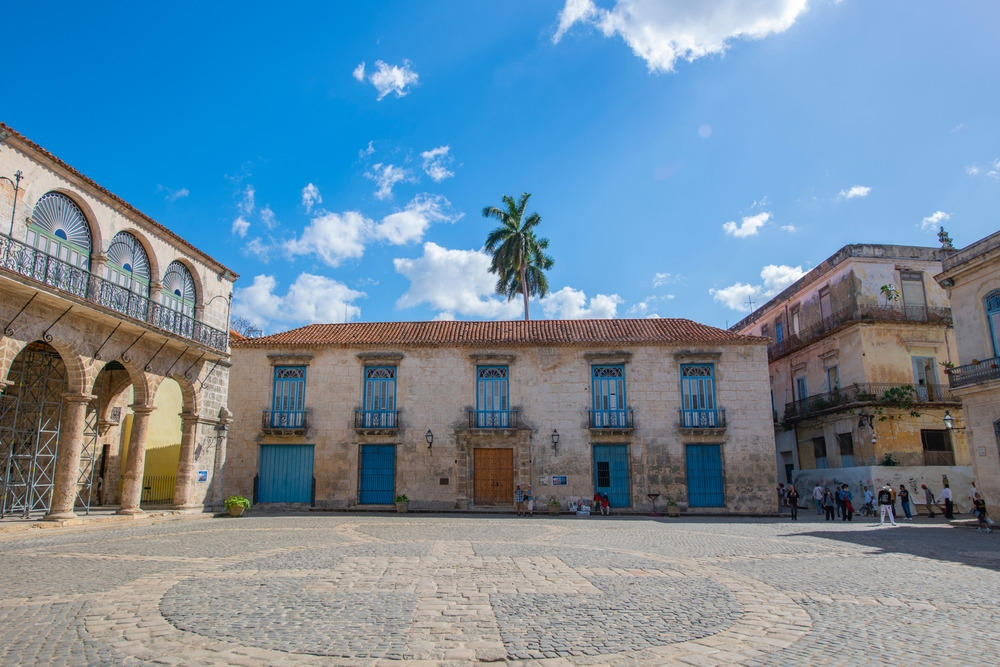
Located in the former Palace of the Captains General on Plaza de Armas, the City Museum traces four centuries of Havana's history across 40 rooms.
On the Plaza de Armas of Old Havana, the City Museum (Museo de la Ciudad) occupies the former Palace of the Captains General, one of Cuba's major colonial buildings. Its 40 rooms trace four centuries of urban history, from the founding of Havana in 1519 to the 1959 Revolution.
Why Visit the City Museum
Three main reasons warrant a stop at this museum. First, the building itself: a Cuban baroque palace completed in 1792, its limestone façade still embedded with visible marine fossils. Second, the richness of the collections, covering the Spanish colonial period, independence wars, and the young Republic. Finally, the setting itself: a courtyard paved with white marble where peacocks roam, at the center of which stands a statue of Christopher Columbus erected in 1862, considered by some sources as the first statue dedicated to the admiral installed on the American continent.
History of the Palace of the Captains General
Construction began in 1776 on the ruins of the Parroquial Mayor, Havana's first church, destroyed twice over. The project was launched under the authority of Governor Felipe Fondesviela, Marquis of la Torre, and completed in 1792 during the tenure of Luis de las Casas.
The palace served as the official residence of 65 Spanish captains general between 1791 and 1898, then as the seat of American military administration from 1899 to 1902. On May 20, 1902, it became the presidential palace until 1920, hosting notably the inauguration of Cuba's first president, Tomás Estrada Palma. The building subsequently housed city hall before becoming a museum in 1968, under the authority of the Oficina del Historiador de La Habana.
What to See in the Collections
The 40 rooms of permanent exhibition are arranged in the palace's former apartments and corridors. Each room documents a chapter of Cuban history.
Iconic Pieces Not to Miss
- The first Cuban flag, raised in 1850 by Narciso López;
- A telegraph machine from 1865;
- A handcrafted cannon in leather and brass used by the mambises during the independence wars;
- The boat used by Antonio Maceo in 1896 to cross the Trocha de Mariel;
- Louis XV and Louis XVI style furniture, porcelains, and objects belonging to the colonial elite;
- Military uniforms, 19th-century carriages, weapons, and historical flags.
Thematic Rooms
- La Parroquial: archaeological remains and religious works from Cuba's first church, formerly located on the museum's site;
- La Giraldilla: dedicated to the first bronze sculpture cast in Havana;
- La Heraldica: banners, titles, and objects related to Cuban nobility;
- Cuban Brass Room: forging and local metallurgy;
- Emilio Roig Room: objects belonging to the historian;
- Pinacotheca: Cuban paintings from the 19th century to modern times;
- Spanish Uniforms Room and Heroic Cuba Room: struggles for independence.
The Salón del Trono deserves particular attention: it houses a throne prepared for a Spanish royal visit that never took place. A scale model of the first locomotive to run in Cuba and a Carriage Room complete the evocation of the 19th century.
The Courtyard and View of Plaza de Armas
The central courtyard, paved with white marble and bordered by arcades, forms the heart of the building. The peacocks strolling about add an unexpected touch. From the upper-floor rooms, you can see El Templete, which marks the location of the city's founding, as well as the buildings bordering Plaza de Armas.
Practical Information
The museum is open Tuesday to Sunday, with more limited hours Sunday mornings and closed Mondays. It's best to check current hours before your visit, as they may change. The entrance fee remains modest for a museum of this scale.
Audio guides are available in Spanish and English, and guided tours offer deeper insights into the collections. Allow 1.5 to 2.5 hours to tour the main rooms. Photography is generally permitted without flash, though some rooms may have restrictions: it's wise to inquire at the entrance.
How to Get There
The museum is located on Plaza de Armas, in the pedestrian historic center of Old Havana, a UNESCO World Heritage site. From the Capitol or Parque Central, allow 10 to 15 minutes on foot via Obispo or O'Reilly streets. Bici-taxis and coco-taxis drop off at the entrance to the pedestrian quarter. No parking is available in immediate proximity; private vehicles stop at the edge of the historic center.
What to See Nearby
Plaza de Armas itself deserves a visit: it hosts an antique book market and several colonial buildings. El Templete, just opposite the museum, marks the presumed site of the city's founding in 1519. The Castillo de la Real Fuerza, nearby, is one of the Americas' oldest fortresses and houses the original weathervane of La Giraldilla. To continue exploring Cuba, also see the Jagua Castle near Cienfuegos, or the Santiago Cathedral at the island's other end.
Frequently Asked Questions
Frequently asked questions
Allow 1.5 to 2.5 hours depending on your interest in historical details. A quick tour of the main rooms and courtyard can be done in an hour, but lovers of colonial history and antique furniture enthusiasts could spend half a day here.
Audio guides are offered in Spanish and English. No other language versions are available at this time. English-speaking visitors can opt for a guided tour if an English-speaking guide is available, or bring a paper guide.
Photography is generally permitted without flash, but certain rooms or temporary exhibitions may have restrictions. It's best to confirm conditions at the entrance upon arrival.
The 18th-century building has multiple floors and was not designed for modern accessibility. The ground floor and courtyard are accessible, but the upper floor, which contains a significant portion of the collections, requires the use of stairs.
Preparing Your Visit to Havana
The City Museum is a key stop for understanding how Cuba's capital was shaped and the weight of its colonial past. To integrate this visit into a broader itinerary, consult our Cuba tours and suggestions on Havana.
Interested in this visit?
We can include it in your personalised itinerary.