Manaca Iznaga
Manaca Iznaga
Former sugar plantation in the Valley of the Sugar Mills, 16 km from Trinidad. Watchtower, hacienda and slavery remnants, UNESCO-listed.
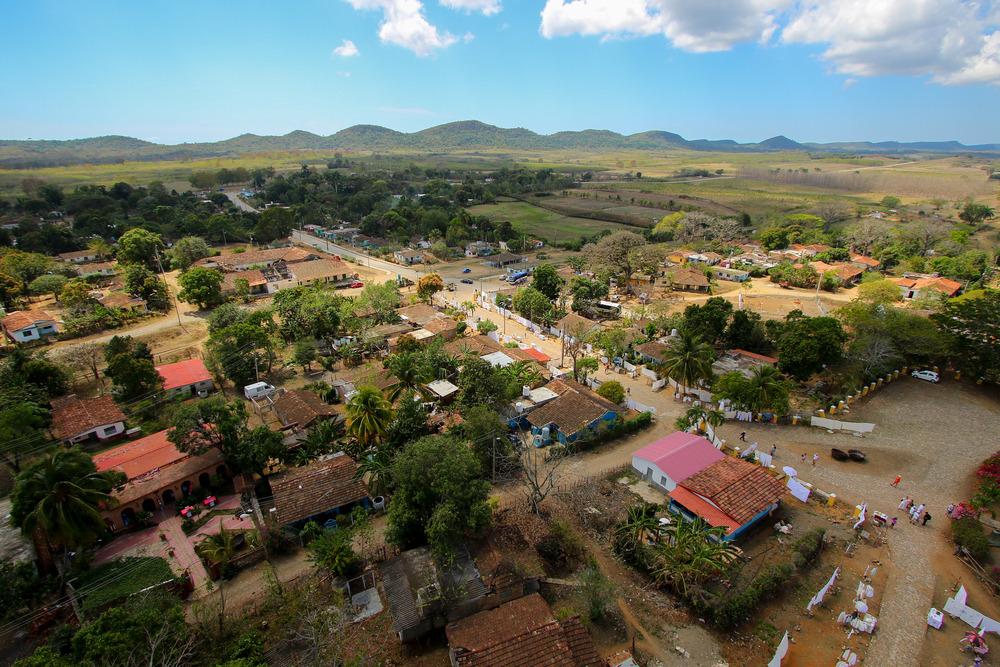
Manaca Iznaga is a former sugar cane plantation located 16 km northeast of Trinidad, in the heart of the Valley of the Sugar Mills (Valle de los Ingenios). The valley and neighboring town have been inscribed as UNESCO World Heritage since 1988. The site documents both the prosperity of Cuba's sugar industry in the 18th and 19th centuries and the reality of slavery that powered its economy.
Why visit Manaca Iznaga Estate
The estate brings together several layers of Cuban history in one place: a restored hacienda, a watchtower standing roughly forty meters high, period workshops and the remains of the slave village. It is one of the few preserved complexes in the Valley of the Sugar Mills, where most plantations fell into ruin after sugar production shifted to the northern coast. Allow 1.5 to 2.5 hours to explore the entire site, including the tower ascent.
History of the plantation
The plantation was founded in 1750. It was acquired in 1795 by Pedro Iznaga, whose family would amass a fortune in the following decades through sugar production and the slave trade. Manaca Iznaga was among the region's largest sugar mills, exploiting the valley's fertile lands through the forced labor of hundreds of enslaved people.
Goods produced on site were transported by steam train to the port of Casilda, south of Trinidad, for export. When sugar production shifted north in the late 19th century, many valley haciendas were abandoned. Manaca Iznaga, however, retained its main buildings, which underwent successive restorations: the tower was restored in 1887, then designated a National Monument in 1981.
What to see on site
The Torre Manaca-Iznaga
The tower dominates the estate at approximately 43.5 meters in height (some sources cite 45 meters). Built in the early 19th century under orders from the Iznaga Borrell family, it served to monitor the sugar cane fields and enslaved laborers' work. A large bell positioned in front of the hacienda marked their days: dawn call, breaks, end of day.
The ascent involves seven stories connected by approximately 137 steps. From the summit, views sweep across the valley and toward the foothills of the Escambray Mountains. Entry to the estate is free; a modest contribution is requested to climb the tower.
The hacienda
The main house features a façade reconstructed between 1989 and 1990, inspired by a 19th-century engraving. It displays a full-arch arcade, a Spanish-style door framed by pilasters, and windows protected by turned wooden balusters. The interior layout follows 18th and 19th-century patterns: two bodies parallel to the street contain bedrooms, offices and reception rooms, extended by a gallery on stilts built above a basement level.
A restaurant-bar occupies part of the main house and generally serves lunch during a short window in midday (around 12pm–2:30pm, to be confirmed on-site). It offers simple dishes and freshly pressed sugar cane juice, made using a press located at the rear.
Workshops, village and cemetery
Other period buildings stand around the hacienda:
- A blacksmith's workshop and infirmary, identifiable by their four-sloped wooden roofs;
- The slave village, composed of modest dwellings with patios where poultry were raised;
- The former slave cemetery, a stark reminder of the estate's tragic history.
At the site's edges, stalls run by local vendors offer embroidered textiles, lace and handicrafts. The workforce is Cuban, and purchases support local valley families directly.
When to visit
The dry season, from November to April, offers the most comfortable conditions for exploring the site and climbing the tower: mild temperatures, clear skies, better visibility from the summit. It is also peak tourist season, with noticeable crowds mid-morning.
The wet season, from May to October, remains feasible despite sometimes heavy afternoon showers. Crowds are thinner and valley vegetation is lusher. Favor a morning visit to avoid both heat and tour groups.
How to reach Manaca Iznaga
Three main options from Trinidad:
- Tourist train: it connects Trinidad to the plantation most days, crossing the Valley of the Sugar Mills. Once pulled by a steam locomotive, it is now drawn by a diesel engine. The slow journey allows you to observe wildlife and former sugar parcels.
- Shared or private taxi: allow around twenty minutes' drive from Trinidad's center. A private taxi lets you continue to other sugar mills in the valley.
- Rental car: access is signposted from the road linking Trinidad to Sancti Spíritus.
Nearby
The estate fits naturally into a stay in Trinidad, whose colonial center is also UNESCO-listed. Other Cuban sites complement a historical discovery of the island: Jagua Castle near Cienfuegos, the Bay of Pigs south of Matanzas, or Caguanes National Park for a nature focus.
Frequently asked questions
Frequently asked questions
Including Manaca Iznaga in a Cuba trip
The estate fits naturally into an itinerary combining Havana, Cienfuegos and Trinidad. To build a custom route including the Valley of the Sugar Mills and other heritage sites on the island, explore our Cuba trips.
Interested in this visit?
We can include it in your personalised itinerary.