Crocodile Breeding Center
Crocodile Breeding Center
On the Zapata Peninsula, the Criadero de Cocodrilos has protected two species of Cuban crocodiles since 1962. Guided tours, demonstrations, and conservation efforts.
The Criadero de Cocodrilos de Boca de Guamá, on the Zapata Peninsula, is a breeding and conservation center dedicated to the two crocodile species found in Cuba. Located on the shores of Laguna del Tesoro, roughly two hours' drive from both Havana and Varadero, the site combines scientific mission, reintroduction program, and accessible public guided tours.
Why Visit the Criadero de Cocodrilos
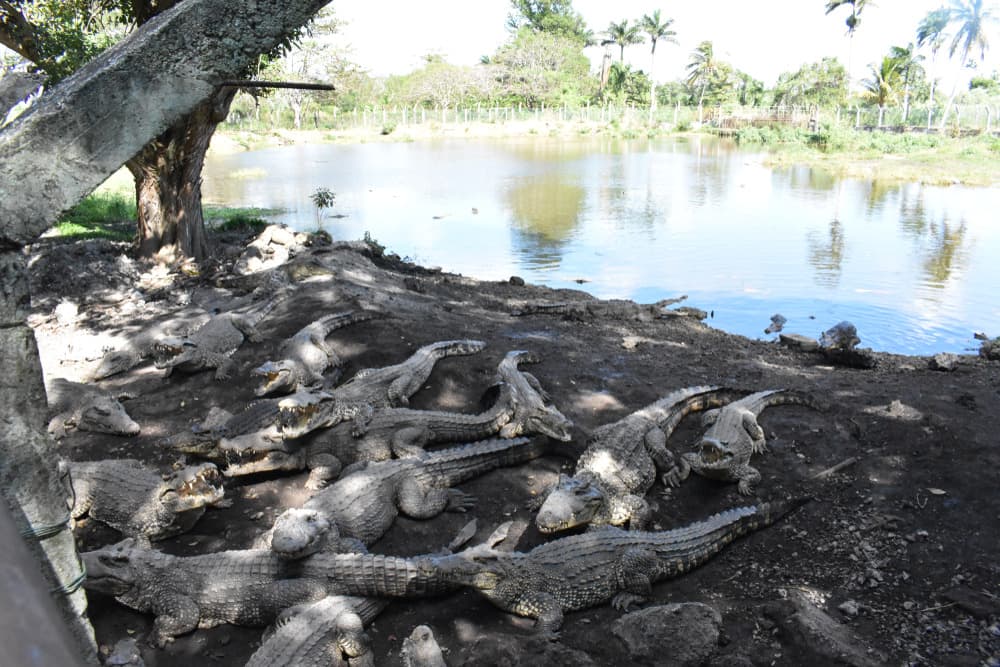
The center breeds two species: Crocodylus rhombifer, the Cuban crocodile endemic to the island, and Crocodylus acutus, the American crocodile found throughout tropical America. More than 10,000 individuals live here, distributed by size and age across pools and engineered wetland zones.
The visit is brief and educational, allowing you to understand the crocodile reproductive cycle, their ecological role, and conservation issues specific to Cuba. The center makes an excellent family stop en route to the Bay of Pigs or Cienfuegos.
History of the Program
Founded in 1962 and managed by the Ministry of Fishing Industry, the Criadero is considered the first major environmental initiative of Cuba's revolutionary government. The Cuban crocodile, whose natural range today is limited to a few areas of the Zapata Peninsula and the Isle of Youth, was then facing intensive hunting and habitat degradation.
Captive breeding, combined with reintroduction of individuals into protected areas and work on genetic diversity, aims to preserve the identity of this endemic species, one of the most threatened among crocodilians worldwide.
What to See and Do
The guided tour lasts approximately 45 minutes and is done on foot, accompanied by a caretaker or local guide. Explanatory signs line the trails bordered by tropical vegetation.
Observing the Crocodiles
The enclosures group animals by age class: newborns measuring only a few centimeters, juveniles, and adults spanning several meters in semi-natural pools. A teaching room displays preserved embryos in formaldehyde and a crocodile skeleton, useful for understanding the animal's morphology and development.
Depending on the day's schedule, visitors may touch a crocodile held by a caretaker, or even hold a young one in hand for a photo. This handling remains supervised by staff.
Feeding Demonstration
Caretakers perform a feeding demonstration: food is tossed into the pools, and crocodiles, motionless, suddenly leap to catch their prey. A complementary activity is sometimes offered for a small fee: waving a wooden pole tipped with a fish head over the water to observe the hunting technique up close.
Other Animals on Site
The center also houses aquatic turtles and a Cuban hutia, a large endemic rodent locally nicknamed "tree rat." You may occasionally spot one sheltering in the foliage.
Restaurant and Shop
At the end of the tour, a local restaurant, called a "rancho," offers crocodile meat, with firm texture and flavor compared to fish. A souvenir shop stocks reptile-related items, and sometimes naturalized baby crocodiles.
If you purchase a crocodile-skin product, always ask for a receipt: it will serve as proof to customs of the animal's legal origin (farmed, not wild-caught), in compliance with international CITES regulations.
Practical Information
- Visit duration: allow 1 to 1.5 hours on-site with the demonstration.
- Hours: daytime opening, generally morning through late afternoon. Exact hours vary; best to arrive in the morning.
- Admission: paid entry, moderate cost, with possible supplements for interactive activities and photos.
- Languages: guided tours in Spanish, sometimes in English; English-speaking guides available as staff permits.
- Essentials: mosquito repellent is a must, closed-toe shoes, water, and a hat.
When to Go
The Zapata Peninsula is a vast wetland, meaning significant mosquito presence year-round, intensified during the wet season (May to October). The dry season, November to April, offers more comfortable conditions: milder temperatures, fewer insects, and less muddy trails. The visit is mostly outdoors; early morning hours are most pleasant.
How to Get There
The Criadero is located in Boca de Guamá, on the Zapata Peninsula, roughly two hours' drive from both Havana and Varadero via the national highway. The site has a small parking area at the entrance. It's also included in numerous organized excursions from major tourist centers, often combined with Laguna del Tesoro and the Bay of Pigs. For international travelers, the nearest airports are Havana and Varadero.
Nearby Attractions
- Laguna del Tesoro: accessible by boat from Boca de Guamá, it houses the reconstructed village of Guamá, a tribute to Taíno culture with indigenous-inspired sculptures.
- Bay of Pigs: approximately one hour's drive away, historic site of the 1961 landing and renowned diving spot (Playa Girón, Caleta Buena).
- Caguanes National Park: another Cuban biosphere reserve, complementary for nature enthusiasts.
- Hummingbird House: to extend your observation of Cuba's endemic wildlife.
Frequently Asked Questions
Frequently asked questions
Plan Your Cuba Trip
The Criadero de Cocodrilos fits naturally into an itinerary connecting Havana, Cienfuegos, and Trinidad, making a nature stop in the heart of the Zapata Peninsula. To build your complete itinerary, consult our custom Cuba trips.
Interested in this visit?
We can include it in your personalised itinerary.