One Country, Two Currencies
Traveling to Cuba requires familiarizing yourself with a unique monetary system, local customs, and certain payment restrictions. Before your departure, it's essential to understand which currency is in circulation, how to make your payments, and what precautions to take.
Traveling to Cuba requires familiarizing yourself with a unique monetary system, local customs, and certain payment restrictions. Before your departure, it's essential to understand which currency is in circulation, how to make your payments, and what precautions to take.
Cuba's Official Currency
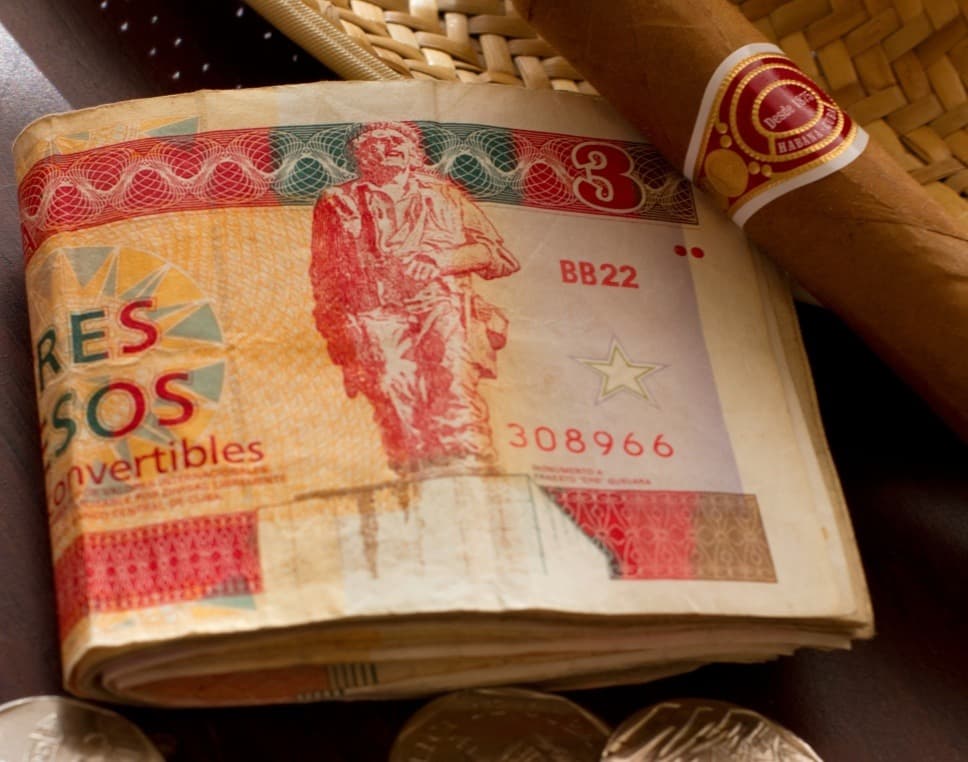
Since January 1, 2021, following the economic reform "Tarea Ordenamiento," the Cuban peso (CUP) is the only official currency in circulation in Cuba. This monetary unification, marked by the disappearance of the convertible peso (CUC), aimed to simplify the economic system and strengthen the country's appeal, particularly for foreign investors.
The CUP is used by both the local population and visitors to settle purchases in shops, markets, restaurants, and other services displaying prices in the national currency. Cash payments are mandatory from individuals, as they do not yet have card payment processing capabilities.
The value of the Cuban peso against foreign currencies varies according to the official rate set by the State and the informal market rate, often more advantageous and widely used in daily life. The CUP circulates exclusively in cash and maintains stable value in the regular market.
CUP vs MLC (Freely Convertible Currency)
In Cuba, two payment systems coexist: the Cuban peso (CUP), used in cash, and the Moneta Libremente Convertible (MLC), a virtual currency exclusively intended for card transactions.
The MLC, indexed to foreign currencies such as the euro or US dollar, does not circulate as physical banknotes. When paying in MLC, the currency brought by the traveler (euros, dollars, etc.) is converted into internal electronic money within the country, non-exchangeable outside. This system, designed to capture foreign currency, is widely used in specialized shops, often oriented toward tourism, offering imported products or higher quality items.
MLC payments are made only by rechargeable bank card in foreign currencies: certain international cards are accepted, but not cash. Many hotels, gas stations, and souvenir shops display their prices in MLC.
In parallel, the CUP remains the reference for cash purchases in local shops, private restaurants, or markets. However, some establishments also accept CUP by bank card, but only via Cuban cards. In this case, tills often have two terminals: one for foreign MLC payments, the other reserved for CUP cards held by residents. These systems are not interchangeable.
Moreover, travelers on beach vacations will primarily use their card in MLC, with cash mainly for tips. Conversely, those exploring the island, meeting locals, and venturing beyond tourist areas will need a more substantial budget in CUP. In the context of a tailor-made organized trip, since most MLC expenses are often settled in advance, cash in CUP becomes the primary tool for everyday expenses.
Exchange and Currency to Bring
It is possible to exchange foreign currencies for Cuban pesos (CUP) in several types of establishments:
- Banks (such as Metropolitano or BANDEC)
- Official CADECA currency exchange offices
- Airport counters
- Certain hotels.
The main accepted currencies include:
- Euro (EUR)
- Canadian dollar (CAD)
- US dollar (USD)
- British pound (GBP)
- Swiss franc (CHF)
- Japanese yen (JPY)
- Mexican peso (MXN).
Euros and Canadian dollars are often favored by travelers, while the US dollar, although again accepted, may be less advantageous due to additional taxes.
Exchange can be done in two ways:
- At the counter, with passport presentation, to exchange cash for CUP
- At ATMs, with an international bank card (excluding cards issued by American banks), to withdraw CUP directly.
Withdrawals are limited to 80,000 CUP (approximately 660 euros) per transaction. To obtain a larger amount, you must submit a specific request and await the availability of funds.
Upon arrival at the airport, you will find currency exchange counters. However, rates applied at airports, banks, hotels, and CADECA are generally identical and less favorable than on the informal market, which some travelers use despite it being illegal and risky. To optimize your transactions, it's better to compare and exchange progressively rather than convert everything at once.
In Cuba, cash remains the dominant payment method, particularly for public transportation, museums, theaters, parks, or small shops. In private establishments (restaurants, bars, guesthouses, clubs…), it is common for foreign currencies (particularly the euro, Canadian dollar, or US dollar) to be accepted directly. State-run establishments, conversely, favor CUP payment.
Payment by Bank Card
Bank card payments remain limited in Cuba and mainly concern hotels, State restaurants, gas stations, and certain MLC shops. Private establishments, such as casas particulares, small restaurants, bars, taxis, or markets, operate almost exclusively in cash, in CUP.
The most reliable bank cards are Visa and Mastercard, provided they are not issued by American banks or institutions linked to the United States, directly or through subsidiaries. Certain European banks also apply American sanctions, which can lead to unexpected transaction blocks. Other accepted cards include Union Pay, Ocean Card, CABAL, MIR, and American International Service (AIS).
Prepaid MLC cards can be purchased from Cuban banks (such as BANDEC) or at currency exchange offices (CADECA), reloading them with foreign currencies.
Withdrawing Money in Cuba
Automatic teller machines (ATMs) are mainly found in major cities like Havana, Varadero, or Santiago, but their availability remains limited. It is not uncommon for them to be out of service, empty, or displaying long queues. Outside urban areas, they are virtually nonexistent, making withdrawals difficult for travelers.
Withdrawals are made exclusively in CUP and are debited in US dollars (USD), with an average local markup of 3.25% to which any fees charged by your bank are added. The rate applied is that of the official market, often less favorable than the informal rate.
Practical Tips
To travel peacefully in Cuba, it is advisable to bring a sufficient reserve in cash to cover most of your expenses. Do not rely solely on automatic teller machines: they are rare, sometimes out of order or empty, and may refuse your card without apparent reason. Withdrawals should therefore be considered a supplement, not your main source of liquidity.
To avoid any inconvenience, a few precautions are necessary:
- Bring banknotes in good condition, without tears or marks, as damaged denominations can be refused.
- Favor small denominations, more practical for daily purchases and to avoid change issues.
- Distribute your payment methods (cash and cards) across different locations to limit losses in case of theft.
- Withdraw cash as soon as possible if you encounter an ATM, and in sufficient quantity for several days.
- Always check the rate displayed before accepting a transaction, as some counters do not apply the current official rate.
- Inform your bank before departure and, if necessary, temporarily increase your withdrawal limit to avoid any blocks.
Finally, remain vigilant at airports and tourist areas where pickpockets are reported. A security pouch or discreet wallet can prove very useful for protecting your cash.