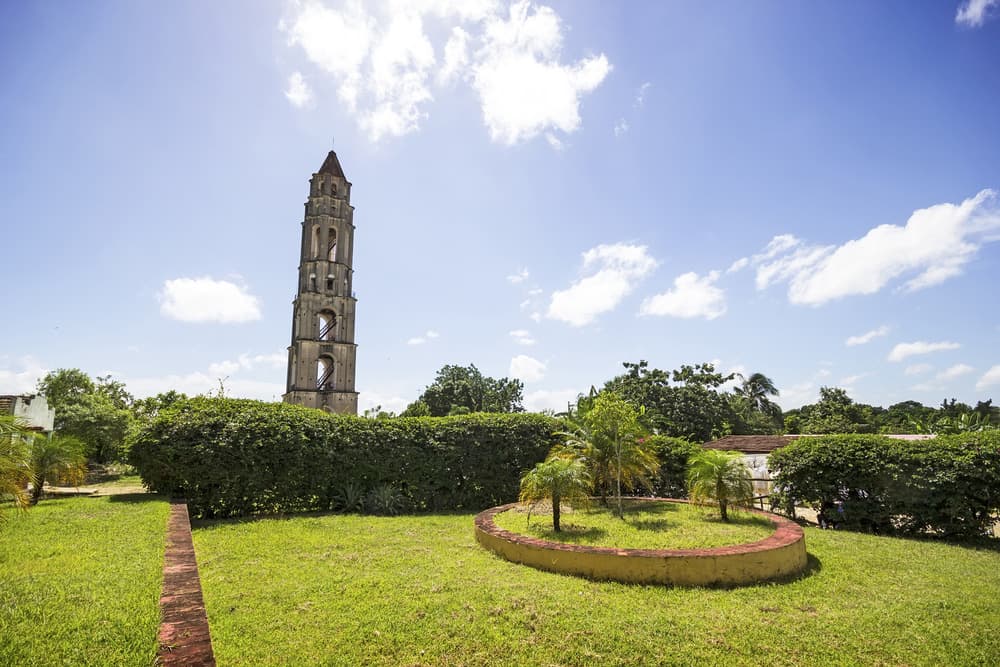
Iznaga Tower
Iznaga Tower
Just 20 km from Trinidad, the Manaca Iznaga Tower dominates the Valle de los Ingenios, the former sugar-growing heart of Cuba and a UNESCO World Heritage site. Seven stories, two centuries of history.
About twenty kilometers from Trinidad, in Sancti Spíritus Province, the Manaca Iznaga Tower rises above the Valle de los Ingenios. This former sugar center, inscribed on the UNESCO World Heritage List in 1988, was one of the Caribbean's greatest sugar cane production hubs in the nineteenth century. The tower stands as a testament both to the power of its landowning families and the slave system upon which their wealth was built.
Why visit Iznaga Tower
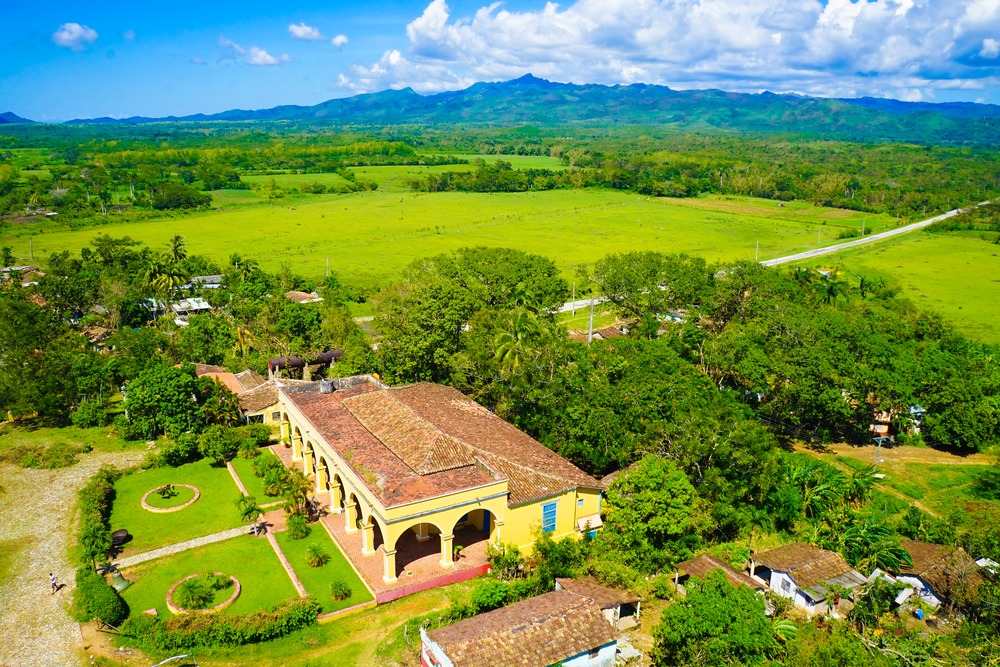
The site brings together three dimensions of Cuban history in one place: colonial architecture, the sugar economy, and the memory of slavery. Rising 42.5 to 45 meters high, the tower is one of Cuba's most singular structures, nicknamed the "Cuban Tower of Pisa" because of its slight lean. From the summit, panoramic views embrace sugarcane fields, the ruins of former sugar mills, and the foothills of the Escambray Mountains.
The context is equally striking: the valley once held more than fifty sugar mills (ingenios) between the late eighteenth and mid-nineteenth centuries, their remains still scattered across the landscape.
History of the estate and tower
The first documented trace of the site dates to 1750, when Manuel José de Telleria was granted permission to build a mill on the Manacú estate. The operation then took the name Manaca Telleria, later San Francisco Javier. In 1795, Pedro José Iznaga, a slave trader who had become one of the island's wealthiest men, purchased the plantation for 24,000 pesos. His son, Alejo Maria del Carmen Iznaga, inherited the estate in 1831.
It was under Alejo's direction that the tower was erected between 1814 and 1830. Seven stories, between 136 and 184 steps depending on counting method, a structure transitioning from square to octagonal form, punctuated by grand arches ensuring air circulation: the building exemplifies nineteenth-century Cuban architectural eclecticism. Built of clay bricks and lime and sand mortar, the tower was designed to withstand hurricanes and earthquakes—which it has endured for two centuries.
Its functions were multiple: bell tower, watchtower, fire alarm signal. The bells marked the days of enslaved people and called the faithful to prayers to the Virgin in the morning, at noon, and in the evening. Long considered the highest watchtower in the Caribbean sugar industry, it also served to monitor plantations and, according to some sources, to keep watch for potential ships on the southern coast.
Legends surrounding the site
Several popular tales surround the tower. The best-known evokes a rivalry between Pedro and Alejo Iznaga, both in love with the same woman: to win her, Pedro allegedly had a well dug 28 meters deep, still visible in the courtyard, while Alejo erected the tower. Another version recounts that Alejo, suspecting his wife of infidelity, locked her away at the summit; some locals claim to see, at nightfall, the ghost of a solitary woman.
What to see on site
- The tower climb: narrow and steep stairs leading to a viewpoint offering a 360° panorama of the valley, the ruins of sugar mills, and the Escambray Mountains.
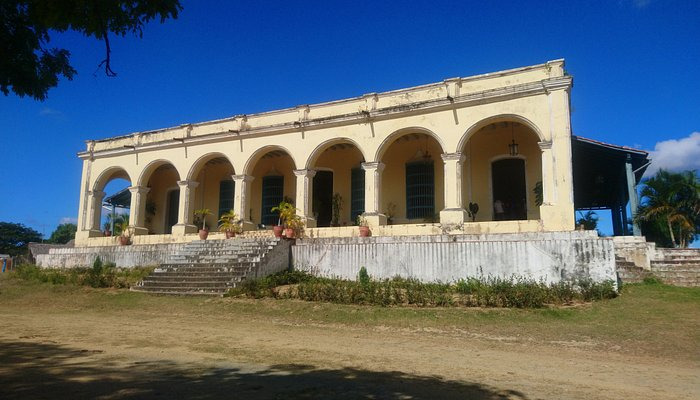
- The manor house: former residence of the Iznaga family converted into a restaurant-bar, where you can dine on-site (service at midday hours).
- The 28-meter well: allegedly dug by Pedro Iznaga according to legend, located in the courtyard of the complex.
- The sugar press: an imposing machine displayed near the manor house, evidence of past industrial activity.
- The hamlet surroundings: craft stalls (embroidery, lace) and remnants of sugar-processing installations.
Practical information
Allow 1 to 2 hours for a comfortable visit, longer if you plan to dine. The climb is physically demanding due to the stairway's narrowness and heat; closed-toe shoes, water, and a hat are recommended. Tower entry is moderately priced, payable in Cuban pesos or foreign currency depending on the period.
The site is open all day; the restaurant operates mainly at lunch hours. Check locally in Trinidad for current conditions, which may vary.
When to visit
The dry season, from November to April, offers the best conditions: cooler temperatures for climbing and clear skies over the valley. The rainy season (May to October) coincides with cyclone season; showers are brief but can make the climb slippery. Early morning or late afternoon light showcases the landscape beautifully and keeps temperatures more bearable.
How to get there
The site lies about 20 km east of Trinidad, in Sancti Spíritus Province. Three main options:
- By car or shared taxi from Trinidad: approximately 30 minutes by the valley road.
- By tourist train: a heritage train follows the old sugar-cane railway from Trinidad and stops at Iznaga. Frequency is limited and depends on equipment condition; verify the day before.
- By guided excursion, a convenient option often combining the Valle de los Ingenios and other regional highlights.
What to combine in the area
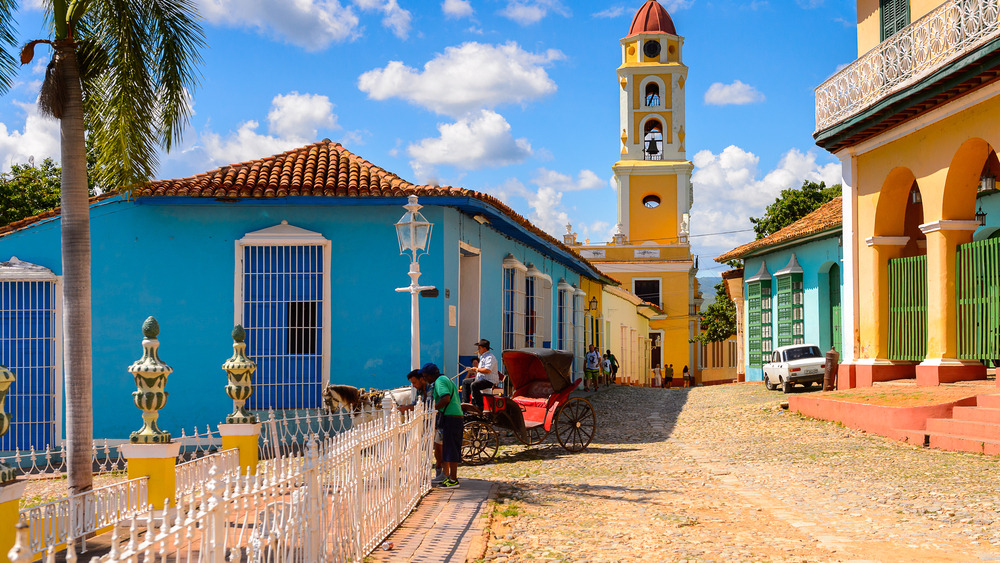
- Trinidad, a UNESCO-listed colonial town, 20 km to the west.
- Museo de Historia Municipal, in Trinidad, to deepen your understanding of the sugar valley's history.
- Bay of Pigs, accessible on a westward route.
- Jagua Castle, in Cienfuegos, another fortified colonial remnant.
Frequently asked questions
Frequently asked questions
Between 136 and 184 steps depending on sources and counting method, distributed across seven stories.
Because of its slight lean, which has developed over time due to ground conditions and structural stresses.
Yes, physically: the stairway is narrow, steep, and hot. It remains accessible to those in good condition, but is poorly suited for young children and not recommended for those with vertigo.
Yes, the former manor house has been converted into a restaurant-bar serving at lunch hours.
Service varies: it depends on equipment condition and visitor demand. Check the day before with agencies in Trinidad.
Planning your trip
Iznaga Tower fits naturally into a circuit around Trinidad and Cuba's southern coast. To build a complete itinerary combining colonial towns, sugar valleys, and Caribbean landscapes, consult our custom journeys to Cuba.
Nearby
Interested in this visit?
We can include it in your personalised itinerary.