Cueva de los Portales
Cueva de los Portales
Karst cave in Pinar del Río where Che Guevara established his headquarters in October 1962. Today an open-air museum designated as a National Monument.
Deep in the Sierra de los Órganos, in the province of Pinar del Río, Cueva de los Portales brings together remarkable geology and revolutionary history. This semi-open karst cave, traversed by the Caiguanabo River, is best known for hosting the headquarters of Ernesto Che Guevara in October 1962 during the missile crisis. Designated a National Monument in 1987, it is today visited as an open-air museum, 1.5 hours by road from Havana.
Why Visit Cueva de los Portales
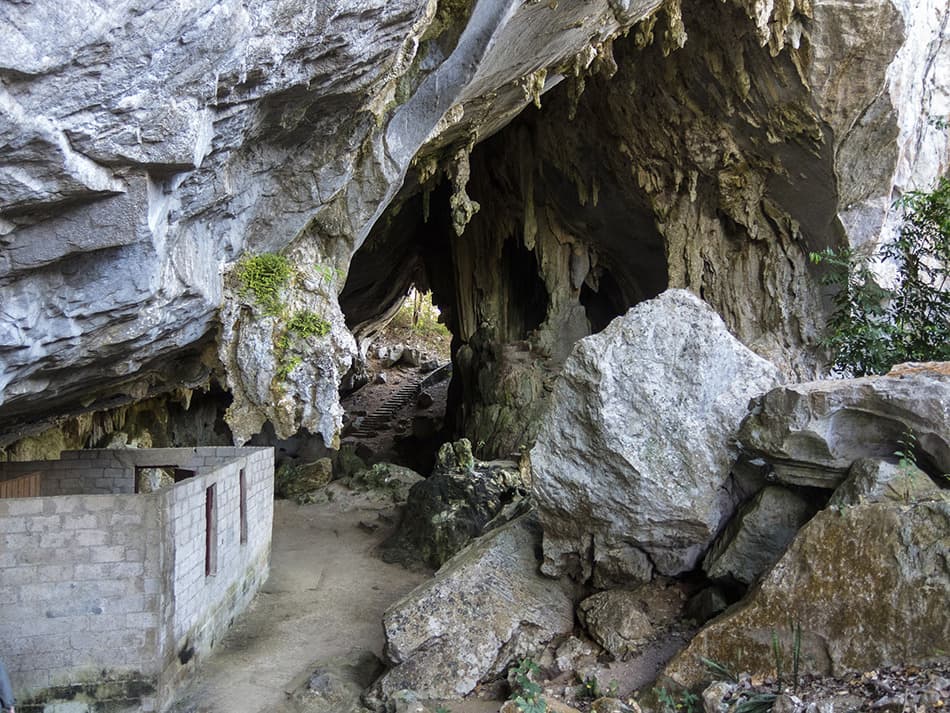
The site brings together three interests rarely combined in the region: notable geological heritage, preserved natural surroundings, and a major episode in Cuba's twentieth-century history. The cave presents itself as a natural cathedral with broad arches, where daylight enters and reveals stalactites, limestone walls, and the calm course of the Caiguanabo River.
The contrast between the site's austerity and its historical weight is striking. No intrusive scenography: Che's objects are displayed where he used them, in a forest atmosphere. The site is integrated into the Sierra del Rosario National Park, designated a UNESCO Biosphere Reserve, making it also an appreciated vantage point for bird-watching enthusiasts.
History of the Cave
Cueva de los Portales was reportedly spotted around 1800 by a Spanish explorer who is said to have left it his name — an origin that local sources report without always being able to document with certainty. For a century and a half, the site remains a natural landmark in a mountainous, difficult-to-access zone.
In 1947, hacendado José Manuel Cortina transformed the cave into a private retreat, drawn by the coolness of the vault and the presence of the watercourse. A few light improvements were made without altering the site's character.
The turning point came in October 1962. In the midst of the missile crisis, as Cuba prepared for a possible American invasion, Commander Ernesto Che Guevara established the headquarters of the Western Army he commanded there. During the 32 days of crisis, he piloted military operations across the entire western part of the island from this cave. A masonry cabin, still visible, serves as his shelter for sleeping and planning. In recognition of this historical and natural value, the site was designated a National Monument in 1987.
What to See On Site
The Main Cave and Open-Air Museum
The main cavity, semi-open, is easy to explore. You can observe large stalactites, bats, and the passage of the Caiguanabo River. Inside, several authentic objects belonging to Che are displayed in their original locations: his camp bed, his work table, and the chess table where he played during waiting hours. The ensemble constitutes a sober open-air museum, without spectacular reconstruction.
The Adjacent Cave System
Climbing up the hillside, three other cavities complete the network: El Espejo, Salvador, and Cueva Oscura. This karst system presents real scientific interest and offers some views over the surrounding valley.
Fauna and Flora
The site is surrounded by dense tropical vegetation — palms, tree ferns, orchids — typical of the Sierra del Rosario forests. Proximity to the La Güira park makes it an appreciated terrain for bird observation, with several endemic Cuban species. Guided outings can be arranged upon request with the reception staff.
Practical Information
The site is generally open during the day, from morning to early afternoon. Hours may vary depending on season and visitor traffic; it is wise to check locally before setting out. Entrance fees are modest and a tip to the guide is appreciated, particularly for guided tours that add much to the experience.
Budget 1 to 1.5 hours on site, longer if you combine the visit with a walk in the surroundings or a bird-watching session. Bring good shoes, water, insect repellent, and a headlamp if you wish to explore less-lit corners. A campismo located nearby can accommodate visitors wishing to extend their stay.
When to Go
The region enjoys a tropical climate with two marked seasons. The dry season, from November to April, remains the most comfortable for visiting: moderate temperatures, walkable trails, and better visibility in the cave. The rainy season, from May to October, brings more exuberant vegetation but also frequent showers and more mosquitoes.
For bird observation, the transition months (March-April and October-November) are particularly interesting, with migrating species passing through alongside endemic wildlife.
How to Get There
The cave is located in Caiguanabo San Andrés, in the municipality of La Palma. It is approximately 11 km from La Güira park, 25 km from La Palma, and 60 km from Viñales. From Havana, count about 1.5 hours by car.
The site is poorly served by public transport. The most practical solution remains a rental car, private taxi from La Palma or Viñales, or including the visit in an organized excursion. The final access track can be in poor condition after the rainy season.
Things to Combine With
Cueva de los Portales fits naturally into a circuit in western Cuba. The region of national parks and the Viñales valley, renowned for its mogotes and tobacco plantations, are the closest stops. Travelers venturing southeast can then continue to the Bay of Pigs, another place of memory. Further on, in Santiago, the Castillo del Morro and the Santiago Cathedral complete an itinerary blending nature, colonial history, and revolution.
Frequently Asked Questions
Frequently asked questions
Because Ernesto Che Guevara established the headquarters of the Western Army there in October 1962 during the 32 days of the missile crisis. Several of his personal objects (camp bed, work table, chess table) are still displayed there.
Count 1 to 1.5 hours for the main cave and open-air museum. If you explore the adjacent caves (El Espejo, Salvador, Cueva Oscura) or add a bird-watching outing, plan for a half day.
The drive takes approximately 1.5 hours. Public transport is not well-suited; it is recommended to rent a car, take a private taxi, or book an organized excursion.
Yes, a campismo located nearby welcomes visitors according to availability. It is a simple option, useful for bird-watchers wishing to be on site early in the morning.
The dry season, from November to April, offers the best visiting conditions: moderate temperatures, low humidity, and walkable trails.
Including Cueva de los Portales in Your Trip
A singular stop between karst nature and revolutionary memory, Cueva de los Portales lends itself well to a circuit in western Cuba centered around Pinar del Río and Viñales. To plan your itinerary, consult our tailor-made trips to Cuba.
Interested in this visit?
We can include it in your personalised itinerary.