Jagua Castle
Jagua Castle
Spanish fortress inaugurated in 1745 at the entrance to Cienfuegos Bay, Castillo de Jagua is visited by ferry and has housed a history museum since 1998.
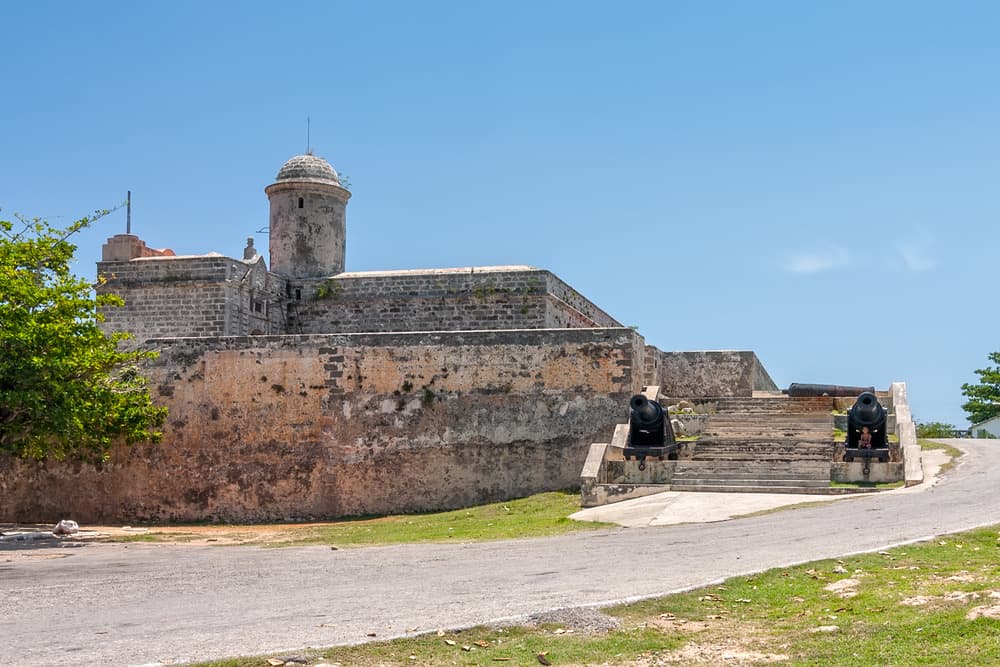
Off the south coast of Cuba, at the mouth of Cienfuegos Bay, the Castillo de Nuestra Señora de los Ángeles de Jagua has watched over the channel since 1745. Built on the initiative of Philip V of Spain to counter Caribbean piracy, this limestone fortress can be visited today as a complement to a stay in Cienfuegos, which it predates by several decades in official founding.
Why visit Jagua Castle
Cuba's third most important fortress after the Castillo del Morro in Havana and San Pedro de la Roca in Santiago, Castillo de Jagua holds particular appeal: its military architecture inspired by Vauban remains intact, its wooden drawbridge still functions, and the ferry crossing from Cienfuegos makes it an excursion in its own right. The site, rarely crowded, allows for a peaceful visit blending military history, colonial anecdotes and local legends.
History of Castillo de Jagua
Before the official founding of Cienfuegos in 1819, Jagua Bay already attracted pirates, buccaneers and privateers from Jamaica, England and France. They would call in to replenish their ships and threatened Spanish merchant routes laden with sugar, tobacco, timber and wax. Several fortification attempts failed before the Spanish crown undertook a major project.
Preliminary foundations were laid as early as 1729 by engineer Bruno Caballero y Elvira. The official construction began in 1738 under the direction of French military engineer José Tantete Dubruller (sometimes spelled Duvillier). The fortress was inaugurated in 1745 under the full name of Castillo de Nuestra Señora de los Ángeles de Jagua. Its first commandant, Don José Castilla Cabeza de Vaca, also contributed to local development by founding the Caunao hacienda "Nuestra Señora de la Candelaria," the region's first sugar mill.
The fortress played a decisive role during the British occupation of Cuba in 1762, serving as a Spanish command post. Sources document incursions or attempted raids linked to known figures of Caribbean piracy: Francis Drake, Jacques de Sores, Henry Morgan and Lorenzo Craff. Declared a Cuban national monument in 1978, the building has undergone several restoration campaigns, particularly in 1922–1923 and then in 2010, and has housed a history museum since 1998.
What to see on site
Military architecture
The castle follows the defensive principles of Sébastien Le Prestre de Vauban: a massive quadrilateral structure on two levels, thick walls of limestone quarried from nearby Pasacaballo, gun ports, a watchtower with semi-spherical dome and cylindrical sentries at the corners. A still-functional wooden drawbridge spans a dry moat to reach the inner courtyard. A 100 m³ cistern ensured water autonomy for the garrison.
The original armament comprised ten guns: four 18-pounder cannons on the upper level, four 24-pounder cannons and two 8-pounder cannons on the lower level.
Halls and collections
Around the parade ground are arranged the dormitories, dungeons, chapel, storerooms and kitchen. The commandant's office retains Spanish Renaissance-style furniture, a carved chest, a marble table and edged weapons. The chapel houses a mural fresco considered the oldest in Cienfuegos province. The belfry contains a bell donated by Captain Alejo Gutiérrez Rubalcava of the ship San Antonio de Padua to Doña Leonor, wife of the first commandant.
The museum displays scale models, artillery pieces, ceramics and majolica imported from Spain, documents on construction and traditional fishing tools. One room is dedicated to torture instruments, including the so-called "cold drop" method, which consisted of letting an icy drop of water fall regularly on the forehead of a restrained prisoner.
The legend of the Blue Lady
The castle also owes its reputation to the legend of the Dama Azul, the Blue Lady. Inhabitants have reported for centuries the nocturnal apparition of a woman dressed in blue wandering between the walls. Some accounts identify her as a young Spanish woman kidnapped by pirates, others as a spirit linked to workers and enslaved people on the construction site. This oral tradition is an integral part of the visit.
Practical information
Allow about 1 to 2 hours to tour the entire site, museum included. The castle generally opens Tuesday to Sunday during daytime hours, but hours and fees vary: check locally before your visit. English-speaking guided tours are sometimes available on-site. The site is rarely crowded, allowing for a peaceful discovery of the fortress and the bay.
How to get there
Two main options are available to visitors from Cienfuegos:
- By ferry: from Cienfuegos port, a crossing of approximately 30 minutes skirts the bay and offers a gradual approach to the fortress. This is the most picturesque route.
- By road: via Pasacaballo and then a short boat trip to cross the channel to the castle. Allow about 30 km from central Cienfuegos.
The small fishing village of Castillo de Jagua, adjacent to the fortress, offers a few paladares serving seafood in a simple atmosphere. From the ramparts, you can also see the remains of the Juragua nuclear power plant, whose construction launched in 1976 in partnership with the USSR was never completed.
Nearby attractions
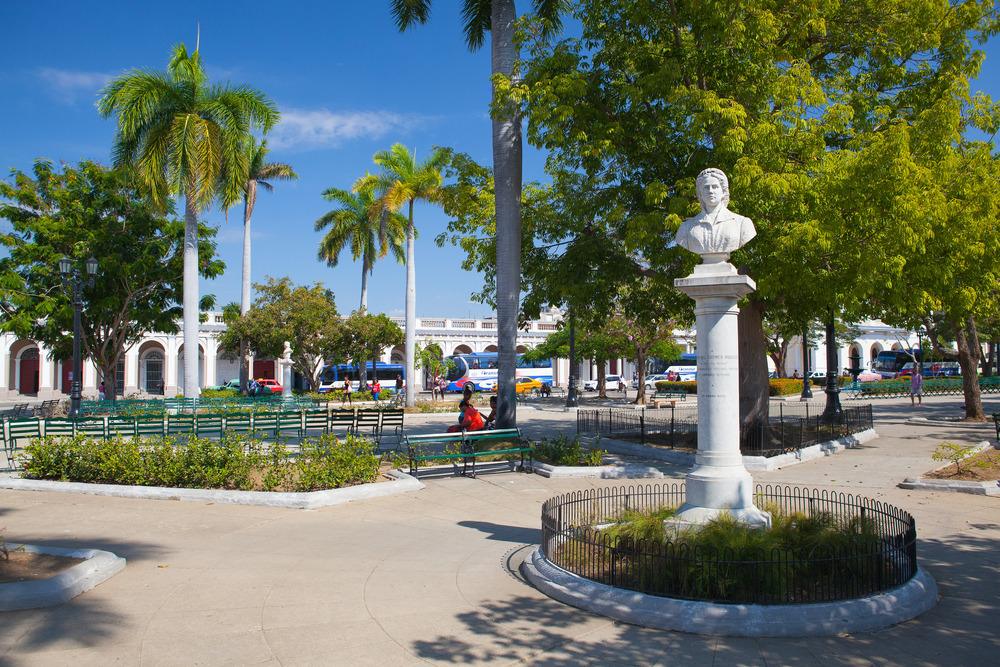
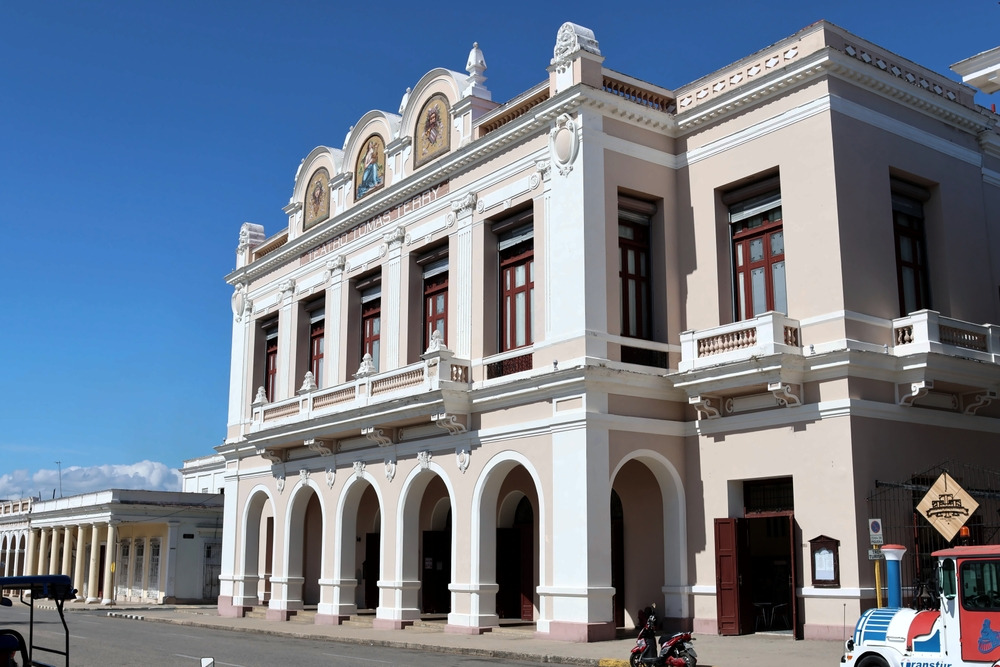
- Cienfuegos: colonial city founded in 1819, UNESCO-listed for its French-inspired historic center.
- Bay of Pigs: a key landmark of 20th-century Cuban history, accessible from the south coast.
- Castillo del Morro: Havana's great fortress, worth comparing with Jagua Castle.
- Caguanes National Park: a biosphere reserve to the north, to extend your natural exploration.
Frequently asked questions
Frequently asked questions
The most common way is by ferry from Cienfuegos port, about 30 minutes crossing. It is also possible to reach it by road via Pasacaballo, then a short boat trip to the fortress.
Allow about 1 to 2 hours to walk through the fortress, museum and grounds. Including the round-trip ferry crossing, plan for a half-day from Cienfuegos.
The full name, Castillo de Nuestra Señora de los Ángeles de Jagua, combines Spanish Catholic tradition with a toponym of indigenous origin. Jagua designated the region long before colonization and remains present in local place names.
The legend of the Dama Azul, a woman in a blue dress who would wander the corridors, has been part of local folklore for centuries. No historical evidence confirms it, but guides enjoy telling the tale during visits.
The dry season, from November to April, offers the best conditions for the ferry crossing and visiting the ramparts. The wet season remains possible but comes with rain and more pronounced heat.
Plan your trip
Castillo de Jagua fits naturally into an itinerary centered on Cuba's south coast. To build a tailor-made trip blending Cienfuegos, Trinidad and the island's colonial heritage, explore our custom-made journeys to Cuba.
Nearby
Interested in this visit?
We can include it in your personalised itinerary.