Cuba's National Capitol
Cuba's National Capitol
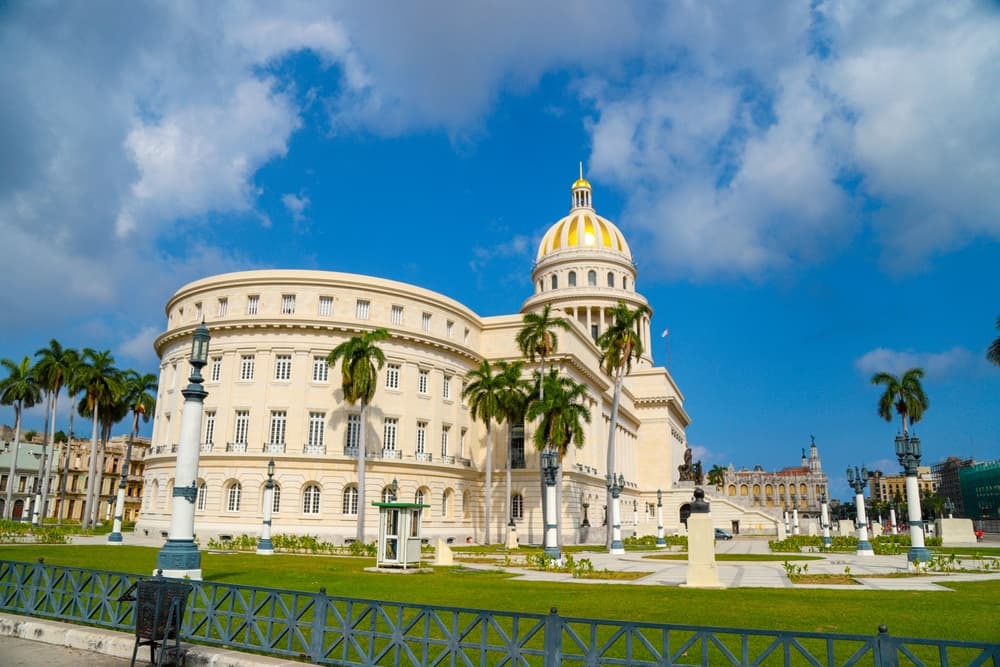
In the heart of Havana, the National Capitol imposes its 92-meter dome and a century of Cuban political history, from Congress in 1929 to its 2019 restoration.
At the center of Havana, the National Capitol (El Capitolio) dominates the landscape with its neoclassical silhouette between Centro Habana and the Old City. Crowned with a 92-meter dome and flanked by an open esplanade overlooking the Paseo de Martí, it was, until the 1950s, the tallest building in the Cuban capital. Far more than an architectural achievement, the structure condenses a century of Cuban political history.
Why Visit the National Capitol
The Capitol holds several records and curiosities that alone justify a visit:
- Eclectic architecture inspired by neoclassicism, often compared to Washington's Capitol without being a replica.
- The Statue of the Republic (17.6 m), considered the 3rd largest indoor statue in the world after the Great Buddha of Nara and the Abraham Lincoln statue in Washington.
- A 25-carat diamond set beneath the dome, nicknamed Cuba's Star, which marks kilometer zero of Cuba's road network.
- The historic seat of the Cuban Congress from 1929 to 1959, restored and reopened to the public in 2019.
History of a Monumental Project
A Political Commission in 1926
The Capitol was commissioned in 1926 by President Gerardo Machado, on the former grounds of the Villanueva railway station. The project was entrusted to Cuban architect Eugenio Rayneri Piedra, assisted by French landscape designer Jean-Claude Nicolas Forestier; work was supervised by the American firm Purdy & Henderson. The context was the "Dance of the Millions," a period of economic euphoria driven by sugar revenues.
Three Years of Construction, 17 Million Dollars
Five thousand workers labored over 3 years, 3 months and 20 days, from 1926 to 1929, for an investment of 17 million American dollars. The building measures 207 meters long and 91 meters wide, spanning 43,418 m² including gardens and courtyards. Its steel structure came from the United States; it is clad in white limestone from Capellania and granite.
From Congress to Academy of Sciences
Inaugurated in 1929, the Capitol housed the Cuban Congress (Chamber and Senate) until the 1959 Revolution. From 1962 onward, it was entrusted to Cuba's Academy of Sciences and the National Library of Sciences and Technology. A major restoration was launched in 2013, under the direction of historian Eusebio Leal and the Office of the Historian of Old Havana. The restored dome was unveiled in August 2019, on the 500th anniversary of Havana. The building was designated a National Monument in November 2010.
What to See Inside
The Façade and Monumental Staircase
A staircase of 55 steps leads to the main entrance, flanked by six Doric columns (1.55 m in diameter, 14.10 m high) and two bronze statues by Italian sculptor Angelo Zanelli, symbolizing Labor and Virtue. The dome, inspired by the Panthéon in Paris and Bramante's Tempietto, was the 3rd highest dome in the world upon its completion.
The Salón de los Pasos Perdidos
The central hall, the Salón de los Pasos Perdidos (Hall of Lost Steps), is renowned for its acoustics. It houses the Statue of the Republic: 17.6 meters tall, 30 to 40 tons, covered with 22-carat gold leaf, on a 2.50-meter marble base. Also a work by Zanelli, it was shipped in three pieces from Rome.
Cuba's Star
Beneath the dome, inlaid in the floor, a 25-carat diamond marks kilometer zero of Cuba's road network: all distances between Havana and the rest of the country are calculated from this point. According to a persistent legend, the stone once belonged to Tsar Nicholas II; stolen in 1946, it was returned anonymously in 1947.
Courtyards and Historic Halls
Two interior courtyards provide light and ventilation. In the north courtyard stands El Ángel Rebelde, a statue added after the inauguration. Several halls bear the names of figures and places linked to the Cuban struggle for independence (1868-1898):
- Salón Baire: former conference room of the House of Representatives.
- Salón Bolívar: original furnishings, Venetian mirrors, French-inspired ambiance.
- Salón Baraguá: neoclassical style, formerly used by Parliament secretariats.
- Salón Martí: Italian Renaissance style, former antechamber to the library.
The tour also includes the Tumba del Mambí Desconocido (Tomb of the Unknown Soldier), a tribute to independence fighters.
Practical Information
- Duration: allow 1 to 1.5 hours to explore the main spaces with a guide.
- Admission: paid entry, in CUP or USD depending on the period; moderate fee, additional charge possible for guided tour. Ask on site, as pricing evolves regularly.
- Hours: open during daytime throughout the week. Verify current hours before visiting, as the building may close during sessions of the National Assembly.
- Dress code: covered shoulders recommended, no very short shorts. Large bags not permitted.
How to Get There
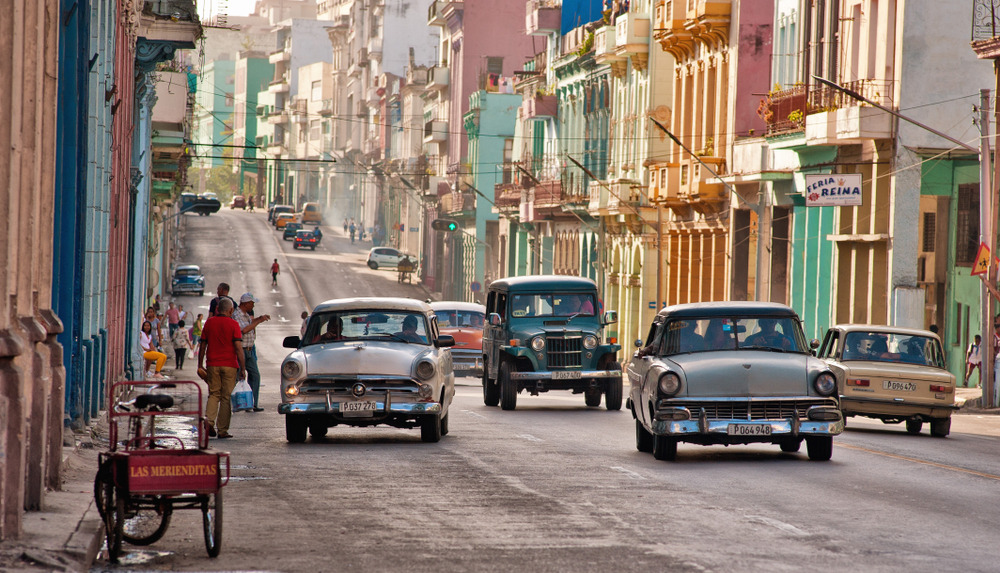
The Capitol is located between Old Havana and Centro Habana, bordered by Paseo de Martí (Prado), and the streets San José, Industria and Dragones. From the Old City, it is accessible on foot in 10 to 15 minutes via the Prado. Bicycle taxis and coco-taxis are stationed in large numbers in front of the esplanade; classic almendrones (shared taxis) circulate constantly on Paseo de Martí. From Vedado or Plaza de la Revolución, allow about ten minutes by taxi.
Nearby Attractions
- Centro Habana: the popular neighborhood extending north from the Capitol, worth exploring for its transitional architecture.
- Havana: the capital as a whole, from the Malecón to Old Havana, a UNESCO World Heritage site.
- House of the Hummingbird: a nature stop, ideal to combine with an itinerary to the west.
- Che Guevara Mausoleum and Museum: in Santa Clara, a major stop to understand the 1959 Revolution.
Frequently Asked Questions
Frequently asked questions
Including the Capitol in Your Journey
The Capitol is ideally visited as part of a stay in Havana combining Old Havana, Centro Habana and Vedado. To build a tailor-made itinerary integrating the capital and the rest of the island, explore our Cuba trips.
Interested in this visit?
We can include it in your personalised itinerary.