Matanzas
Matanzas
Nicknamed the Venice of Cuba and the Athens of the Caribbean, Matanzas reveals a unique Afro-Cuban heritage just 30 minutes from Varadero. Our complete guide.
Just 90 km from Havana, Matanzas is often overshadowed by Cuba's major tourist draws such as Varadero or Trinidad. Yet this understated city richly deserves your attention. Blessed with a distinctive cultural heritage, authentic colonial charm, and a serene riverside atmosphere, Matanzas is an undiscovered gem, where sea, mountains, and poetry converge.
Location and Characteristics
Situated in central-western Cuba on the island's northern coast, Matanzas is the capital of its province. It borders the expansive Matanzas Bay, which opens onto the Strait of Florida, 102 km east of Havana and 322 km west of Varadero. The city unfolds around its bay on three sides, rising partly eastward toward Pan de Matanzas, a hilltop whose shape evokes a reclining woman—the origin of its poetic nickname, "The Sleeping Beauty".
Traversed by three rivers (the Yumuri, San Juan, and Canimar), the city is also marked by 17 bridges connecting its various neighbourhoods. This intricate fluvial network earned it the names "city of bridges" and "Venice of Cuba" for its distinctive aquatic charm.
Today, Matanzas is both a major industrial city and a port of global significance. It ranks as the world's 4th port for sugar cane export—an activity that has profoundly shaped its economic development.
History
Founded on October 12, 1963 as San Carlos y San Severino de Matanzas, the city owes its creation to a royal decree from 1690 authorizing the settlement of 30 families from the Canary Islands in the bay. This decision aimed to strengthen the defence of Cuba's northern coast as part of a strategic project initiated in 1681. Matanzas' unique urban design was conceived according to Philip II's ordinances, with a rigorous layout structured around natural elements—particularly the three rivers flowing into the bay. Long before the city's official founding, the bay was already known to the Spanish since 1508 and served as a pirate stronghold.
The name Matanzas itself—meaning "massacres"—is said to derive from a local legend recounting a bloody 1510 clash between Spanish colonists and indigenous peoples along a namesake river. Yet this legendary past did not prevent the city from becoming, over time, a beacon of culture and history.
During the colonial era, Matanzas experienced rapid growth thanks to sugar plantations, which brought massive importation of African slaves. The city also witnessed several slave rebellions, including the famous Escalera conspiracy, discovered in 1843 and also called the Year of the Whip. Due to the large population of slaves and free Afro-Cubans, Matanzas became an exceptional centre for the transmission of African traditions.
The arrival of the printing press in the 1830s, with the creation of Diaro de Matanzas, marked the beginning of what became known as Matanzas' Golden Age—a period of extraordinary literary and artistic ferment. By around 1860, Matanzas had become the country's second city, though its development slowed as the sugar industry shifted eastward. Nevertheless, the city remained a major intellectual hub, animated by figures such as Heredia, Domingo del Monte, Plácido, Milanés, Manzano, and Félix Tanco.
Moreover, Matanzas preserves emblematic buildings from this period, such as the San Severino Castle, dating from the 17th century, and the San Carlos Cathedral, built in 1730. It was also marked by significant events, including the April 25, 1898 bombardment at the outset of the Spanish-American War (the conflict's first military action in Cuba). More recently, between August 5 and 12, 2022, a devastating fire destroyed the country's largest petroleum storage facility in Matanzas. Four giant tanks were destroyed, killing 16 firefighters and injuring 132 people.
Matanzas Today
Matanzas is an emblematic Cuban city, recognized for its cultural richness, poets, and Afro-Cuban folklore. Nicknamed "the Athens of Cuba", it was a major intellectual centre in the 19th century, attracting renowned writers, musicians, and artists. It is here that the contradanza, the danzón (Cuba's national music and dance), and rumba emerged—born from the cultural blend between African slaves and Spanish colonists. The city remains profoundly marked by this fusion, visible in its Santería casa-templos, its folklore groups, and celebrated annually at the Rumbero Festival at the Sauto Theatre.
Matanzas is also a strategic port and industrial city, exporting sugar and sisal fibre, and producing rope, shoes, fertilizers, and matches. It has long contributed to Cuba's economic development, particularly in energy, livestock, and agriculture.
Today, Matanzas is being reborn: heritage renovations are multiplying, art galleries are flourishing, and a new generation of artists brings contemporary energy to this history-laden city. It offers an authentic alternative to conventional circuits while serving as a gateway to the sea.
What to See in Matanzas?
Cultural Treasures and Architectural Heritage
Matanzas' city centre harbours neoclassical buildings, baroque churches, numerous museums, and theatres. Several plazas merit a visit:
- Parque Libertad: surrounded by the Velasco Theatre, Spanish Casino, Velasco Hotel, and the Town Hall.
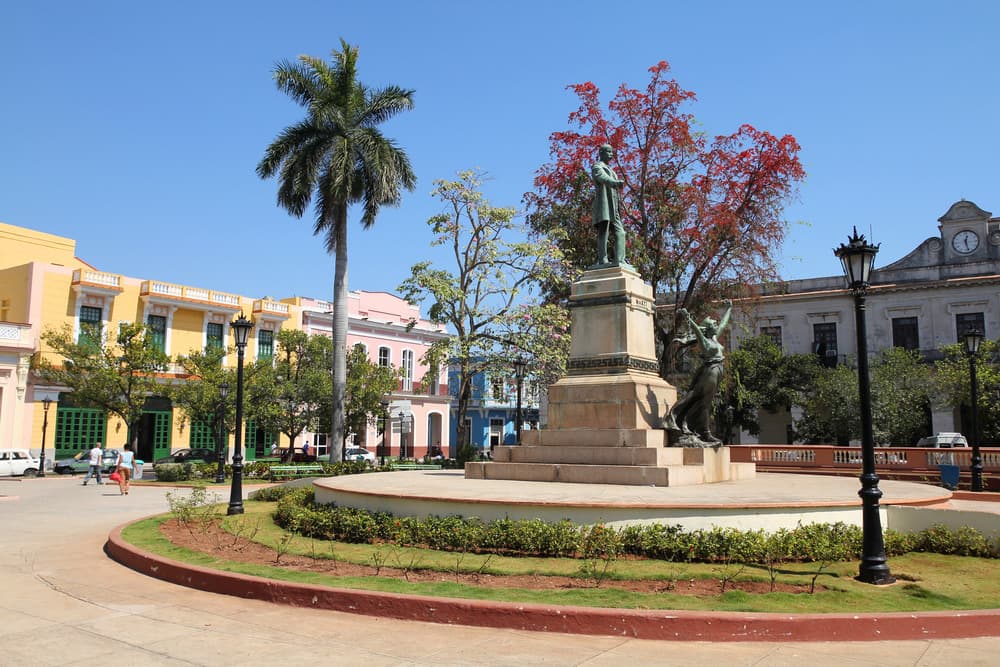
- Plaza de la Vigia: the historic heart where you'll find the Casa de la Cultura, Junco Palace, and the celebrated Sauto Theatre (1863), designated a National Monument.
- Plaza de la Libertad: another colonial plaza where the Governor's Palace (1843) stands, opening onto several historic institutions.
Other remarkable buildings include:
- The San Carlos de Borromeo Cathedral, dating from 1750, distinguished by its frescoes and baroque dome
- The Monserrat Hermitage, built in 1875 by Catalan immigrants, offering one of the finest vistas over the valley.
Museums and Places of Memory
Matanzas is one of Cuba's richest cities in museums. Among the most emblematic, visitors can explore:
- The Pharmaceutical Museum (Botica Francesca by Dr. Triolet, 1882), unique in the Americas, housing over 5 million pieces: porcelain bottles, potions, instruments, records, period furnishings…
- The Provincial Historical Museum, in the Palacio de Junco, presenting the region's history and slavery.
- The El Morrillo Memorial Museum, an 18th-century colonial fort designated a National Monument.
- The Miguel Faílde Pérez Museum, dedicated to the creator of the danzón
- The Pedro Esquerré Gallery, championing contemporary Cuban art.
Finally, history enthusiasts can also discover the Quinta de Bellamar, a heritage residence, or the Matanzas aqueduct, still in service since 1870.
Matanzas benefits from several transportation links connecting it efficiently to the rest of Cuba. Just approximately 15 km from the city, the Juan Gualberto Gómez Airport handles domestic and international flights.
By rail, Matanzas has two stations:
- One situated on the main line between Havana and Santiago de Cuba,
- Another in the Versalles neighbourhood, departure point for the Hershey electric train linking to the capital via a scenic route.
Viazul and Astro bus companies complete the offering with regular services to various Cuban cities.
Finally, by road, Matanzas is directly connected to Havana and Varadero via the Via Blanca, a coastal route traversing superb landscapes.
Attractions in Matanzas
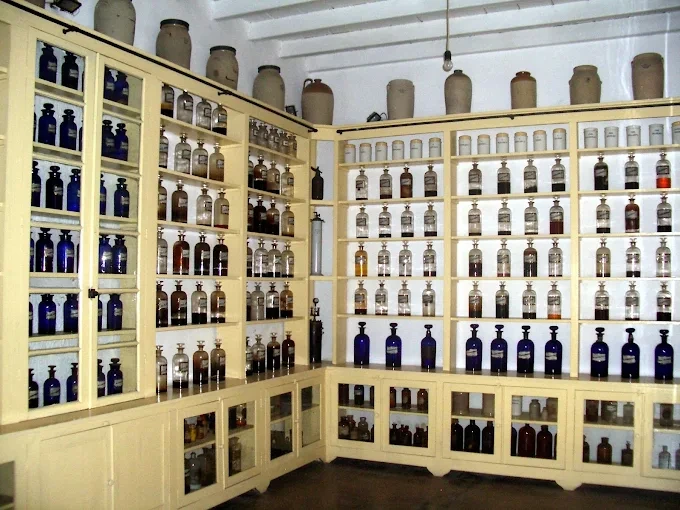
Musée Pharmaceutique
À Matanzas, le Museo Farmacéutico conserve dans son état d'origine une pharmacie de 1882, premier musée pharmaceutique d'Amérique latine, classé UNESCO en 2025.
Château de San Severino
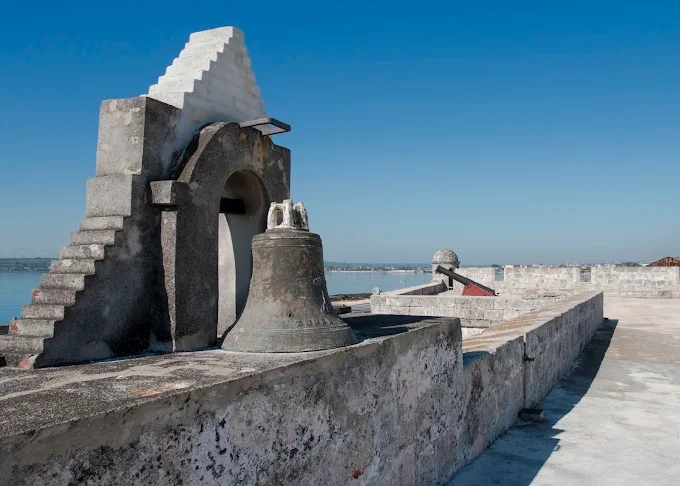
Forteresse espagnole du XVIIe siècle à l'entrée de la baie de Matanzas, le château de San Severino abrite le Musée national de la Route de l'Esclave (UNESCO).
Want to discover this destination?
Our local advisors design your tailor-made trip.