Guasasa
Guasasa
Guasasa, a small fishing village on Cuba's southern coast, is home to a pristine cove ideal for snorkeling and a rare glimpse into rural island life.
Nestled on Cuba's southern coast, at the western edge of the Topes de Collantes natural park, Guasasa is one of those places time has forgotten, which few travelers take the time to discover. Isolated, rustic, and caressed by the Caribbean Sea, this fishing hamlet attracts above all those seeking wild landscapes and genuine contact with local life. Guasasa is indeed a raw destination, without pretense, where the scenery speaks louder than infrastructure. For those wanting to see another facet of Cuba, far from beach resorts and colonial cities, this remote village offers a rare, timeless escape.
Where is Guasasa located?
Guasasa is a small coastal village situated in southern Cuba, in the eastern part of the Ciénaga de Zapata, approximately 27 km east of Playa Girón. This fishing hamlet, still largely untouched by tourism, remains well off the beaten path. Its difficult access, via poorly maintained roads through forests and the highlands of the Escambray massif, has helped preserve its authenticity.
What is the origin of the name Guasasa?
The origin of the name Guasasa is the subject of several accounts. According to some versions, it comes from the abundant presence of a plant called guasasa, or even a species of small biting insects bearing this name, which swarmed the region when the first settlers arrived in the second half of the 16th century. Another theory points to a notable event: the capture by a Spaniard named José Suarez of an enormous fish weighing over 300 pounds called Guasasa. The place was then allegedly nicknamed La Caleta de Guasasa, before the name was gradually shortened.
Characteristics
The village of Guasasa, integrated into the unique ecosystem of the Ciénaga de Zapata, benefits from a rich and well-preserved natural environment. It is surrounded to the north, east, and west by dense forests and wetlands, while its southern shoreline is bordered by the warm waters of the Caribbean Sea.
Its terrain consists of sandy soils and reefs along the coast, rocky and limestone terrain in its center, and wetlands that extend to the periphery. The region is also distinguished by underground hydrography: rivers flow predominantly underground, feeding submerged caves called pozetas, as well as cenotes and small natural springs scattered along the shoreline.
Local fauna is abundant and typical of Cuban wetland zones. Notable inhabitants include crocodiles, parrots, wild dogs and pigs, as well as a notable presence of mosquitoes and midges, encouraged by the lush vegetation of this protected wetland zone.
A simple life turned toward the sea
Today, Guasasa is a quiet, little-known village that offers an authentic immersion into rural Cuban life. Nestled on the waterfront, it is home to only a few hundred residents. Daily life is dictated by fishing: wooden boats, nets drying in the sun, and a simple way of life focused on the sea.
The village remains outside tourist circuits, with no hotels or restaurants, and very few officially recognized casas particulares. A small shop provides basic supplies, but the local economy relies mainly on fishing and, formerly, on charcoal production. Currently, many residents work outside the village, while others continue to live off marine resources.
Despite the harsh living conditions and often modest homes, the hospitality of the locals is warm. For curious and respectful travelers, a visit to Guasasa offers a rare escape, far from crowds, in a Cuba still preserved from mass tourism.
What to see in and around Guasasa?
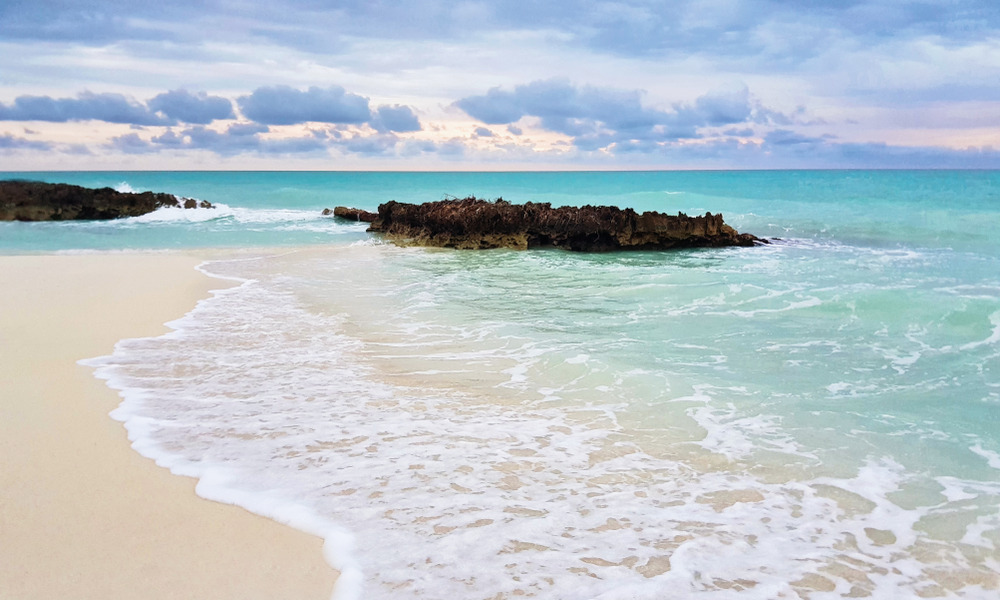
Guasasa is not a place where one comes to tick off monuments or visit museums. The appeal lies in natural landscapes and human experience. Nestled into the rocky coastline, the Guasasa cove is a true natural haven still largely unknown. Its difficult access, far from classic tourist routes, often guarantees a moment of absolute tranquility. This small semi-enclosed inlet, approximately 80 meters wide at its mouth to the sea, shelters calm and crystal-clear waters, almost perfectly still, ideal for snorkeling and diving. The depth varies between 0.5 and 3 meters, allowing easy appreciation of the seafloor without needing to dive deep.
Beneath the surface, a colorful spectacle awaits marine life enthusiasts. The seafloor is composed of rocks, soft gorgonians, and hard corals, including elkhorn coral. You may observe numerous tropical species: surgeonfish, four-eyed butterflyfish, bluehead wrasses, striped parrotfish, yellow-tailed damselfish, and even small moray eels nestled between rocks. On certain days, entire schools of blue surgeonfish glide peacefully past you.
What draws visitors to Guasasa are also the raw landscapes and untouched nature. The region stands out for its wild coastline, alternating pebble beaches, deserted coves, and turquoise waters, perfect for solitary swimming or simple contemplative moments. Venturing slightly beyond the shore, you'll discover remarkable ecological richness. Terrestrial fauna, particularly birds from the nearby mangroves and forests, will delight bird-watching enthusiasts.
Reaching Guasasa is no easy task, but the adventure is part of its charm. From Trinidad, the journey typically takes over an hour, largely on unpaved roads riddled with ruts and rough sections. The ideal vehicle for getting there is a 4x4, or it's better to hire a local driver familiar with the terrain's particularities.
Another option is to take the local bus connecting Playa Girón to the village of Guasasa, but this service is limited to two daily departures, generally early morning and evening around 8 p.m. It's therefore best to check schedules once you arrive.
It's worth noting that the coastal road linking Playa Girón to Guasasa is pleasant and offers lovely views. Along the way, you'll pass Caleta Buena, a renowned snorkeling site about 18 km from Guasasa. Once in the village, the Guasasa cove is easy to spot: it's about 200 meters from the central junction.
To avoid transportation hassles, many travelers choose to visit Guasasa as a day excursion, accompanied by a local guide or through an agency based in Trinidad or Topes de Collantes.
Want to discover this destination?
Our local advisors design your tailor-made trip.