Soroa Orchidarium
Soroa Orchidarium
Botanical garden founded in 1943 in the Sierra del Rosario, the Soroa Orchidarium preserves over 20,000 plants and 700 orchid species, of which 130 are endemic to Cuba.
The Soroa Orchidarium, or Orquideario de Soroa, houses one of the most significant orchid collections in Latin America. Nestled on a hillside in the Sierra del Rosario, roughly 80 km west of Havana, this botanical garden preserves over 20,000 plants and nearly 700 orchid species, including 130 endemic to Cuba. Born in 1943 from a private venture that evolved into a scientific center, it brings together botanical interest, family heritage, and the conservation of tropical flora.
Why visit the Soroa Orchidarium
The site offers a dual appeal: the richness of its plant collection and the singular history of its founder. Designated as part of Cuba's national heritage and included within the Sierra del Rosario Biosphere Reserve, it sits in a protected environment that visitors often extend to include the Soroa waterfalls or the Las Terrazas ecological community. The visit, accessible and well-marked, suits both botany enthusiasts and travelers seeking a quiet stop between Havana and Pinar del Río.
Garden history
The Orchidarium was founded in 1943 by Tomás Felipe Camacho (1886-1961), a Spanish lawyer from the Canary Islands who settled in Cuba in 1905. According to local sources, Camacho served as legal advisor to a Cuban president before dedicating himself to his botanical passion.
In 1942, he acquired a 35,000 m² plot of land in Candelaria, which he named Rancho Pelida. The death of his daughter in 1943, followed by that of his wife Pilar, prompted him to transform the residence into a sanctuary dedicated to orchids, in their memory. Over the years, he assembled more than 18,000 orchids from Asia, Central America, and South America, complemented by endemic Cuban species. In 1952, he hired a Japanese gardener to oversee the cultivation. The entire complex—gardens, greenhouses, and the family home converted into a museum—was completed in 1953.
Camacho died in 1961 upon returning from a trip to the Canary Islands. The site was then entrusted to the University of Pinar del Río, which continues to manage it scientifically and ensure its preservation today.
What to see on site
The orchid collection
The garden houses over 20,000 plants and approximately 700 orchid species, including 130 endemic to Cuba. The specimens are displayed in conditions close to their natural habitat: attached to tree trunks or protected under shaded greenhouses. The region witnessed the discovery, at the end of the 20th century, of Encyclia bocourtii, a species now associated with the site.
The surrounding tropical flora
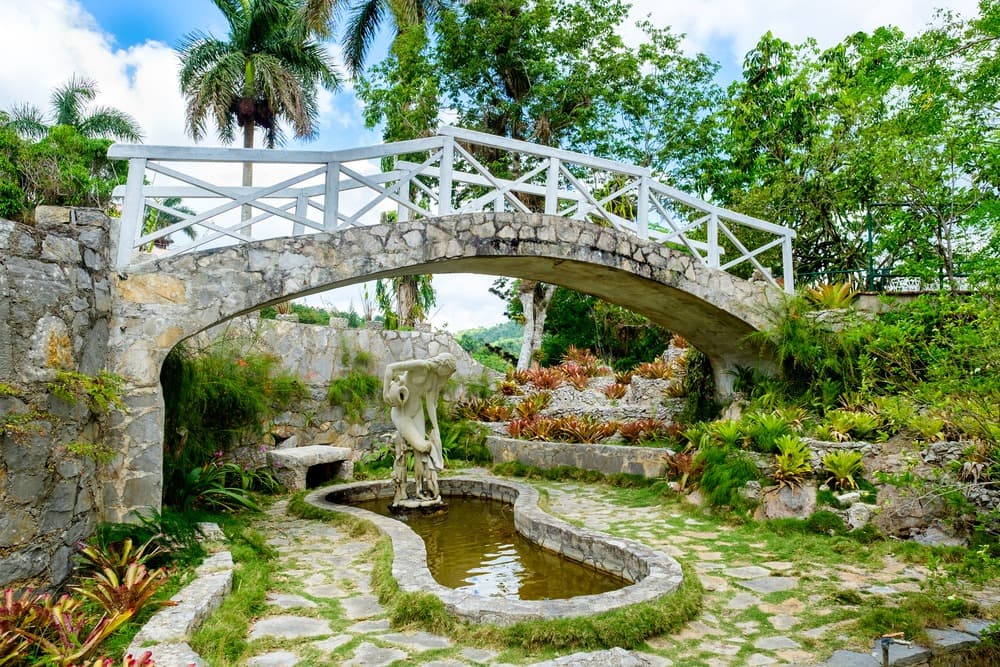
Beyond orchids, the trails traverse varied vegetation: fruit trees, medicinal plants, crotons, ferns, and local species. Informational signs mark the path, and several viewpoints open onto the Manantiales valley.
The scientific center
Under the supervision of the University of Pinar del Río, the Orquideario functions as a research center for tropical orchids. The laboratories and technical greenhouses remain closed to the public, but their work focuses on in vitro propagation, hybridization, and the reintroduction of endangered species into Cuban ecosystems. The site also houses a specialized library on the Orchidaceae family, considered one of the most comprehensive in the country.
The house-museum
Camacho's former residence, converted into a museum in 1953, preserves period furniture and documents that recount the founder's life and the genesis of the project.
Practical information
The site is open daily, in the morning and early afternoon. Admission is charged with a modest surcharge for photography; rates have evolved since Cuba's 2021 monetary unification, so it's best to verify on-site or through your accommodation. Guided tours in Spanish and English are offered and highly recommended to grasp the diversity of species. Allow 1 to 1.5 hours for your visit. The terrain is sloped, so wear appropriate footwear; most main pathways remain accessible.
When to visit
The Orchidarium can be visited year-round, but flowering is most pronounced during the dry season, from November to April, a period that also coincides with the most pleasant travel conditions in Cuba. From December to March, many tropical species reach full bloom. The wet season (May-October) remains interesting for lush vegetation, but showers can make trails slippery. Morning is preferable for enjoying the cool air and favorable light for photography.
How to get there
The Orchidarium is located about 80 km west of Havana, in Artemisa province, Candelaria municipality. From the capital, the most direct route takes the A4 highway (Autopista Nacional) toward Pinar del Río, then the exit toward Soroa. Expect approximately 1.5 hours by car or shared taxi. Local agencies offer day excursions combining Soroa and Las Terrazas. No rail service or regular bus directly serves the village; a vehicle remains the most practical option.
What to see nearby
The Soroa region concentrates several points of interest that round out a day's visit:
- El Salto de Soroa Waterfall: a cascade of about 22 meters accessible by a short trail from the Orchidarium.
- Soroa Viewpoint: a panoramic lookout over the Sierra del Rosario.
- Las Terrazas: a pioneering ecological community about 20 km away, interesting for its artist studios and hiking trails.
- Baños Romanos: natural pools below the waterfall.
To extend your trip to Cuba, other sites deserve a visit, such as the Bay of Pigs on the south coast or Caguanes National Park in the island's center.
Frequently asked questions
Frequently asked questions
Allow 1 to 1.5 hours to walk the trails and tour the house-museum. With a detailed guided tour, plan for up to 2 hours.
Flowering is most abundant during the dry season, between November and April, with peak blooms from December to March.
Yes. Soroa is about 1.5 hours by road via the A4 highway. Day excursions often combine the Orchidarium, the waterfall, and Las Terrazas.
The main pathways are manageable, but the sloped terrain and some secondary trails limit full wheelchair access.
Tours are generally offered in Spanish and English. For an English-speaking guide, it's best to arrange in advance through a local agency.
Plan your trip
The Soroa Orchidarium fits naturally into an itinerary in western Cuba, between Havana and Viñales Valley. To craft a bespoke journey that includes this botanical stop and other highlights of the island, explore our Cuba travel packages.
Interested in this visit?
We can include it in your personalised itinerary.