Museum of Colonial Architecture
Museum of Colonial Architecture
Housed in the 18th-century Casa Azul on Trinidad's Plaza Mayor, this museum traces the evolution of Cuban colonial architecture across eight rooms.
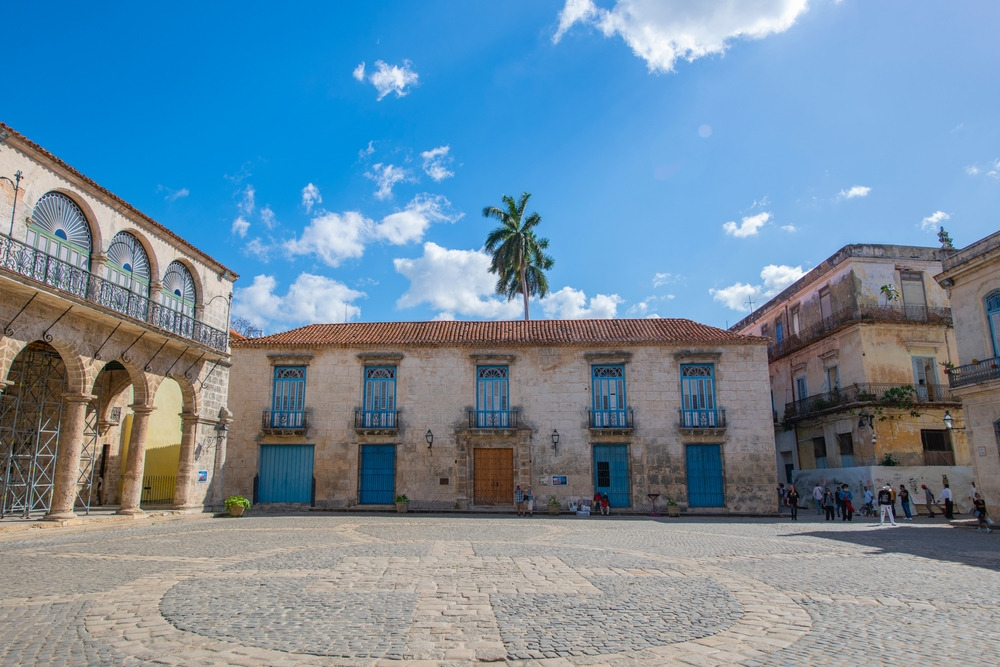
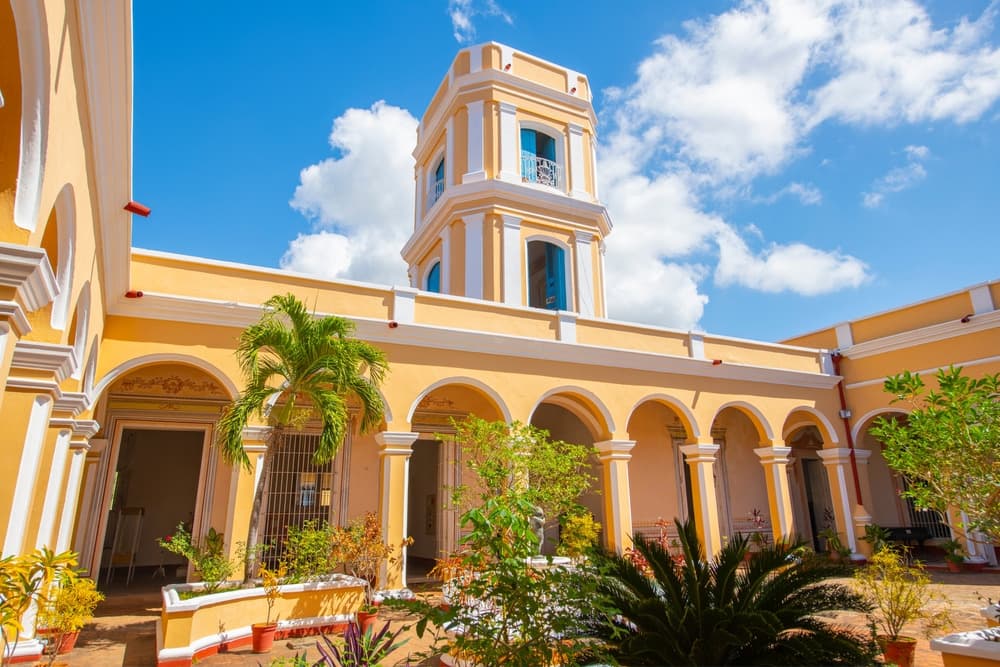
The Museum of Colonial Architecture (Museo de Arquitectura Colonial) occupies the Casa Azul, an 18th-century aristocratic residence located on the Plaza Mayor of Trinidad, a city designated as a UNESCO World Heritage Site. Its eight exhibition rooms chronicle the evolution of the techniques, materials, and styles that shaped Cuban colonial architecture from the 18th to the 19th century.
Why Visit the Museum of Colonial Architecture
Trinidad is nicknamed the "museum-city of the Caribbean" for the coherence and preservation of its colonial urban fabric. The museum serves as the key to understanding this ensemble: before walking through the cobblestone streets, you grasp the constructive logic of Creole houses, the role of the tropical climate in façade design, and the economic origins of the local architectural wealth, tied to tobacco, sugar, and the slave trade. Plan 1 to 1.5 hours to explore the eight rooms, longer if you extend your visit with a stroll through the nearby historic center.
History of the Casa Azul
This baroque-inspired building was erected in 1738. A second wing was added in 1785, and the two structures were united as a single property in 1819. Its pastel silhouette, wrought-iron balconies, and tall shuttered wooden windows epitomize centuries of colonial refinement.
The house belonged to the Sánchez Iznaga family, local elite landowners enriched by tobacco, sugar, and the slave trade. In 1979, their heirs ceded the property to the Cuban state. From 1980 onward, the residence was converted into a museum with the mission of tracing the evolution of Cuban vernacular architecture and Trinidad's urban development.
What to See in the Museum
Also called the Museo de Arquitectura Trinitaria, the exhibition is organized around eight permanent rooms covering domestic architecture from the 18th to the 19th century.
Architectural Elements and Metalwork
- Antique paneled doors and cuarterones, period-appropriate handles and locks
- Windows and wrought-iron grilles characteristic of Trinidad's façades
- Plaster moldings, cornices, and decorative friezes typical of colonial houses
Materials and Craftsmanship
- Hand-formed bricks, lime, and wattle-and-daub construction
- Carved wood, notably mahogany used for doors and ceilings
- Presentation of colonial principles: symmetry, natural light capture, cross-ventilation adapted to the tropical climate
Remarkable Pieces
- A polychrome ceiling depicting a satyr
- A lithograph by Eduardo Laplante showing Trinidad in the 19th century
- A model of the city illustrating colonial urban planning
- An early natural cooling system used in 19th-century houses
- The recreation of a 19th-century bathroom
One room is dedicated to temporary exhibitions focused on restoration projects and heritage trades: masons, carpenters, draftsmen, researchers, and conservators.
Practical Information
The museum is generally open mornings and early afternoons, six days a week (weekly closure to verify on-site, most often Fridays). Admission is moderately priced, with a small supplement for photography. Flash photography is prohibited. According to museum information, guided walking tours of the historic center may be available: check at the front desk for details and scheduling. Morning visits are preferable to avoid peak heat and enjoy favorable lighting in the interior courtyard.
How to Get There
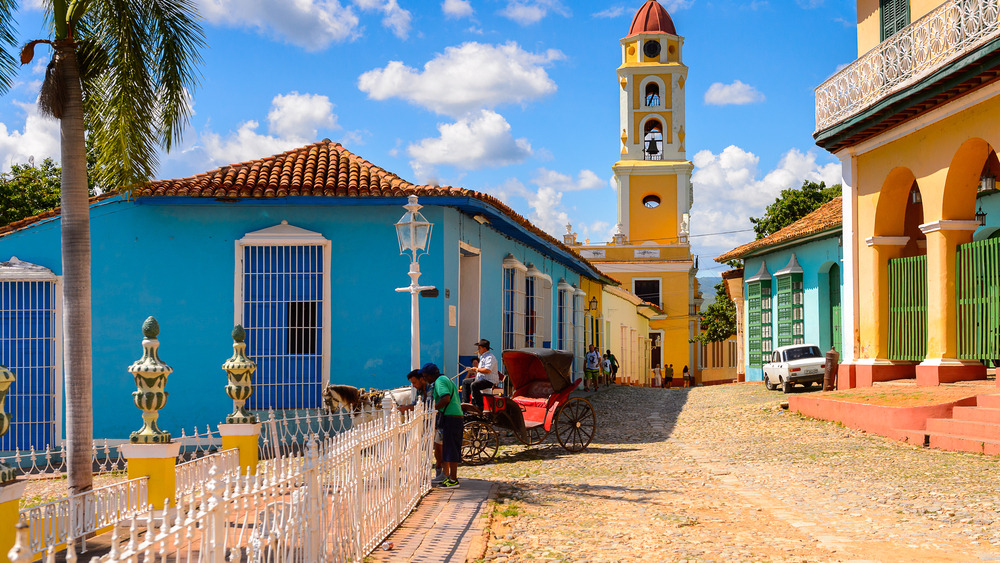
The Casa Azul is located on Plaza Mayor, at the heart of Trinidad's historic center, in Sancti Spiritus Province. Trinidad is connected to Havana and Cienfuegos by Viazul long-distance buses; expect about 5 to 6 hours from the capital. Once in town, the center is explored on foot only: the cobblestone streets are not suited for vehicles. From any point in the casco histórico, Plaza Mayor is accessible within a few minutes' walk.
When to Visit
The dry season, from November to April, remains the most comfortable period to visit Trinidad: bearable temperatures and low probability of showers. The wet season (May to October) is hotter and coincides with Caribbean hurricane season, particularly between August and October. The museum can be visited year-round, but a dry-season morning offers the best conditions for combining indoor exploration with outdoor strolling.
Nearby Attractions
Plaza Mayor concentrates several complementary sites:
- The Museo Romántico, housed in the Brunet Palace, which showcases the furnishings and decorative arts of Trinidad's prominent families
- The parish church of Santísima Trinidad, which closes the plaza to the north
- The Museo de Historia Municipal and Museo de Arqueología, just steps away
To extend your exploration of Cuba, the Jagua Castle near Cienfuegos and the Bay of Pigs are accessible from the south coast, while Caguanes National Park complements a circuit through the island's interior.
Frequently Asked Questions
Frequently asked questions
It occupies the Casa Azul on Plaza Mayor in Trinidad, in Sancti Spiritus Province, at the heart of the UNESCO-designated historic center.
Plan 1 to 1.5 hours to explore the eight permanent exhibition rooms. The visit can be extended with tours of neighboring museums on Plaza Mayor.
Yes, in most areas, without flash and generally with a small supplement paid at the entrance.
Guided tours are primarily offered in Spanish, sometimes in English depending on guide availability. An audio guide or a private English-speaking guide remains preferable for a detailed interpretation.
In the morning, upon opening, to avoid intense heat and peak tourist crowds on Plaza Mayor. The dry season (November to April) remains the most comfortable period.
To incorporate the museum visit into a broader itinerary, explore our Cuba travel ideas.
Interested in this visit?
We can include it in your personalised itinerary.